Researchers at Washington University in St. Louis have developed a blood test that can predict when Alzheimer’s disease symptoms will start, with an accuracy of within 3 to 4 years. The test measures levels of a protein called p-tau217 in the blood, which accumulates in the brain long before cognitive decline becomes noticeable. This breakthrough, published in Nature Medicine on February 19, 2026, offers a window into when someone might develop symptoms—for instance, a positive test result at age 60 suggests symptoms could appear around age 80, while the same positive result at age 80 might indicate symptoms within a decade.
This article explores how this blood test works, what it can and cannot tell us today, why it matters for future research, and what experts recommend about its use. The research, led by Dr. Suzanne Schindler and funded by the National Institutes of Health, represents a significant shift in how we understand Alzheimer’s disease progression. Rather than waiting for memory problems or confusion to emerge, doctors may soon be able to track biological changes in the blood years before symptoms appear. However, it’s important to understand that this discovery has important limitations for current clinical practice—the test is not yet accurate enough to predict when an individual person will develop symptoms, and major medical institutions currently recommend against using it to screen cognitively normal people.
Table of Contents
- How Does a Blood Test Predict When Alzheimer’s Symptoms Will Begin?
- Understanding p-tau217 and the Biological Clock Behind Symptom Onset
- Prediction Accuracy and Real-World Timeline Examples
- Why This Test Is Not Ready for Individual Clinical Use
- Why This Discovery Matters for Alzheimer’s Research and Clinical Trials
- The Broader Context of Blood Biomarkers in Alzheimer’s Detection
- Looking Ahead: What’s Next for Blood-Based Alzheimer’s Prediction
- Conclusion
How Does a Blood Test Predict When Alzheimer’s Symptoms Will Begin?
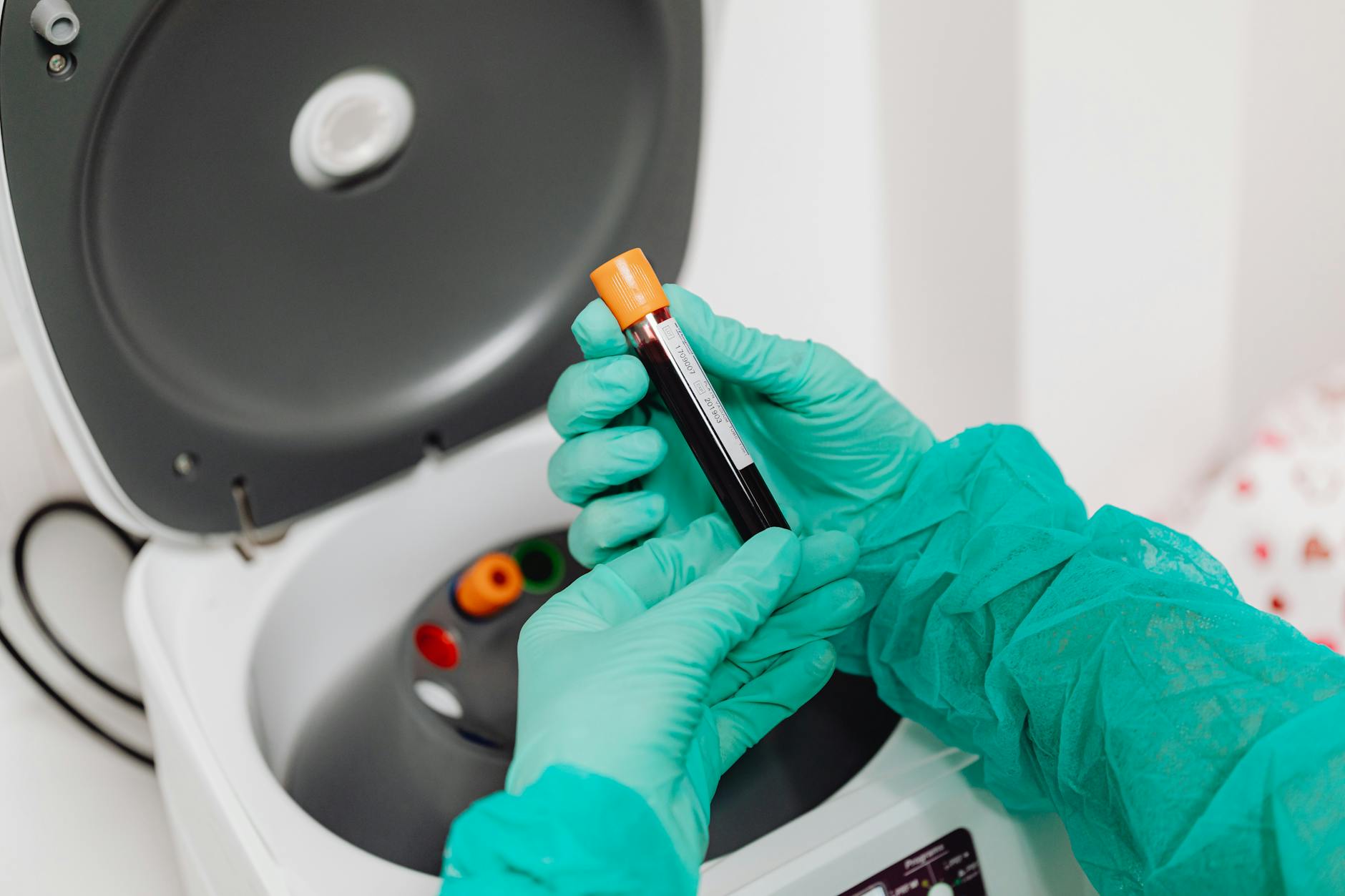
The blood test works by measuring how much p-tau217 protein has accumulated in your bloodstream. These tau proteins accumulate in consistent, measurable patterns over time—much like growth rings in a tree that reveal the tree’s age. The more tau has built up, combined with other markers like amyloid proteins, the closer someone is to developing cognitive symptoms. Researchers analyzed the relationship between current protein levels and the age at which people typically begin experiencing memory loss or other cognitive decline.
What makes this discovery novel is that it creates a biological clock. When the test results show elevated p-tau217, it’s not just a yes-or-no diagnosis of Alzheimer’s disease. Instead, the levels tell researchers something more precise: approximately how many years of accumulation have already occurred. Someone might have very high tau levels at age 75, indicating decades of buildup, while another person at age 65 has moderate levels that suggest less progression. This difference in accumulation rate helps predict when symptoms will emerge for that individual.
Understanding p-tau217 and the Biological Clock Behind Symptom Onset
The p-tau217 protein is one of several tau variants that researchers have learned to measure in blood samples. Tau is a natural protein in the brain, but in Alzheimer’s disease, it becomes phosphorylated (chemically modified) and begins accumulating in ways that eventually damage neurons. The “p” in p-tau217 refers to this phosphorylated form, and the “217” refers to the specific location on the tau protein where phosphorylation occurs. What makes p-tau217 special is that it appears to follow a very consistent pattern of accumulation, making it a reliable predictor of symptom timing.
However, it’s crucial to understand the limitations here. The p-tau217 test cannot tell you if you will definitely develop Alzheimer’s disease—only that if amyloid and tau accumulation follows the typical pattern seen in Alzheimer’s cases, symptoms are likely to emerge around a certain timeframe. Some people with high tau and amyloid levels never develop noticeable cognitive symptoms during their lifetime, a phenomenon researchers are still working to understand. Additionally, the test is not recommended as a screening tool for cognitively normal people, meaning your doctor should not order this test just to see “your risk” of future Alzheimer’s symptoms.
Prediction Accuracy and Real-World Timeline Examples
The Washington University study found that the blood test can predict symptom onset with a median absolute error of 3 to 4 years. This means the actual symptom onset might occur 3 to 4 years earlier or later than the prediction, which sounds reasonable until you consider individual decision-making—a prediction of “10 years” could mean 6 to 14 years, creating considerable uncertainty for planning purposes. The research team tested this across different age groups and found relatively consistent accuracy, though the predictions work slightly differently depending on someone’s current age. For a concrete example: if a 60-year-old person tests positive for elevated p-tau217, the model predicts they might develop symptoms around age 80—approximately 20 years in the future.
But if an 80-year-old tests positive, the prediction might be around age 90, or roughly 10 years ahead. The difference reflects how much tau has already accumulated relative to what’s needed for symptoms. For someone in their 50s with very high tau levels, the prediction might be sooner; for someone in their 80s with moderate levels, symptoms could be decades away or might never materialize. This variability illustrates why the test cannot be used for individual diagnosis today—the uncertainty range is too large for clinical decisions.

Why This Test Is Not Ready for Individual Clinical Use
Medical institutions and researchers emphasize that the p-tau217 blood test is not currently recommended for routine screening of cognitively normal people. The models created in this research are powerful for research purposes but not precise enough for clinical application yet. A doctor cannot ethically recommend a specific treatment or lifestyle intervention based solely on a prediction that could be off by 3 to 4 years, especially when that prediction might never come true for some patients.
There’s also a psychological consideration: knowing that you might develop Alzheimer’s in 10 years based on a blood test could create significant anxiety and potentially lead to overtreatment or unnecessary medical interventions. Unlike genetic tests for conditions that are certain to develop, the tau clock is probabilistic. Even people with very high tau levels are not guaranteed to develop cognitive symptoms, and the emotional impact of this uncertainty could outweigh any benefit from the information.
Why This Discovery Matters for Alzheimer’s Research and Clinical Trials
While the blood test isn’t ready for individual screening, it’s exceptionally valuable for research. The tau clock can help scientists recruit participants for Alzheimer’s clinical trials by identifying people who are likely to develop symptoms within a specific timeframe. Previous trials struggled to enroll people at the right disease stage—too early and no symptoms appear to change, too late and the disease has progressed too far for new treatments to help.
Now, researchers can use the p-tau217 blood test to identify people who will likely reach cognitive decline within 5 to 10 years, making it easier to test whether treatments can delay or prevent symptom onset. This could accelerate drug development dramatically. Instead of waiting decades to see if a treatment helps prevent Alzheimer’s, researchers might gather evidence in 10 to 15 years instead. Several disease-modifying treatments for early Alzheimer’s have recently been approved or are in late-stage trials, and this blood test could help identify which patients benefit most from these therapies.

The Broader Context of Blood Biomarkers in Alzheimer’s Detection
The p-tau217 blood test is part of a larger movement toward liquid biomarkers—tests that measure disease-related changes in body fluids rather than requiring brain imaging or cerebrospinal fluid collection. Other blood tests for Alzheimer’s include p-tau181, p-tau199, phosphorylated tau variants, and amyloid levels. Each captures different aspects of the disease process.
The tau clock approach specifically uses the accumulation pattern of p-tau217 to estimate timing, whereas other blood tests might indicate whether someone has abnormal amyloid or tau but not necessarily when symptoms will appear. Researchers from NIH and Washington University chose to focus on p-tau217 because it showed particularly strong correlations with symptom onset timing across different age groups. This doesn’t mean other biomarkers are less important—they can reveal different aspects of disease progression. Together, these blood tests are painting a much more detailed picture of Alzheimer’s disease before symptoms emerge.
Looking Ahead: What’s Next for Blood-Based Alzheimer’s Prediction
As research continues, scientists will work toward making these predictions more precise. The current 3- to 4-year error range might shrink as researchers collect more data, incorporate additional biomarkers, and refine the mathematical models. In the future, it’s possible that a combination of p-tau217, amyloid levels, genetic factors, and other biological markers could create even more personalized predictions.
The ultimate goal is to use this information not just for research but for prevention. If doctors can identify people who are likely to develop symptoms in 10 years and offer treatments that delay onset by just a few years, millions of people could potentially avoid cognitive decline during their remaining lifespan. This possibility—changing the trajectory of Alzheimer’s disease before symptoms even appear—is what makes the tau clock research so significant for dementia care.
Conclusion
A new blood test measuring p-tau217 protein can predict when Alzheimer’s symptoms may start with an accuracy of 3 to 4 years, offering unprecedented insight into disease progression. The research, published in February 2026 by Washington University in St. Louis, works by detecting the accumulation of tau proteins—a biological clock that correlates strongly with when cognitive decline typically begins. However, this test is not yet ready for use in screening cognitively normal people or for individual diagnosis, as the prediction range remains too uncertain for clinical decision-making.
What makes this breakthrough genuinely valuable is its potential to transform Alzheimer’s research and clinical trials. By identifying people likely to develop symptoms within a specific timeframe, researchers can test whether new treatments can prevent or delay cognitive decline. As blood-based biomarkers continue to improve and additional research refines these predictions, we may eventually see a shift toward preventive care for Alzheimer’s disease—treating people before symptoms appear, rather than after. For now, if you’re interested in your own dementia risk, discussion with a neurologist or cognitive specialist remains more valuable than a standalone p-tau217 blood test.
You Might Also Like
- This new Alzheimer’s test is raising a big question: should you take it
- Scientists say your brain’s immune system may protect against Alzheimer’s
- New test can now tell Alzheimer’s apart from similar brain diseases
For more, see Alzheimer’s Association.