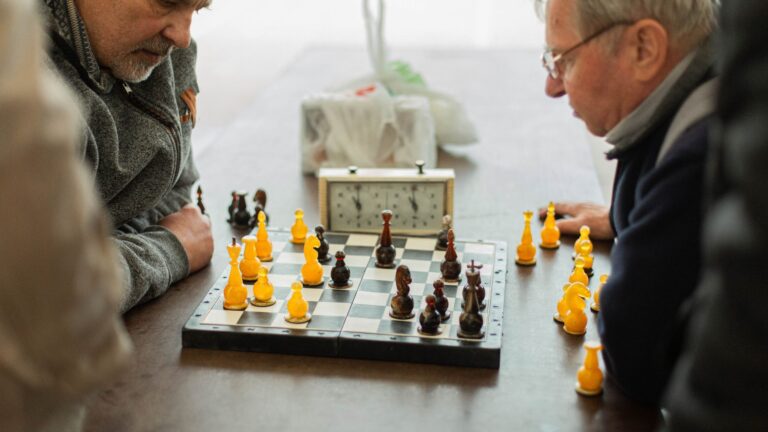
Sorting games help people with memory problems stay engaged and purposeful, but they do not restore memory. Sorting games are matching or grouping tasks, like arranging cards by color or beads by shape. They support attention and daily routine more than recall itself.
Families often ask if daily puzzles can slow decline. Evidence shows a narrower benefit. Sorting offers practice in focus and decision-making, plus calm time together.
Medical information disclaimer: This article is for general educational purposes only and does not provide medical advice, diagnosis, or treatment. Always consult a physician or other qualified health professional about symptoms, medications, tests, or treatment decisions.
Table of Contents
- What Does Sorting Train?
- What Did Long-Term Training Show?
- Can Games Prevent Memory Loss?
- How to Make Sorting Helpful at Home?
What Does Sorting Train?
The Journal of Neuroscience reports that the clinical Wisconsin Card Sorting Test correlates with working-memory measures and activates mid-dorsolateral prefrontal cortex during feedback, as detailed in the full research article. This shows sorting taxes executive function rather than isolated recall.
Executive function means holding a rule in mind, shifting rules, and using feedback. A player must remember the current category, compare each item, and adjust after a mistake. That work uses attention and flexibility more than long-term memory.
What Did Long-Term Training Show?
JAMA via PubMed Central reports that at five-year follow-up reasoning training reduced self-reported difficulty with shopping, housekeeping and finances, while memory and speed training did not, according to the five-year ACTIVE follow-up. The benefit stayed close to the skill practiced. This pattern matters for expectations.
Practice improves the practiced ability. Transfer to everyday memory is limited. Memory drills alone did not ease daily tasks in that trial.
Can Games Prevent Memory Loss?
The National Institute on Aging advises consumers to beware claims that specific computer or online games improve memory and notes commercial apps lack proof of matching structured training effects, as stated in its cognitive health guidance. Evidence is still evolving.
Treat sorting as enrichment, not treatment. Choose it to reduce boredom, support routine, and encourage success. Do not buy an app because it promises a stronger memory.
How to Make Sorting Helpful at Home?
The Alzheimer's Association recommends sorting tasks such as sorting poker chips, playing cards by color or suit, and beads or objects by shape or color for engagement, listed in its activities document hosted by Loudoun County. The goal is participation, not speed or scores.
Set up one clear task at a time for comfort and success. Watch for fatigue, confusion, or frustration. Stop before frustration builds and offer a walk, snack, or music instead.
- Choose large, safe, familiar items with clear colors or shapes.
- Give one rule, such as red with red or circle with circle.
- Keep the table clear, light bright, and sessions short.
- Praise effort, allow mixed piles, and simplify when needed.