Researchers say sits at the center of this dementia and brain health question.
Researchers have discovered that a simple blood test measuring phosphorylated tau 217 (p-tau217) can identify women at risk for Alzheimer’s disease up to 25 years before symptoms appear. In a landmark study published in March 2026 by UC San Diego researchers, women with elevated levels of this biomarker showed a threefold higher risk of developing dementia compared to those with normal levels. For a 45-year-old woman with family history of Alzheimer’s, this test could theoretically indicate elevated risk decades before she experiences any cognitive changes—information that could inform lifestyle decisions, medical monitoring, and future care planning.
This breakthrough emerged from research conducted by UC San Diego and Washington University scientists analyzing data from 2,766 women enrolled in the Women’s Health Initiative Memory Study, who have been followed for up to 25 years. The blood biomarker p-tau217 offers something researchers have sought for decades: an objective, measurable way to identify brain changes associated with Alzheimer’s disease long before memory loss or confusion occurs. This article explains how the test works, what the research actually shows, current limitations on its use, and what it might mean for women concerned about their dementia risk.
Table of Contents
- What Does the Blood Test Actually Measure and Predict?
- How Accurate Is the Prediction, and What Are Its Current Limitations?
- Does the Test Work Equally Well for All Women?
- What Should Women Do with This Information if They’re Concerned About Alzheimer’s Risk?
- What Happens If Someone Has Elevated p-tau217 but Never Develops Dementia?
- What About Women Under 50? What Does This Research Mean for Younger Women?
- Where Does This Research Lead Next?
- Conclusion
What Does the Blood Test Actually Measure and Predict?
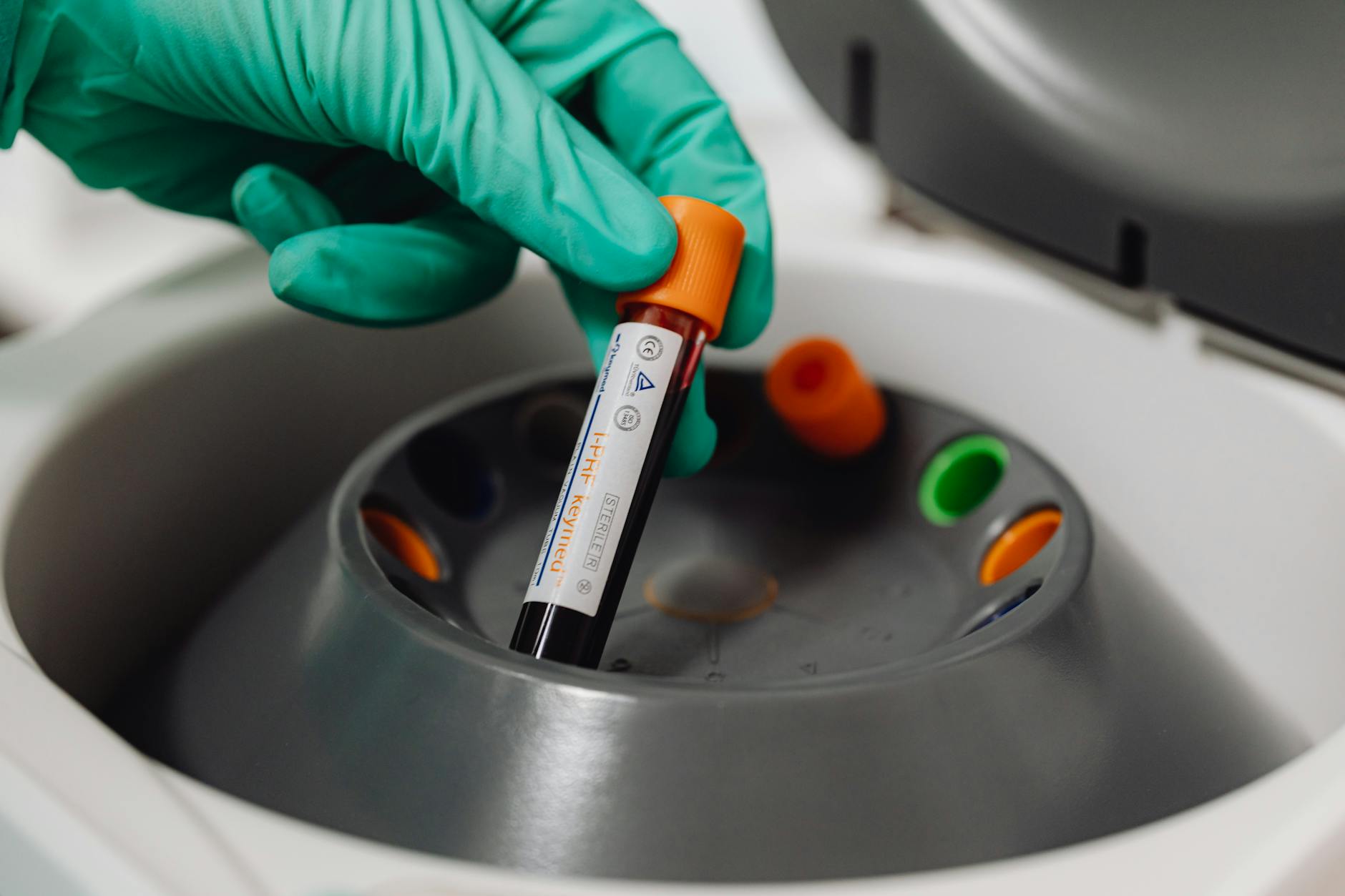
The p-tau217 biomarker in the blood reflects a specific form of tau protein that accumulates in the brains of people developing Alzheimer’s disease. In the UC San Diego study, researchers measured p-tau217 levels in blood samples taken from 2,766 women ages 65-79 who were cognitively normal at the start of the study. Over the following 25 years, they tracked how many women developed mild cognitive impairment or dementia and compared those outcomes to their initial p-tau217 levels. Women with elevated p-tau217 at baseline were three times more likely to develop dementia during the study period than women with normal levels—a significant and consistent association.
What makes this finding noteworthy is the timeframe. The blood test predicted dementia risk not just years in advance, but up to 25 years before symptoms appeared. For women identified with elevated p-tau217 in their 50s or 60s, the test indicated they might develop cognitive symptoms in their 70s or 80s. This differs from other dementia screening approaches that typically detect changes already underway in the brain; p-tau217 appears to identify the pathological process much earlier in its course.
How Accurate Is the Prediction, and What Are Its Current Limitations?
The Washington University research team developed a mathematical model—what they termed “p-tau217 clocks”—that predicts not just whether dementia will develop, but approximately when symptoms will appear. Their model predicted symptom onset with a median absolute error of 3.0 to 3.7 years. this means if the model predicts symptoms will start at age 78, the actual onset might occur anytime between approximately 74.5 and 81.5 years old. For research purposes and identifying candidates for clinical trials, this 3- to 4-year window is useful. However, for an individual woman trying to make personal medical decisions, a 7-year range of uncertainty is substantial. The p-tau217 blood test showed over 90% accuracy in identifying which women had Alzheimer’s-related changes visible on brain PET imaging scans.
This high accuracy in detecting pathological changes is why researchers are excited about the biomarker’s potential. However, the critical limitation is that having Alzheimer’s pathology in the brain does not guarantee someone will develop dementia symptoms. Not everyone with these changes progresses to cognitive impairment at the same rate, or at all. The test identifies risk, not destiny. Additionally, researchers explicitly caution that the blood test is not recommended for cognitively normal individuals outside research settings at present. The test remains primarily a research tool for clinical trials and prospective studies, not yet cleared for routine screening in medical practice.
Does the Test Work Equally Well for All Women?
The research found that p-tau217’s predictive power was stronger in women over age 70 compared to younger women. In other words, if a woman was already in her 70s at baseline, an elevated p-tau217 level was more predictive of near-term dementia risk than it was for women in their 60s. This matters because it means the test may have different utility depending on when it’s used.
A 45-year-old with elevated p-tau217 would fall outside the age groups studied, making it harder to estimate her personal risk based on this research. The test also showed stronger associations in women who carry the APOE ε4 genetic risk factor for Alzheimer’s, a well-established vulnerability gene. Women with both elevated p-tau217 and the APOE ε4 gene variant faced higher dementia risk than those with elevated p-tau217 but without the gene. Notably, the researchers found that p-tau217 predictions worked similarly in both White and Black women when combined with age and other factors, suggesting the biomarker may be useful across racial groups—an important finding given that dementia risk assessment tools have historically shown racial disparities.

What Should Women Do with This Information if They’re Concerned About Alzheimer’s Risk?
For women in the age groups studied (those now 65 and older), discussing p-tau217 testing with a neurologist or dementia specialist makes sense if they have concerning symptoms, family history, or other risk factors. However, the blood test is not appropriate as a screening tool for the general population of cognitively normal women right now. The distinction is important: screening means testing everyone regardless of symptoms; diagnostic workup means testing people with specific reasons for concern.
Currently, p-tau217 falls in the diagnostic category, not the screening category. If a woman does undergo p-tau217 testing as part of a clinical trial or research study and receives a result, that information can inform longer-term health planning—encouraging regular cognitive screening, discussions with family members about future care planning, and potentially modifying lifestyle factors like exercise, cognitive activity, and cardiovascular health management. The research itself does not prove that any intervention can prevent or delay Alzheimer’s in women with elevated p-tau217; that remains an open question being tested in ongoing clinical trials. What the test does provide is advance notice of increased risk, allowing time for thoughtful preparation.
What Happens If Someone Has Elevated p-tau217 but Never Develops Dementia?
This is a crucial limitation that the research cannot fully answer. In the study, elevated p-tau217 increased dementia risk threefold—but that means approximately two-thirds of women with elevated levels did not develop dementia during the 25-year follow-up. The test predicts group-level risk very well but remains imperfect at predicting individual outcomes. Some women with elevated p-tau217 may live their entire lives cognitively intact, their brains containing Alzheimer’s pathology that never progresses to symptoms.
This uncertainty is why researchers emphasize that p-tau217 testing is not yet appropriate for routine clinical screening in cognitively normal people. A positive test would create anxiety in two-thirds of women who take it—women who never would have developed dementia. Furthermore, there is currently no proven intervention that can prevent or reverse Alzheimer’s in asymptomatic people with elevated p-tau217. Recommending a test for something you cannot yet treat effectively raises ethical questions that the field is still working through.

What About Women Under 50? What Does This Research Mean for Younger Women?
The Women’s Health Initiative Memory Study enrolled women ages 65-79, so the p-tau217 data directly applies to older women, not younger ones. For women in their 40s or 50s concerned about Alzheimer’s risk, these findings suggest that blood biomarkers might eventually provide early detection, but the specific evidence about p-tau217 accuracy in younger women simply does not exist yet.
A 45-year-old with a family history of Alzheimer’s cannot reliably use this blood test to assess her personal risk based on current research. What younger women can do is participate in research studies if they’re interested, maintain modifiable risk factors for dementia (regular exercise, cognitive engagement, good sleep, cardiovascular health), and discuss family history with their doctors. Blood biomarker research is expanding rapidly, and it’s likely that better tools for younger women will emerge within the next 5-10 years.
Where Does This Research Lead Next?
These findings from UC San Diego and Washington University are prompting investment in several directions. Clinical trials are underway testing whether interventions like specific drugs, intensive lifestyle changes, or cognitive training can modify the course of disease in people with elevated p-tau217 before symptoms appear. If such interventions prove effective, the calculus for testing asymptomatic people could shift dramatically—a positive test would move from indicating risk to indicating opportunity for treatment.
Researchers are also working to standardize p-tau217 testing across different laboratories, make the test faster and more affordable, and validate it in younger age groups. The next 3-5 years will likely see p-tau217 move from research settings into some clinical practices, though probably still in specialized dementia clinics rather than as a general screening test. For women, the practical implication is that waiting and staying informed about new Alzheimer’s research is reasonable. The science is moving quickly, and recommendations about who should test and when may change as evidence accumulates.
Conclusion
A blood test measuring phosphorylated tau 217 can identify women at substantially higher risk of Alzheimer’s dementia up to 25 years before symptoms appear, according to research published in 2026 from UC San Diego and Washington University. The test shows over 90% accuracy in detecting Alzheimer’s-related brain changes and works similarly across racial groups, offering real promise for future dementia prevention and early intervention. However, the test remains primarily a research tool, not yet recommended for routine screening in cognitively normal women, because it carries a 3-4 year margin of error in predicting symptom onset and because no proven treatment yet exists for asymptomatic people with elevated p-tau217.
For women now in their 60s and 70s with family history or symptoms concerning for cognitive changes, discussing p-tau217 testing with a neurologist is reasonable as part of comprehensive dementia evaluation. For younger women, the best approach currently is to maintain modifiable risk factors for brain health and stay informed as research evolves. The coming years will likely bring clarity on whether interventions can modify the course of Alzheimer’s disease in people identified with elevated p-tau217, potentially transforming this blood test from a research marker into a clinically actionable screening tool.
You Might Also Like
- New Blood Test Can Predict Dementia Risk 25 Years Before Any Symptoms Appear
- The $50 Blood Test That Could Tell You Your Dementia Risk Decades in Advance
- Real-World Studies Track Effectiveness of Approved Alzheimer’s Drugs
For more, see Alzheimer’s Association — medical tests.