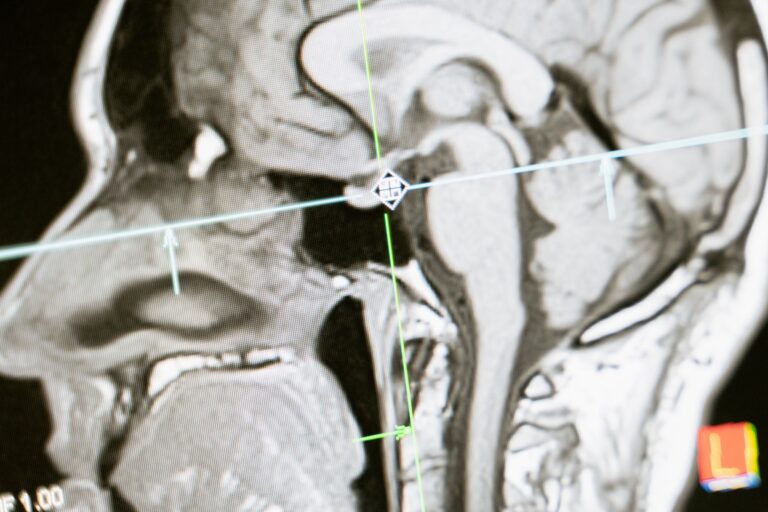
Yes, a blood test can now predict dementia risk up to 25 years before symptoms appear—at least in women. Researchers at UC San Diego published findings in March 2026 showing that a blood test measuring phosphorylated tau 217 (p-tau217) can identify women at significantly elevated risk of developing dementia decades in advance. In their study of 2,766 cognitively healthy women aged 65-79, those with elevated p-tau217 levels had three times the risk of developing dementia compared to women with lower levels.
This discovery represents a fundamental shift in how we might approach dementia prevention: instead of waiting for memory loss and confusion to appear, doctors could potentially identify at-risk individuals in middle age or early old age, when interventions might still make a difference. The blood test works by measuring a protein fragment that accumulates in the brains of people destined to develop Alzheimer’s disease and other forms of dementia. This article explores how this breakthrough came about, what it means for diagnosis and treatment, the current limitations that prevent routine use, and what the next steps are for turning this discovery into practical clinical care.
Table of Contents
- How Can a Simple Blood Test Predict Dementia Decades in Advance?
- What Do These Blood Tests Measure and How Accurate Are They?
- Who Benefits Most from This Discovery?
- How Soon Might This Blood Test Become Available to Everyone?
- What Are the Major Limitations and Unknowns?
- What About Other Blood-Based Biomarkers?
- What’s the Future of Blood-Based Dementia Prediction?
- Conclusion
How Can a Simple Blood Test Predict Dementia Decades in Advance?
The breakthrough hinges on understanding what happens in the brain long before memory problems emerge. Alzheimer’s disease involves the accumulation of two abnormal proteins: amyloid-beta and tau. These proteins begin damaging brain cells years—sometimes decades—before a person notices any cognitive decline. The p-tau217 variant is a modified form of tau that appears to be particularly sensitive to the early stages of Alzheimer’s pathology. By measuring p-tau217 in the bloodstream, researchers can detect a fingerprint of what’s happening deep in the brain without needing expensive brain imaging or invasive procedures. The UC San Diego study provides compelling evidence for this approach.
Researchers took blood samples from women in the 1990s—when all participants were cognitively normal—and then followed these women for up to 25 years. When they looked back at the original blood samples, they found that women who later developed dementia had significantly higher p-tau217 levels decades earlier. This retrospective analysis shows that the protein wasn’t just present when dementia appeared; it was already measurable when the brain was still functioning normally. This finding suggests that p-tau217 could serve as an early warning system, allowing doctors to identify high-risk individuals before irreversible damage accumulates. Other blood-based biomarkers appear to work in similar ways. A Swedish community study published in March 2025 followed 2,148 dementia-free older adults for up to 16 years and found that elevated baseline levels of several tau variants (p-tau181, p-tau217) along with other markers like NfL and GFAP were all associated with increased dementia risk. This suggests that blood testing may offer multiple ways to assess brain health, though p-tau217 appears to be among the most promising for long-range prediction.

What Do These Blood Tests Measure and How Accurate Are They?
Phosphorylated tau is a protein that becomes chemically modified (phosphorylated) when tau tangles begin to form in the brain—a hallmark of Alzheimer’s disease. The “217” refers to the specific location on the tau protein where phosphorylation occurs, and this particular variant seems to correlate especially well with early Alzheimer’s pathology. When tau tangles develop, some of these modified proteins leak into the cerebrospinal fluid and eventually into the bloodstream, where they can be detected with highly sensitive laboratory tests. These blood tests are extraordinarily sensitive, able to measure these protein fragments at concentrations of just a few picograms per milliliter—about one trillionth of a gram per liter. However, an important limitation applies here: elevated p-tau217 indicates Alzheimer’s pathology in the brain, but not everyone with this pathology develops clinical dementia during their lifetime. Some people with amyloid and tau accumulation die of other causes before memory loss becomes apparent.
This means that while p-tau217 is a strong risk factor, it’s not a certainty. Additionally, current blood-based biomarker testing is not recommended for routine screening in asymptomatic people without any cognitive symptoms. The Alzheimer’s Association, in guidelines released in 2025, notes that these tests are currently most appropriate when specialists are already evaluating someone for cognitive impairment—not as a population-wide screening tool for healthy individuals. The clinical validation of blood tests has advanced rapidly, with the FDA clearing the Roche Elecsys pTau181 test in October 2025 for use in primary care settings. This approval represents the first FDA-cleared blood test for Alzheimer’s disease diagnosis and marks a shift toward mainstream implementation. However, even this cleared test is intended for ruling out Alzheimer’s-related amyloid pathology in at-risk individuals, not for predicting dementia decades in advance in asymptomatic people. The distinction matters: current clinical approval is for symptomatic patients, while the 25-year prediction capability is still primarily research-based.
Who Benefits Most from This Discovery?
The UC San Diego study specifically enrolled women, and all of the 25-year outcome data comes from female participants. This sex-specific finding raises an important question: does p-tau217 work equally well in men? Current evidence doesn’t answer this fully. Dementia affects women at higher rates than men, partly because women live longer on average, but also because of biological differences in how Alzheimer’s pathology develops and progresses. The fact that p-tau217 showed such strong predictive power in women doesn’t automatically mean it will work identically in men, and this remains an area needing additional research. Women in their 50s, 60s, and early 70s stand to benefit most from this research as it advances into clinical practice. If doctors can identify women with elevated p-tau217 when they’re still cognitively normal, there may be opportunities for preventive interventions—though those interventions are still being developed and tested.
Some lifestyle modifications like cognitive training, cardiovascular exercise, and cognitive engagement show promise in slowing cognitive decline. Emerging Alzheimer’s drugs like lecanemab and donanemab target amyloid accumulation, but their role in asymptomatic individuals with elevated p-tau217 is still unclear and requires clinical trials. For families with strong histories of Alzheimer’s disease, blood testing for p-tau217 could eventually provide valuable risk stratification. Instead of assuming all family members face the same risk, genetic counseling combined with blood biomarker results could offer more personalized estimates. Someone with a family history but no elevated p-tau217 might have lower lifetime risk than expected, while someone with both family history and elevated biomarkers might benefit from more intensive monitoring or prevention strategies. However, this remains prospective—such clinical pathways haven’t yet been formally established.

How Soon Might This Blood Test Become Available to Everyone?
The Roche pTau181 test is already available in clinical settings, but availability is currently limited to patients being evaluated for cognitive symptoms by specialists. Expanding this to broader use in primary care practices will require several steps. First, more research is needed to establish how p-tau217 and other biomarkers should be integrated into standard clinical care for asymptomatic individuals. Second, primary care doctors need education and training on how to interpret these results and counsel patients about what elevated levels mean. Third, there must be clarity on what interventions are actually effective for people identified as at-risk through blood testing. The timeline isn’t yet clear.
Some centers may begin offering p-tau217 testing in primary care settings within the next 2-3 years, particularly for older adults with risk factors or cognitive complaints. However, routine screening of all middle-aged or older adults remains unlikely in the near future. Such screening would require identifying which populations benefit most, establishing reference ranges across different demographic groups (including more data on men and diverse racial and ethnic populations), and ensuring that test results lead to meaningful interventions. A screening test for something treatable makes sense; a screening test that identifies risk but offers no proven prevention strategy raises ethical questions about whether identifying people as at-risk actually improves health outcomes. Cost and insurance coverage will also matter. At present, blood biomarker testing for Alzheimer’s is covered by Medicare only in certain clinical contexts, primarily when doctors are evaluating someone with cognitive symptoms. Broadening coverage to asymptomatic screening would be a major policy shift and would likely follow clinical evidence showing that early identification improves long-term outcomes.
What Are the Major Limitations and Unknowns?
The most critical unknown is whether identifying people with elevated p-tau217 actually prevents or delays dementia. The UC San Diego study shows that the biomarker is predictive, but it’s observational data—researchers simply measured the blood test and followed outcomes. No interventional study has yet shown that treating asymptomatic people with elevated p-tau217 prevents cognitive decline. This is a crucial gap. It’s possible that some people with elevated biomarkers would never develop symptomatic dementia, or would develop it so late in life that it wouldn’t affect their lifespan or quality of life. Until we know whether early detection enables interventions that meaningfully prevent or delay dementia, the clinical utility of screening asymptomatic individuals remains theoretical. Another limitation is the lack of diverse data.
The UC San Diego cohort was women, and demographic information on racial and ethnic diversity was limited. Blood biomarkers may behave differently across different genetic backgrounds and health histories. African American and Hispanic populations, for instance, have different rates of Alzheimer’s disease than White populations, and the reasons are complex—involving both genetic factors and differences in access to health care, education, and cardiovascular health management. Before p-tau217 testing can be recommended as a screening tool for all older adults, it needs to be validated in representative samples across racial, ethnic, and sex groups. There’s also uncertainty about the relationship between p-tau217 levels and dementia risk across different ages. The UC San Diego study looked at women aged 65-79 at baseline. Would elevated p-tau217 at age 50 be equally predictive? What about at age 85? Different thresholds might apply at different ages, and one-size-fits-all cutoff values won’t work until much larger validation studies are completed.

What About Other Blood-Based Biomarkers?
Beyond p-tau217, other blood proteins show promise as dementia biomarkers. The Swedish study found that p-tau181 (a different phosphorylation site on tau), NfL (neurofilament light chain, a protein released when neurons are damaged), and GFAP (glial fibrillary acidic protein, released by brain support cells under stress) all predicted dementia risk independently. This suggests that a comprehensive blood test panel—rather than a single marker—might provide better risk stratification. One company or clinical lab might measure p-tau217 and p-tau181 together, along with NfL and GFAP, to build a more complete picture of brain health.
The advantage of a multi-marker approach is that it could capture different aspects of brain pathology. p-tau variants reflect Alzheimer’s-specific changes, while NfL reflects more general neuronal damage, and GFAP reflects inflammation and glial activation. Someone with very high GFAP but normal p-tau might be experiencing brain inflammation from a different cause entirely, such as vascular disease or repeated head injuries. As these tests mature, doctors will likely use combinations of markers to differential diagnose different types of cognitive aging and dementia risk.
What’s the Future of Blood-Based Dementia Prediction?
The field is moving rapidly. Washington University researchers released findings in February 2026 showing that p-tau217 and other tau variants can predict not just whether someone will develop dementia, but approximately when. Their “Alzheimer’s prevention clock” model estimates that symptomatic dementia could develop within 3-4 years in some individuals, based on blood biomarker levels. This kind of timeline prediction would be far more useful clinically than simply knowing someone has elevated risk—if you know dementia might begin in 3-4 years, you can plan care, inform family, and potentially enroll in prevention trials.
This research is still preliminary but suggests where the field is headed. Over the next 5-10 years, we’ll likely see blood-based biomarkers become standard clinical tools for assessing dementia risk in older adults with cognitive symptoms or concerns, particularly in memory clinics and neurology practices. Broader screening of asymptomatic populations will come later, once we know which interventions actually work to prevent or delay cognitive decline in people identified through blood testing. The combination of blood biomarkers with brain imaging, genetic testing, and cognitive assessment will probably become the standard approach, rather than relying on any single test in isolation.
Conclusion
A blood test measuring phosphorylated tau 217 can predict dementia risk up to 25 years in advance—at least in women, based on a landmark UC San Diego study published in March 2026. This discovery is scientifically significant because it shows that Alzheimer’s pathology begins measurably decades before memory problems appear, opening the door to the possibility of early intervention and prevention. Combined with other blood-based biomarkers and recent FDA clearances for clinical testing, we’re entering an era where dementia risk can be assessed through a simple blood draw rather than expensive imaging or invasive procedures.
However, the path from research discovery to clinical practice involves important steps that are still underway. These tests are not yet recommended for routine screening in asymptomatic people, and we still need to understand which interventions actually prevent or delay dementia in those identified as at-risk. If you’re concerned about cognitive aging or have a family history of dementia, discuss with your primary care doctor or a neurologist whether blood biomarker testing might be appropriate for your situation. The technology exists now; the evidence for how to use it to improve individual outcomes is still being built.