
Doctors say sits at the center of this dementia and brain health question.
Yes, diagnosis is becoming more accurate—and faster. Recent breakthroughs in artificial intelligence are enabling doctors to catch diseases earlier and with greater precision than ever before. AI systems are now outperforming experienced physicians in specific diagnostic areas: DeepRare AI correctly identifies rare diseases on the first attempt 64.4% of the time, compared to doctors’ 54.6%, with expert specialists endorsing the AI’s reasoning over 95% of the time. For conditions like dementia, where early and accurate diagnosis can dramatically change a patient’s treatment trajectory and quality of life, these improvements matter enormously. This article explores how AI-driven diagnostic advances are reshaping medicine, what these technologies can and cannot do, and what the shift means for patients seeking clarity about neurological and other serious conditions.
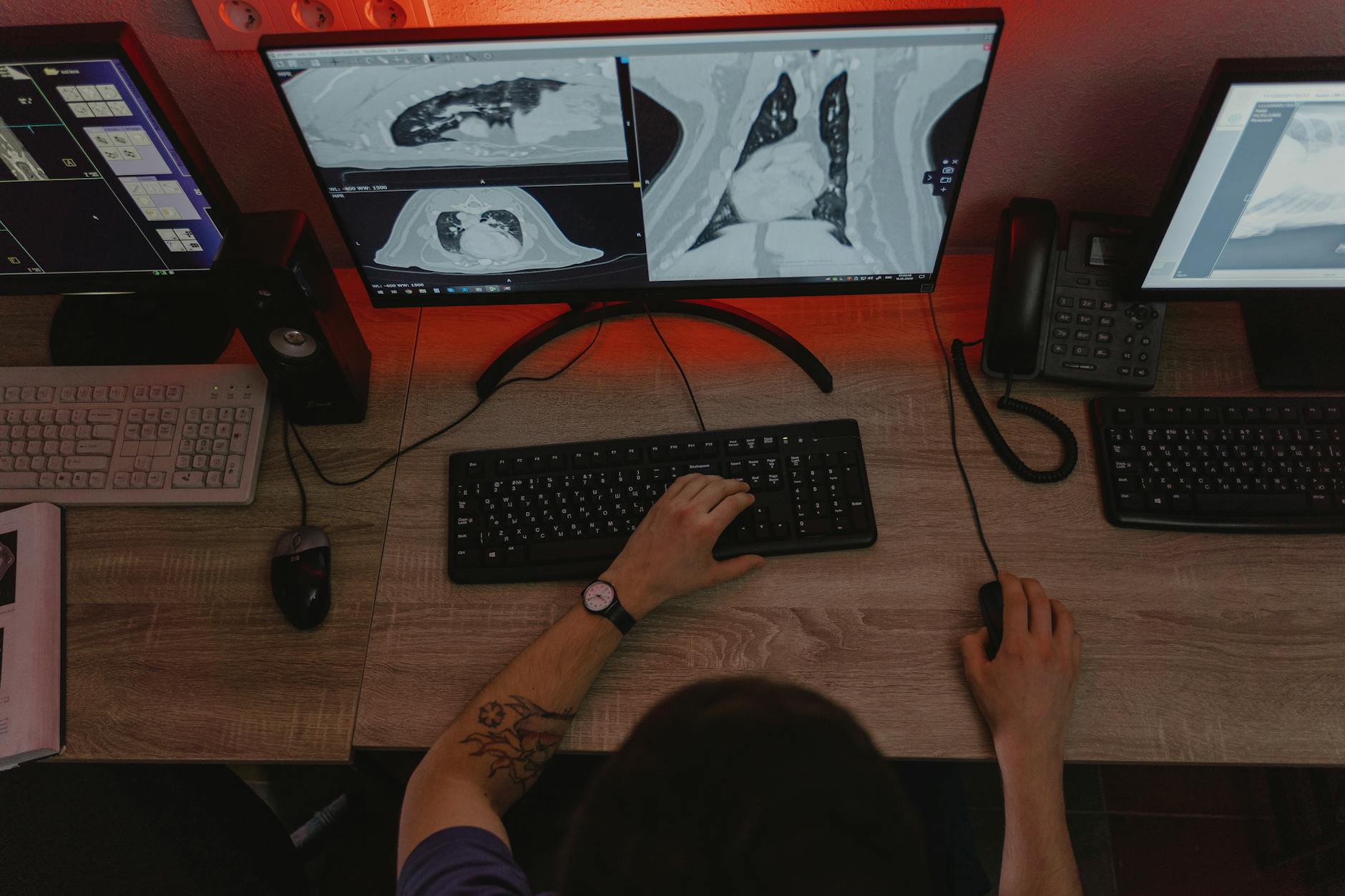
The transition from human-only diagnosis to human-plus-AI diagnosis is already underway in hospitals and clinics worldwide. Rather than replacing doctors, these tools are becoming extensions of medical expertise—identifying patterns in medical imaging, pathology slides, and patient data that humans might miss or that require years of specialized training to spot. Some systems detect lung cancer on CT scans up to a year earlier than radiologists, with 94% accuracy. Others reduce the time to diagnose life-threatening conditions like strokes. The challenge now isn’t whether AI improves diagnosis—it does—but how to implement these tools responsibly while maintaining the human judgment and patient care that remain essential to medicine.
Table of Contents
- How Are AI Systems Making Diagnosis More Accurate Than Doctors?
- What Role Does AI Play in Early Detection?
- What Are the Different Types of AI Diagnostic Tools Available to Doctors Today?
- How Should Patients Approach a Diagnosis in the Age of AI?
- What Are the Limitations and Risks of AI-Assisted Diagnosis?
- How Is AI Helping in Neurology and Brain Health Specifically?
- What Does the Future of Diagnosis Look Like?
- Conclusion
How Are AI Systems Making Diagnosis More Accurate Than Doctors?
Artificial intelligence improves diagnostic accuracy in several ways. First, it processes vastly larger datasets than any individual doctor could review in a lifetime. An AI system trained on millions of imaging scans learns subtle visual patterns that correlate with specific diseases—patterns too faint or complex for the human eye to consistently recognize. Second, AI removes human fatigue and inconsistency. A radiologist reading dozens of scans in a shift may miss a finding; an AI algorithm performs the same analysis with identical precision on the first scan and the last. Third, specialized AI systems now achieve extraordinary accuracy on specific tasks: Harvard’s CHIEF model analyzes tumor tissue slides with 94% accuracy across 11 different cancer types. Mayo Clinic’s AI algorithms identify cardiac abnormalities with 94% accuracy. Microsoft’s MAI-DxO system reaches 85.5% diagnostic accuracy on complex medical cases—far exceeding the 20% accuracy of generalist physicians facing the same cases. The improvement is most striking in rare diseases, where individual doctors may encounter a condition only a handful of times in their careers. DeepRare AI, developed in 2026, was tested against experienced physicians and rare disease specialists.
The AI identified cases correctly on the first attempt 64.4% of the time, compared to doctors’ 54.6%. Remarkably, when expert specialists reviewed the AI’s diagnostic reasoning, they endorsed it 95.4% of the time—suggesting the AI wasn’t just correct, but reasoning soundly. this is particularly important for dementia diagnosis, where several distinct conditions (Alzheimer’s disease, vascular dementia, Lewy body dementia, frontotemporal dementia) can mimic each other. A tool that helps clinicians arrive at the correct diagnosis faster means patients receive the right treatments earlier. However, there is a crucial caveat: accuracy varies dramatically by task. Specialized systems trained on a specific type of medical image or pathology slide perform far better than general-purpose tools. Generative AI models like GPT-4, while useful as diagnostic aids, show only moderate accuracy around 52% on general medical questions. When GPT-4 is given lab data and test results, its accuracy improves to 55% (top-one guess) or 60% (if the correct answer is in the top 10 guesses). This is better than random chance but not reliable enough to replace clinical judgment. The lesson: AI excels at narrow, well-defined tasks with abundant training data; it struggles with breadth and common-sense reasoning.
What Role Does AI Play in Early Detection?
early detection saves lives because treatments are often more effective when disease is caught before significant damage occurs. AI is accelerating detection in multiple ways. For lung cancer, AI tools can identify tumors on CT scans up to a year earlier than human radiologists, with 94% accuracy. This extra year of lead time can be the difference between surgery, chemotherapy, and hospice care. Google’s ARDA (Automated Retinal Disease Assessment) system uses deep learning to detect diabetic retinopathy—eye damage caused by diabetes—in retinal images. It’s been deployed in primary care clinics across India and Thailand, particularly in rural and under-resourced areas lacking ophthalmologist access. Patients in these regions now have access to screening that would otherwise require travel or simply wouldn’t exist. Aidoc, a radiology AI system, reduced stroke detection time by 32% in clinical studies. For stroke, every minute matters: the longer blood flow is blocked to the brain, the more neural tissue dies.
A 32% reduction in detection time translates to more patients receiving clot-busting medications within the narrow therapeutic window where they work. Similar principles apply to many neurological emergencies. However, the speed advantage of AI depends entirely on clinical workflow. If a hospital integrates AI results seamlessly into its diagnosis process and acts on them immediately, the benefit is real. If results sit in a queue or get second-guessed without good reason, the advantage erodes. Successful implementation requires hospitals and clinics to redesign how they use diagnostic information. Another limitation worth noting: AI systems are often trained on data from wealthy healthcare systems with well-equipped hospitals. They may not perform as well in under-resourced settings or on populations underrepresented in training data. A lung cancer AI trained primarily on scans from North American patients might perform differently on scans from a different population or taken on different equipment. Early adopters of these tools need to validate accuracy in their own settings before assuming published results apply directly to their patients.
What Are the Different Types of AI Diagnostic Tools Available to Doctors Today?
Several categories of AI diagnostic tools are now in clinical use. The first is image analysis AI—systems trained to recognize patterns in medical imaging. PathAI uses deep learning to identify cancerous cells in pathology slides with high accuracy, enhancing both the speed and consistency of cancer diagnosis. These tools work best when the task is visually defined: recognizing a tumor in a scan, spotting an abnormality in a slide. The second category is data-analysis AI, which processes patient history, lab results, vital signs, and other structured clinical data to identify disease patterns. Microsoft’s MAI-DxO and similar systems fall into this group. They excel at synthesizing complex medical information and suggesting diagnoses a generalist physician might not consider. The third category—generative AI—deserves special mention because it’s often misunderstood.
Large language models like GPT-4 or Claude can discuss medical topics, suggest differential diagnoses, and even explain medical concepts to patients. However, they should not be relied upon as primary diagnostic tools. Generative AI models achieve around 52% accuracy on general medical diagnostic questions—comparable to a first-year medical student, not a trained physician. When given actual lab data, GPT-4’s accuracy improves to 55% top-one or 60% top-10, with lenient scoring reaching 80%. These are useful for narrowing possibilities or supporting medical trainees, but they’re not suitable for standing alone. A fourth emerging category is human-AI collaborative tools designed to support human decision-making rather than replace it. Paradoxically, research has shown that pairing experienced physicians with AI can sometimes reduce overall diagnostic accuracy—but it improves efficiency and spreads expertise. The key finding: doctors who received formal training in how to use AI tools achieved better outcomes than those who didn’t. This suggests that the diagnostic advantage lies not in the tools themselves but in clinicians who understand their strengths, limitations, and proper application.
How Should Patients Approach a Diagnosis in the Age of AI?
If you’re seeking a diagnosis for cognitive symptoms, dementia concerns, or other serious health issues, understanding the role of AI can help you get better care. First, seek evaluation from a specialist whenever possible, especially for complex neurological conditions. AI systems improve specialist performance but don’t replace expertise. A neurologist or geriatrician evaluating you for dementia will likely use imaging, blood tests, cognitive assessments, and clinical history—some of these may be analyzed with AI assistance. The combination of human judgment and technological precision is more reliable than either alone. Second, ask whether AI was used in your diagnostic process and for what purpose. If your doctor mentions using an AI tool to help interpret imaging or pathology results, that’s generally a positive sign—it suggests they’re using modern best practices. Ask what role the AI played: Was it a screening tool to flag areas for the doctor to review? Was it the primary analysis with human confirmation? Understanding the process helps you assess confidence in the result.
Third, seek a second opinion for serious diagnoses, especially for conditions like dementia where early intervention matters. Different specialists might use different AI tools or apply them differently. A second opinion isn’t a sign that the first doctor was wrong—it’s a standard part of getting the most accurate diagnosis possible. Finally, be aware of the speed-versus-accuracy tradeoff. AI systems can produce results very quickly, which is wonderful for acute emergencies like stroke, where minutes matter. But for chronic conditions like dementia, speed is less critical than accuracy. Your doctor might use AI to support diagnosis but will want to combine results with clinical observation over time. Dementia diagnosis sometimes requires follow-up assessments weeks or months later to confirm initial impressions. That’s not a flaw in the process; it’s appropriate caution for a condition that will affect your life for years to come.
What Are the Limitations and Risks of AI-Assisted Diagnosis?
Despite impressive accuracy rates, AI diagnostic tools have real limitations. One is data bias: if an AI system is trained primarily on data from one population, it may not perform equally well on others. Medical AI trained on CT scans from large hospitals with modern equipment might struggle with scans from older equipment or resource-limited settings. Similarly, an AI system trained predominantly on people of one age, sex, or genetic background might be less accurate for other groups. This is a known problem in medical AI, and responsible developers are working to address it, but it’s not solved yet. A second limitation is the “black box” problem: many AI systems, especially deep learning networks, can’t explain their reasoning in human terms. A doctor using the system learns “this AI says the diagnosis is X with 94% confidence,” but might not understand why. This creates a dilemma: trusting the tool blindly risks missing cases where it fails, but scrutinizing every output defeats the purpose of using it.
Research on human-AI collaboration found something surprising: when doctors worked alongside AI, overall diagnostic accuracy sometimes decreased. The explanation appears to be that doctors either over-relied on the AI (trusting it even when it was wrong) or wasted effort second-guessing it on cases where it was right. With formal training, these problems diminish, but they don’t disappear entirely. A third risk is implementation failure. A brilliant AI system is worthless if hospitals don’t integrate it properly into clinical workflows. If results get lost in bureaucratic delays, or if busy doctors don’t have time to review them carefully, or if staff aren’t trained to use the tool correctly, accuracy plummets. Some early AI implementations in hospitals achieved much lower accuracy in real-world use than in research studies because of workflow problems, not because the AI itself was flawed. Before your hospital or clinic adopts an AI diagnostic tool, good practice includes validation in your specific setting and training for the staff who will use it.

How Is AI Helping in Neurology and Brain Health Specifically?
While most of the recent breakthroughs in AI diagnosis involve imaging and pathology (cancers, cardiac disease, diabetic retinopathy), AI is beginning to enhance brain health diagnostics too. AI systems can analyze brain MRI scans for signs of structural changes associated with dementia, picking up atrophy patterns or white matter damage that help narrow a diagnosis. They can process cognitive test scores and track changes over time more consistently than human scoring. They’re also being applied to electroencephalography (EEG), the electrical activity of the brain, to help identify certain seizure disorders and other neurological conditions more reliably.
One promising but less publicized area is AI analysis of retinal imaging for neurological disease. The retina is an extension of the brain, and certain retinal patterns correlate with neurological damage. Google’s ARDA system, while primarily designed for diabetic retinopathy, demonstrates the potential of AI to identify neural dysfunction through eye imaging. As more neurological conditions are linked to subtle retinal changes, AI systems may become valuable screening tools in primary care—catching early signs of dementia or other brain diseases during routine eye exams. However, this application is still mostly in research phase; it’s not yet standard in most clinics.
What Does the Future of Diagnosis Look Like?
The trajectory is clear: AI-assisted diagnosis will become standard practice in most medical settings within the next few years. The question isn’t whether this will happen but how it happens—whether implementation is thoughtful and includes proper training, validation, and safeguards, or whether it’s rushed and creates new problems. The most likely future is not AI replacing doctors but AI amplifying doctor expertise, particularly in areas where there’s a shortage of specialists. In countries with too few neurologists to evaluate every person with cognitive concerns, AI screening tools could identify high-risk patients who genuinely need specialist evaluation, ensuring the specialists’ time is used effectively.
Another emerging possibility is AI-enabled personalized medicine. As AI systems become more sophisticated at analyzing individual patient data—genetics, brain imaging, cognitive patterns, biomarkers—diagnosis could shift from categorizing patients into disease buckets (Alzheimer’s disease, vascular dementia, etc.) to understanding each person’s unique pathology. A patient’s dementia might be driven by a combination of amyloid plaques, tau tangles, small vessel disease, and neuroinflammation in proportions unique to them. AI could help reveal these combinations, allowing treatment to be tailored more precisely. This is aspirational but grounded in how modern neuroscience is moving.
Conclusion
Doctors’ diagnostic capabilities are genuinely improving, driven largely by AI tools that detect patterns in medical imaging, pathology, and patient data with unprecedented accuracy. Systems like DeepRare AI, Mayo Clinic’s cardiac AI, and Harvard’s CHIEF model demonstrate that specialized AI can outperform human physicians on specific tasks. For serious conditions like dementia, where early and accurate diagnosis determines treatment options and outcomes, these advances are meaningful.
However, accuracy is not uniform across all tools and all contexts: specialized systems trained on large datasets of specific diseases perform far better than general-purpose tools, and implementation challenges mean real-world accuracy can differ from research results. If you’re navigating diagnosis for yourself or a family member, the practical takeaway is straightforward: seek evaluation from qualified specialists, understand what diagnostic tools and tests are being used (including whether AI is involved), ask questions about the results, and don’t hesitate to get a second opinion for serious conditions. Modern medicine increasingly uses AI as one component of diagnosis, alongside clinical judgment, imaging, pathology, and patient history. That combination—human expertise enhanced by AI—is more powerful than either alone.
You Might Also Like
- Scientists say early diagnosis may soon require just a quick swab
- Scientists say your brain’s immune system may protect against Alzheimer’s
- Scientists say they may have found a way to slow disease progression
For more, see CDC — Alzheimer’s and Dementia.




