Geopolitical events can temporarily reshape your investment strategy’s effectiveness, but historical data suggests the impact is far more limited than headlines suggest. When conflict escalates—such as tensions in critical semiconductor-producing regions—stock markets experience sharp initial shocks of 15-25% within 48 hours, with elevated volatility persisting for 30-90 days. However, since 1970, geopolitical shocks have driven heightened short-term volatility but haven’t typically had lasting impact on equity markets, except during periods that coincide with recessions. This article examines how you should think about geopolitical risk in the context of long-term investing, what’s actually changed in 2026, and why the most effective strategy often involves staying the course rather than overhauling your approach.
The real question isn’t whether geopolitical events affect markets—they clearly do. The more important question is whether short-term turbulence should cause you to fundamentally change a long-term investment strategy. For most investors building retirement portfolios or long-term wealth, the answer is no. But 2026 presents a genuinely different environment than previous decades, and understanding the specific risks—particularly around semiconductors, rare earths, and trade barriers—means you can position your portfolio more intelligently without reacting emotionally to each day’s headlines.
Table of Contents
- How Geopolitical Events Create Market Shocks—And Why They Usually Don’t Derail Long-Term Plans
- The 2026 Environment: A More Fragmented and Unstable World
- The Shift From Oil to Semiconductors and Critical Minerals
- Trade Wars, Tariffs, and the Permanent Reshuffling of Supply Chains
- Why Panic Selling During Geopolitical Volatility Usually Backfires
- Scenario Planning and Flexible Strategy as Institutional Best Practice
- Structural Long-Term Changes: The New Normal for Investors
- Conclusion
How Geopolitical Events Create Market Shocks—And Why They Usually Don’t Derail Long-Term Plans
When geopolitical tensions spike, the market’s response is immediate and dramatic. Research from the BlackRock Investment Institute and S&P Global documents that conflict escalation typically triggers initial price declines of 15-25% within the first 48 hours. This isn’t a gradual selloff—it’s panic, and it’s real. The volatility then persists in markets for 30-90 days as uncertainty remains elevated and investors struggle to price in the consequences. The critical distinction, however, is between short-term volatility and long-term portfolio damage. A 48-hour drop of 20% sounds catastrophic, but if you’re investing for a 20 or 30-year retirement horizon, that temporary decline is essentially noise superimposed on a longer trend.
Historical analysis dating back to 1970 shows that geopolitical shocks have consistently produced that short-term volatility, but outside of periods coinciding with actual recessions, equities have recovered. The 1973 Middle East conflict created significant market stress, yet investors who didn’t panic recovered their losses within months. The same pattern appeared during the 1990-1991 Gulf War, the 2001 terrorist attacks, and multiple other conflicts over the past 50 years. The warning: This long-term resilience doesn’t hold during recessions. When geopolitical events occur alongside economic deterioration—rising unemployment, credit tightening, or demand destruction—the damage becomes structural rather than temporary. Distinguishing between a geopolitical crisis that will resolve in 60-90 days and one that signals deeper economic trouble is the real skill. Most geopolitical events fall into the first category, which is why retreating from equities during temporary volatility is often the exact wrong move.

The 2026 Environment: A More Fragmented and Unstable World
The global context in 2026 differs meaningfully from the stable, globalized framework that underpinned investing for the past 30 years. The U.S. is pursuing a transactional approach to foreign policy, prioritizing bilateral deals and national interest over alliance solidarity. This approach is accelerating geopolitical fragmentation and exposing fractures in the Western alliance—what many institutional investors describe as a shift from a unipolar to a multipolar world. Additionally, 2026 is seeing an unprecedented number of serious military conflicts globally, according to Wellington Institutional analysts.
This isn’t a single crisis that will resolve; it’s a structural change in the international environment. What makes this different from, say, the 1990s or early 2000s, is that the underlying assumptions of your investment strategy may have been built on a more stable world. If your portfolio was constructed assuming steady global trade, predictable supply chains, and declining geopolitical risk, those assumptions deserve a re-examination. That doesn’t mean abandoning equities or adopting a defensive crouch; it means being more intentional about which sectors and companies benefit from fragmentation versus which ones suffer. The limitation here is important: geopolitical fragmentation may also create new opportunities. Companies positioned in near-shoring, defense spending expansion, and infrastructure rebuilding tied to reshoring could outperform during this era. Investors who only see fragmentation as a threat may miss profitable positioning in the areas that benefit from it.
The Shift From Oil to Semiconductors and Critical Minerals
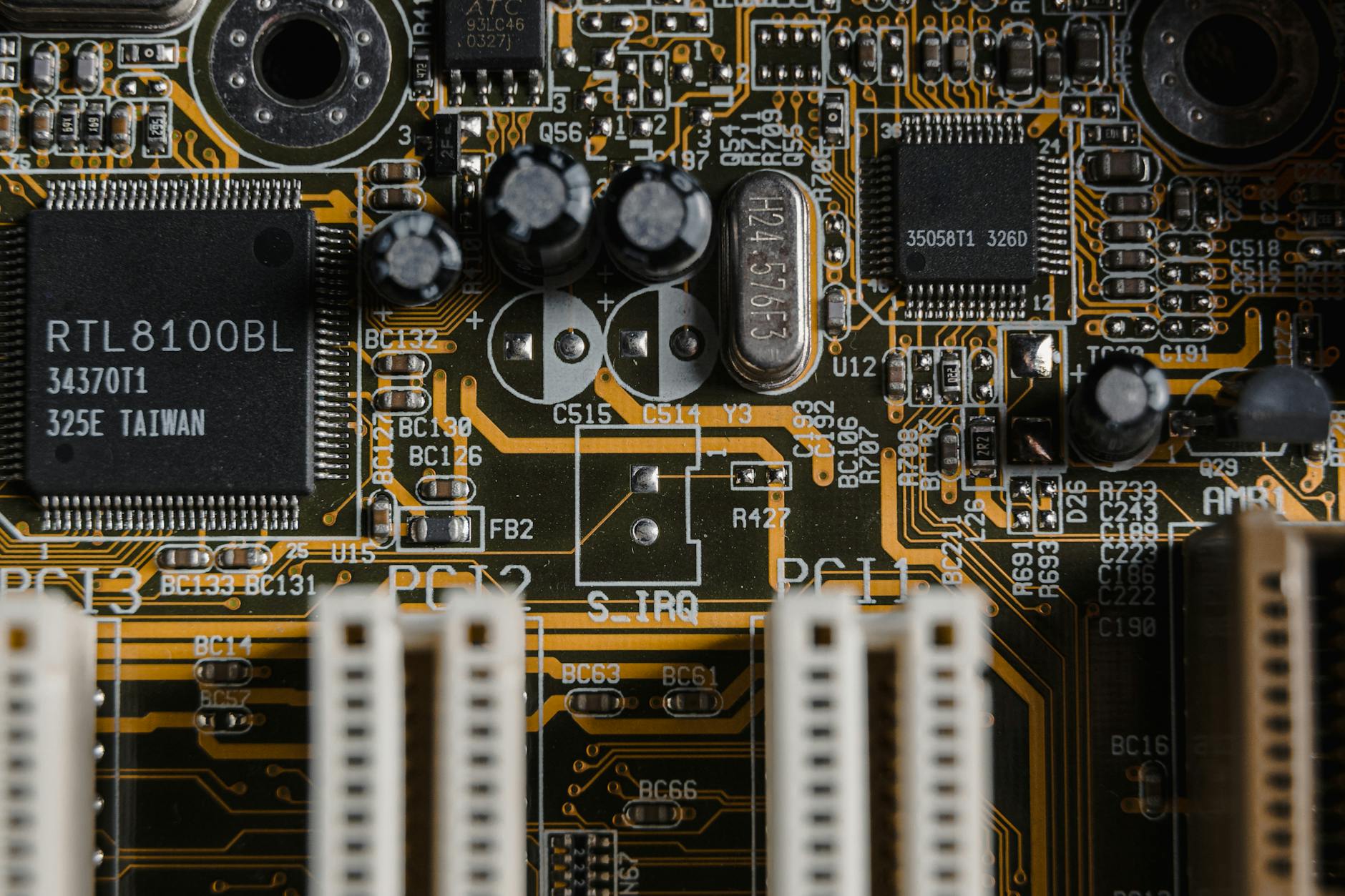
For decades, oil was the primary transmission mechanism for geopolitical risk into financial markets. A Middle East conflict meant oil prices spiked, and investors knew what to expect. That framework has fundamentally changed. Today, semiconductors, rare earths, and critical minerals are now the primary channels through which geopolitical events affect portfolios, according to CFA Institute and VanEck research. These commodity networks are extremely concentrated—Taiwan produces the majority of advanced semiconductors, China dominates rare earth processing, and a handful of countries control mining of minerals essential to battery technology and renewable energy. The concentration risk is acute. A single conflict or trade barrier affecting Taiwan or critical mineral-producing nations could disrupt not just consumer electronics, but also AI training infrastructure, defense supply chains, and the global energy transition.
This is qualitatively different from oil disruption. When oil prices spike, inflation can be managed through monetary policy, and demand destruction eventually limits the spike. But when semiconductor production is disrupted, there’s no alternative supply source—production simply stops, and the economic consequences ripple through multiple industries simultaneously. Example: Consider what happened when COVID-19 briefly disrupted semiconductor manufacturing in 2021. A relatively minor supply shock (compared to an actual geopolitical conflict) led to multi-year backlogs in auto production and extended consumer electronics shortages. Now imagine a military conflict affecting the Taiwan Strait. The disruption would be orders of magnitude larger, affecting not just smartphones and computers but the AI chips underlying the global economy’s digital infrastructure. This is why sophisticated investors are now spending considerable attention on semiconductor supply chain resilience, which was barely discussed 15 years ago.
Trade Wars, Tariffs, and the Permanent Reshuffling of Supply Chains
Beyond military conflict, the 2026 geopolitical environment is producing cascading changes in trade policy. Companies should expect continued movement in tariffs, growing export control restrictions, and trade enforcement investigations, according to Morgan Lewis analysis. These changes have long-term implications for supply chains that go well beyond traditional trade tension cycles. The mechanism is straightforward: companies are responding to trade uncertainty by shifting manufacturing away from geopolitically risky regions toward allied countries—a process called near-shoring. This reshuffles which companies profit, which countries host production, and which emerging markets suffer. A manufacturer moving production from China to Mexico or India reshapes the economic fortunes of multiple regions.
For investors, this creates both opportunities and pitfalls. Companies facilitating near-shoring or infrastructure buildout in allied nations could see structural profit growth. Conversely, traditional emerging market exporters dependent on low-cost production in geopolitically tense areas could face permanent margin compression. The tradeoff: Near-shoring solves geopolitical risk but increases costs. Factories in allied nations with higher labor costs and environmental regulations won’t match the efficiency of Southeast Asian production. This structural cost inflation could persist for years, affecting profit margins across consumer goods, electronics, and manufacturing. Investors need to distinguish between companies that can absorb this cost increase (often through brand power and pricing ability) and those that cannot.
Why Panic Selling During Geopolitical Volatility Usually Backfires
Institutional research consistently shows that investors should avoid retreating from risk assets during short-term geopolitical volatility. Most shocks result in modest drawdowns and rapid recoveries—not permanent impairment of portfolio value. Studies examining geopolitical events over decades reveal that the typical pattern involves a 10-20% decline over 2-6 weeks, followed by recovery within 60-90 days. Those who sold during the panic crystallized losses they would have recouped months later. The warning is important: this doesn’t mean ignoring geopolitical risk or maintaining a static portfolio. Rather, it means maintaining flexibility and avoiding reactive, emotional portfolio changes.
If you panic-sell equities at 20% down after conflict escalation, you’re locking in losses that historically resolve within months. If instead you maintain discipline, or even rebalance slightly by buying into weakness, you capture the recovery. The behavioral challenge is significant—watching your portfolio decline 20% in three days creates enormous psychological pressure. But historically, that pressure has been the worst possible time to act. A historical example: the 1990-1991 Gulf War produced significant market declines and genuine uncertainty about extended conflict. Investors who maintained their equity positions during the crisis and initial conflict phase saw their portfolios recover fully within 12 months. Those who sold in panic and stayed in cash for several years missed years of bull market returns.

Scenario Planning and Flexible Strategy as Institutional Best Practice
Rather than trying to predict which geopolitical event will hit next, institutional investors increasingly recommend scenario planning and flexible investment approaches. This means constructing a portfolio that can tolerate multiple geopolitical outcomes rather than optimizing for one scenario. Key institutional positioning themes emerging in 2026 include AI adoption (geopolitically agnostic and globally beneficial), infrastructure rebuilding tied to near-shoring (benefiting allied nations), and rising defense spending outside the U.S. (particularly in Europe and Asia-Pacific as allies strengthen capabilities).
These positioning themes aren’t predictions about specific conflicts—they’re structural responses to the fragmentation trend. An AI-focused portfolio benefits regardless of which specific geopolitical tension emerges next. Infrastructure beneficiaries profit from near-shoring momentum whether trade tensions worsen or stabilize. Defense spending in allied nations rises as a response to multiple geopolitical threats, not just one. This approach provides what investors call “optionality”—the ability to benefit from multiple potential outcomes rather than being caught offside by an unforeseen crisis.
Structural Long-Term Changes: The New Normal for Investors
Beyond the business cycle and market volatility sits a more fundamental shift. Positioning should account for structurally higher inflation, lower growth, and more differentiated macro and market outcomes relative to the pre-fragmentation globalization era, according to Wellington Institutional analysis. The world from 2000-2020 was characterized by declining trade barriers, integrated global supply chains, and declining inflation from emerging market competition. That era is ending.
The forward-looking reality is that global trade protectionism could change investment risk profiles permanently. Companies with resilient pricing power, diversified supply chains, and exposure to near-shoring benefits are likely to outperform those dependent on low-cost global manufacturing. The geopolitical risk management has become a core investment skill rather than a specialized niche. Understanding which sectors, companies, and countries benefit from fragmentation versus suffering from it will likely differentiate investment returns over the next decade more than traditional factors like valuation or growth rate.
Conclusion
Geopolitical events do reshape market conditions in the short term—initial price moves of 15-25% are real, and volatility persisting 30-90 days creates genuine uncertainty. However, historical evidence since 1970 demonstrates that outside of periods coinciding with actual recessions, these shocks result in temporary drawdowns followed by recovery. The critical discipline is distinguishing between short-term market noise and structural portfolio damage, and most geopolitical crises fall into the first category.
The actionable insight for 2026 is not to abandon your long-term investment strategy, but to make sure it accounts for the new realities of trade fragmentation, semiconductor supply chain concentration, and a more multipolar world. Position toward beneficiaries of near-shoring, infrastructure rebuilding, defense spending, and AI adoption. Maintain flexibility rather than optimizing for a single scenario. And when the next geopolitical crisis hits and markets decline 20% in three days, remember that historical evidence suggests staying disciplined through that volatility is far more profitable than panic selling, even though the psychological pressure to act will feel overwhelming.
You Might Also Like
- What Is the Long-Term Health Risk for Iranians Living Near Bombed Nuclear Sites
- $94,000 Average Lifetime Out-of-Pocket Cost for a Dementia Caregiver’s Own Health Decline
- Election Results Signal Changes Across Investment Portfolios This Quarter
For more, see Alzheimer’s Association — medical tests.