Yes, tax protesters face substantial penalties from the IRS, and those penalties accumulate quickly—often exceeding the original tax owed when interest and enforcement actions combine. The tax resistance movement has surged in early 2026, with the National War Tax Resistance Coordinating Committee reporting a dramatic spike in online traffic: from a typical 40,000 unique visitors annually to over 110,000 in January 2026 alone, driven largely by protest against U.S.
military spending in Gaza and Iran operations. While civil disobedience carries moral weight for some, the financial consequences are severe and virtually automatic—the IRS uses sophisticated detection systems to identify non-compliance, and enforcement is unambiguous. This article examines the specific penalties protesters face, how the IRS catches them, the methods protesters use, and why financial literacy matters even for those with strong political convictions.
Table of Contents
- What Are the Specific Penalties Tax Protesters Face?
- How Does the IRS Detect Non-Compliance Among Protesters?
- What Methods Do Tax Protesters Actually Use?
- Should You Consider Tax Protest as Political Expression?
- Why Has Tax Resistance Spiked in 2026?
- Historical Context and Current Circumstances
- What Happens Next in This Movement?
- Conclusion
What Are the Specific Penalties Tax Protesters Face?
The IRS imposes a tiered penalty structure that escalates quickly. A late filing penalty of 5% per month applies when a return is not submitted on time, while an additional 0.5% monthly penalty accrues on any unpaid tax balance. These percentages compound monthly, meaning someone who protests by not filing or refusing to pay could see penalties rapidly exceed the original amount owed. For example, if someone owes $5,000 and neither files nor pays, within six months of deadline they face $1,500 in late-filing penalties (5% × 6 months × $5,000) plus $150 in unpaid-balance penalties (0.5% × 6 months × $5,000), for a total already exceeding $6,600.
Criminal penalties carry even heavier weight. The IRS can prosecute tax evasion cases, resulting in fines up to $250,000 and imprisonment for up to five years. These criminal charges are distinct from the civil penalties above and apply when someone deliberately and willfully evades taxes. The distinction matters: the government doesn’t need to prove intent to collect civil penalties, but criminal prosecution requires demonstrating willful evasion. However, if someone openly states they are not paying as political protest, prosecutors may argue that willfulness is clearly established.

How Does the IRS Detect Non-Compliance Among Protesters?
Many tax protesters believe their resistance will go undetected or that political intent will shield them from enforcement. This misunderstanding is dangerous. The IRS operates sophisticated automated detection systems that flag non-compliance regardless of the protester’s political motivations. These systems cross-reference third-party reports—W-2 forms from employers, 1099 forms from contractors and financial institutions, mortgage interest statements, dividend reports, and other income documents. If an employer filed a W-2 showing earnings but the IRS receives no corresponding tax return, the automated system triggers an audit notice immediately.
Even if someone doesn’t file, the IRS knows income exists, and enforcement follows automatically. This means political intent is irrelevant to detection. The IRS treats tax resistance the same as any other non-compliance. If a protester genuinely refuses to participate in the tax system, they must accept that enforcement will follow without exception. The agency’s position is clear: the tax code applies universally, and the courts have consistently ruled that protesting the purposes of taxation does not provide a legal defense against paying taxes owed.
What Methods Do Tax Protesters Actually Use?
The National War Tax Resistance Coordinating Committee’s website documents three primary methods used by protesters. Some file tax returns but refuse to pay the balance owed—a visible act of protest that clearly communicates intent but ensures immediate IRS action, as the agency matches filed returns against payments received. Others deliberately underpay, submitting a lower amount than owed in an attempt to soften their conscience while technically “participating” in the system. A third group chooses not to file at all, treating non-compliance as total resistance.
Non-filing carries the steepest penalties. Because the IRS must first discover that someone should have filed, detection may take longer, but once discovered, the penalties accumulate retroactively from the original due date. Someone who doesn’t file for three years and then faces enforcement will owe penalties dating back to the first unfiled year. In contrast, those who file and underpay at least create a record that limits the penalty period and sometimes allows negotiation through payment plans. The choice between methods matters financially, even though all carry real consequences.
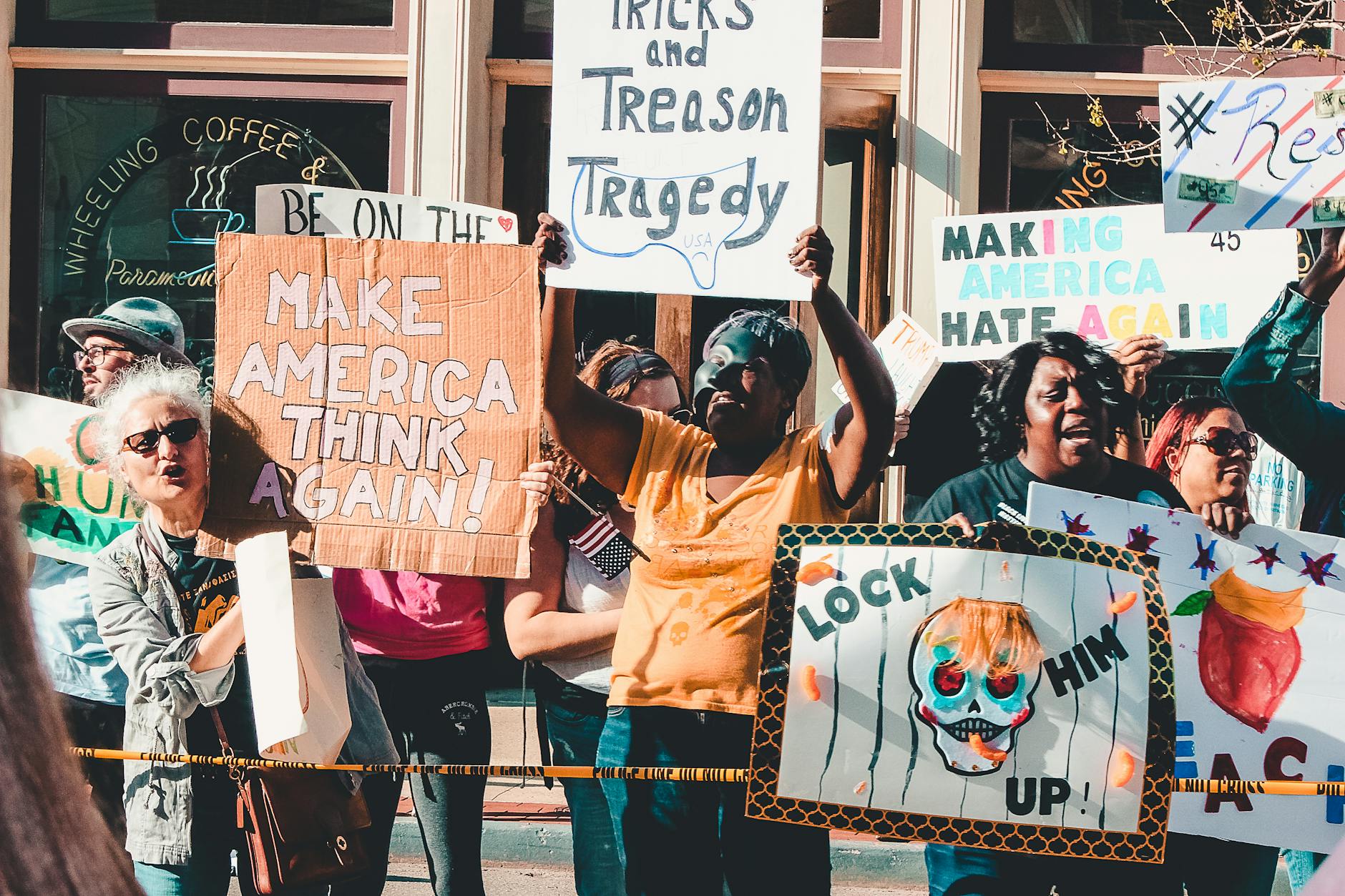
Should You Consider Tax Protest as Political Expression?
From a purely practical standpoint, tax resistance is not a viable form of political pressure for individuals acting alone. The penalty structure is designed to ensure that protesting costs money—precisely the opposite of what a protester intends when their goal is to redirect government spending. Someone refusing to pay $3,000 in taxes to protest military spending may end up owing $5,000 or more in combined penalties and interest, with none of that additional money being redirected; it simply goes to the IRS and does nothing to advance the protester’s political cause. Large-scale, organized resistance—involving thousands of people refusing to pay—would theoretically create administrative burden and political visibility.
However, the U.S. has never seen that level of coordination succeed, and individual participation exposes the protester alone to financial consequences. This represents a tradeoff between moral witness and practical impact. Someone considering tax resistance should understand they are choosing personal sacrifice with uncertain political effect rather than engaging in a tactic that will pressure government policy.
Why Has Tax Resistance Spiked in 2026?
Tax resistance historically spikes during periods of active U.S. military engagement abroad. The current surge reflects opposition to spending on military operations in Gaza and Iran, with the January 2026 traffic spike coinciding directly with intensified protests against those interventions. Notably, the movement is driven by conscience rather than self-interest; protesters are not evading taxes to save money but to make a political statement, understanding the cost and accepting it.
This distinguishes tax resistance from ordinary tax evasion, though the IRS treats both identically from an enforcement perspective. The growth in web traffic to the National War Tax Resistance Coordinating Committee suggests renewed interest, particularly among younger taxpayers or those politically engaged around foreign policy. However, growth in interest and growth in actual participation may differ significantly. A person visiting the website may not ultimately follow through with tax non-compliance given the penalties involved. The visibility of the movement may actually serve as a deterrent—people seeing the documented penalties may decide the cost is too high.

Historical Context and Current Circumstances
Tax resistance in the United States traces back decades, with organized movements emerging during the Vietnam War and recurring whenever the U.S. undertakes foreign military operations seen as unjust by some segments of the population. The National War Tax Resistance Coordinating Committee itself represents decades of activism and documentation about both the philosophy and practical mechanics of tax resistance.
That institutional memory includes countless stories of people who resisted and faced financial consequences, yet the choice to resist persists. What distinguishes 2026 from prior eras is not the existence of tax resistance but the visibility and accessibility of information about it. Internet access means someone interested in protesting can quickly find detailed guidance, statistics on enforcement, and stories from others who have resisted. This reduces barriers to learning but does not reduce the actual penalties, which remain as rigorous as ever.
What Happens Next in This Movement?
As military operations continue to generate political opposition, tax resistance will likely remain visible but limited in scale. The penalty structure creates a self-selecting group of protesters: those motivated enough by conscience to accept financial harm. History suggests this population remains small relative to the total taxpayer base, but their growth in recent months indicates the issue retains emotional salience for some.
Government policy will not change because of individual tax resistance; the movement’s value to participants is primarily symbolic rather than instrumental. Looking forward, political engagement around military spending will probably continue through more conventional channels—voting, lobbying, protest, activism—while tax resistance remains a fringe tactic for those who view it as a moral imperative. The fact that 110,000 people visited a website about it in one month does not indicate that 110,000 people will actually refuse to pay taxes; many were likely researchers, journalists, or people satisfying curiosity rather than people preparing to resist.
Conclusion
Tax protesters who refuse to pay face concrete, substantial penalties that accumulate quickly and are detected automatically through IRS systems. The late-filing penalty of 5% per month, unpaid-balance penalty of 0.5% monthly, and potential criminal charges for willful evasion create financial consequences that often exceed the original tax owed. No legal defense of political intent exists, and the IRS enforces uniformly regardless of a protester’s stated motivations.
While the movement has grown in early 2026—driven by opposition to military spending in Gaza and Iran—most people who view the movement online will not actually follow through with tax resistance when confronted with documented penalties. If you are considering tax resistance, consult a tax attorney or financial advisor to understand the specific consequences in your situation. If you’ve already engaged in tax non-compliance, contacting the IRS or a tax professional about payment arrangements and penalty abatement options may significantly reduce your financial exposure compared to waiting for enforcement. Tax protest carries real costs; the decision to pay them should be made with full awareness of the financial impact and realistic expectations about political effect.