Exercises used sits at the center of this dementia and brain health question.
Physical therapy programs use nine core exercises—planks, bridges, bird dog, pelvic tilts, dead bug, side planks, single-leg Romanian deadlifts, clamshells, and side-lying leg raises—to systematically improve core stability and strength. These exercises work by engaging multiple muscle groups simultaneously, building the deep abdominal and spinal muscles that support posture, prevent falls, and reduce pain. For older adults and those managing dementia or cognitive conditions, a stable core is foundational to maintaining independence, preventing falls, and preserving mobility throughout daily life.
Core stability isn’t just about abdominal strength—it’s about training your body to control spine movement and activate deep muscles that stabilize your entire torso. Physical therapists specifically design core programs because research confirms that core stabilization exercises decrease pain, reduce disability, restore muscular function, promote stability, and reduce the risk of subsequent injury. The key principle is starting at the highest level at which you can maintain proper form, using slow, controlled movements that challenge stability rather than simply building muscle strength. This article explores each of the nine core exercises, explains how they work, discusses their benefits for brain health and mobility, and provides guidance on how to perform them safely with proper progression.
Table of Contents
- What Makes These Nine Exercises Essential for Core Stability?
- How Progressive Core Training Builds Functional Strength
- Individual Exercises and Their Specific Roles in Core Stability
- Building a Structured Core Program: Progression and Frequency
- When and Why Core Stability Matters Most for Neurological Health
- Adapting These Exercises for Different Fitness Levels
- The Long-Term Role of Core Stability in Aging and Independence
- Conclusion
What Makes These Nine Exercises Essential for Core Stability?
The nine core exercises recommended by physical therapists aren’t arbitrary—they target different aspects of core function and stability in complementary ways. Planks and bridges are considered among the most effective because they engage multiple muscle groups at once, forcing your entire core system to work together. When you hold a plank, you’re not just using your abdominals; you’re also activating your back extensors, glutes, and shoulder stabilizers. Similarly, bridges isolate the glutes and lower back extensors while engaging the abdominal muscles, making them particularly valuable for improving hip stability and spinal support.
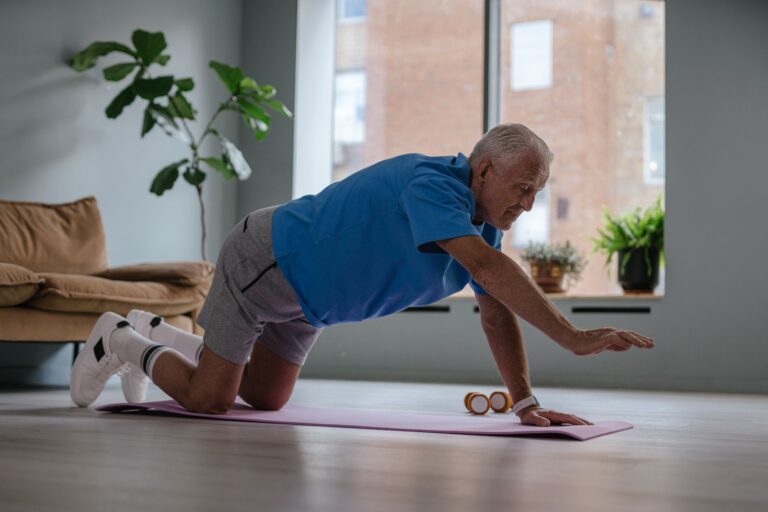
The bird dog exercise takes this a step further by adding balance and coordination challenges. Balancing on your hands and knees with your arms and thighs perpendicular to the floor forces your nervous system to engage stabilizer muscles in real time—this functional challenge is harder than holding a static position and trains your core for real-world movements. Unlike planks and bridges, which build general strength, the bird dog develops the neural control that keeps you stable during actual activities like walking, reaching, or turning. This distinction matters: strength without control can still lead to injury, which is why physical therapists use both static holds and dynamic movements.

How Progressive Core Training Builds Functional Strength
Physical therapists don’t prescribe the same core exercise for every patient because individual capacity varies widely. The principle is to begin at the highest level at which you can maintain stability while performing an exercise with proper form—this might mean a full plank for one person and a modified wall plank for another. Progression is gradual: you might start with pelvic tilts to learn how to activate your deep abdominals without strain, then move to dead bug exercises where your limbs move independently while your lower back stays flat against the floor. However, progression also requires honest self-assessment. Many people rush to harder versions before they’ve truly mastered control at their current level. Someone who cannot maintain a neutral spine in a plank hasn’t gained the stability benefit—they’ve just reinforced poor movement patterns.
Physical therapists watch for subtle signs of compensation: the hips dropping, the lower back arching, the shoulders hiking up. These indicate that the exercise is too advanced and you need to step back. This doesn’t mean you’re weak; it means you’re being intelligent about building strength safely and sustainably. The documented evidence supports this approach strongly. A systematic review in the medical literature confirms that core stability exercises are effective in patients with non-specific low back pain, suggesting benefits that extend beyond just abdominal aesthetics. Slow, controlled movements that challenge stability rather than rushing toward maximum repetitions or weights is the mechanism that drives these benefits.
Individual Exercises and Their Specific Roles in Core Stability
Beyond planks and bridges, each of the remaining seven exercises brings distinct value. Pelvic tilts seem simple—lying on your back and gently rocking your pelvis—but they teach you to consciously activate your deepest abdominal muscles without the strain of harder exercises. This makes them especially useful for people starting or restarting a core program or those recovering from injury. The clamshell, where you lie on your side with knees bent and lift your top knee while keeping your feet together, targets the hip abductors and glute medius, muscles often weakened by prolonged sitting or balance issues.
The side-lying leg raise complements the clamshell by working hip abductors and stabilizers from a different angle and with extended leverage. Side planks bring the core challenge into a lateral position, engaging the oblique muscles that are essential for rotating, bending sideways, and maintaining upright posture. Single-leg Romanian deadlifts blend standing balance with hip hinge mechanics, training your core to stabilize while your entire leg system is put through a complex movement—this exercise is particularly valuable for older adults because it mimics the demands of real-world activities like reaching down to pick something up while standing on one leg. The dead bug, performed lying on your back with arms and legs extended upward and then lowered in alternating patterns, trains your core to keep your spine stable while your limbs move—a skill essential for everything from getting out of bed to walking.

Building a Structured Core Program: Progression and Frequency
A comprehensive core program typically uses multiple exercises from these nine rather than doing the same one repeatedly. A physical therapist might start a patient with pelvic tilts and dead bugs two or three times per week, adding bird dog once the patient demonstrates control. Over weeks, the intensity increases—not necessarily by doing harder versions of the same exercise, but by combining exercises, adding holds, or introducing unstable surfaces. This variation prevents adaptation plateaus and keeps the nervous system engaged and responsive.
The timing of when you do core work matters practically. Many people try to squeeze core exercises into a five-minute stretch at the end of a longer workout, but core work requires mental focus and neuromuscular coordination—your brain and muscles need to be fresh. Doing core exercises early in a session, when you’re not fatigued, ensures you’re practicing stability correctly and getting the nervous system training you need. Some physical therapists recommend daily gentle core work (light pelvic tilts or dead bugs) combined with more intense sessions twice weekly. This contrasts with the old “all or nothing” approach where people did no core work or did core work only when recovering from pain, missing the opportunity for preventive stability training.
When and Why Core Stability Matters Most for Neurological Health
For individuals managing dementia or cognitive decline, core stability becomes even more critical. Cognitive function and balance are deeply interconnected—balance challenges activate and strengthen the same neural circuits involved in attention, executive function, and proprioceptive awareness. When someone with cognitive decline loses core stability, falls often follow, and falls cause injuries that accelerate further decline. By maintaining core stability through these nine exercises, you’re supporting not just spinal health but also the postural reflexes and balance mechanisms that keep the nervous system resilient.
One caution: core exercises can feel boring or repetitive, and motivation fades quickly without clear feedback. Older adults sometimes abandon core programs not because the exercises don’t work but because they see no immediate effect on pain or appearance. However, the benefit of core stability is primarily preventive—you notice its absence when you fall, not its presence when you’re stable. For this reason, combining core exercises with something that provides immediate gratification—improved posture, easier chair transfers, better balance during walking—helps sustain adherence. Working with a physical therapist rather than trying to self-navigate these exercises increases consistency and ensures your form stays correct enough to generate real benefits.

Adapting These Exercises for Different Fitness Levels
Someone who has never done core work doesn’t start with a full plank; they might begin with a wall plank where their hands are on a wall and their body is at a steep angle. Similarly, bridges can be modified by placing a small ball between the knees, which adds an activation cue for the glutes without increasing difficulty. The side plank, one of the harder exercises in this list, has multiple progressions: starting on your knees, progressing to a full side plank, then advancing to raising your top leg while holding the plank.
These modifications exist not as compromise versions but as legitimate progressions. A wall plank held for 30 seconds with perfect form is more valuable than a collapsed full plank held for 60 seconds. Progression happens quietly—you won’t necessarily feel dramatic strength gains month to month—but when you return to activities like climbing stairs or getting up from a low chair, you’ll notice the difference.
The Long-Term Role of Core Stability in Aging and Independence
As people age, core stability often declines faster than strength in isolated muscles because core work requires coordination, balance, and neural control—qualities that fade without deliberate practice. Someone can walk to the mailbox and back yet have a core stability deficit revealed the moment they try to stand on one leg or bend down while balance is challenged. This is why physical therapists emphasize that core exercises, once learned, should become part of a maintenance routine rather than something you do for a few weeks and abandon.
The nine exercises featured in this article represent a complete system. You don’t need to do all nine daily, but rotating through them ensures you develop balanced stability in all directions. The documented evidence shows core stability exercises work; what determines success is consistency, proper form, and progression—building the habit of moving deliberately rather than just going through repetitions.
Conclusion
The nine core exercises—planks, bridges, bird dog, pelvic tilts, dead bug, side planks, single-leg Romanian deadlifts, clamshells, and side-lying leg raises—form the foundation of any comprehensive physical therapy core program. Each exercise targets different aspects of spinal stability and abdominal control; together they build the functional strength that prevents falls, reduces pain, supports posture, and preserves the mobility and independence that matter for quality of life.
The key to success is not doing more, but doing with intention: maintaining proper form, beginning at a level you can control, and progressing gradually as your stability improves. If you’re considering starting a core strengthening program, particularly if you have concerns about balance, fall risk, or mobility, consult with a physical therapist who can assess your individual needs and create a progression tailored to your current level. Core stability is one of the most powerful investments in long-term health and independence you can make, and these nine exercises provide the evidence-based framework to achieve it.
You Might Also Like
- 9 Physical Therapy Exercises Used to Strengthen the Lumbar Spine
- 9 Physical Therapy Treatments Often Used to Reduce SI Joint Pain
- 6 Stabilization Exercises Physical Therapists Use to Improve SI Joint Stability
For more, see NIH MedlinePlus — cognitive testing.