Weak core stability is one of the most overlooked contributors to spine vulnerability and chronic back pain. If your core muscles cannot properly support and stabilize your spine, your back loses essential protection against injury, strain, and degenerative wear. The warning signs are often subtle at first—a twinge when you bend, difficulty standing for long periods, or gradually worsening posture—but they point to a real structural problem: your deep abdominal and back muscles are not doing their job. More than 80% of adults experience back pain at some point, with weak core and poor posture among the leading causes.
This article explores eight concrete signs that your core may be failing to protect your spine, why they matter, and what you can do about it. A weak core affects not just your ability to exercise or feel strong—it impacts your daily life, your confidence, and your long-term spinal health. When your core is weak, other muscles compensate by overworking, creating pain patterns that seem mysterious until you understand the underlying problem. By recognizing these eight signs early, you can take action before the problem becomes chronic.
Table of Contents
- Is Lower Back Pain Your Most Obvious Warning Sign?
- Does Poor Posture and Slouching Define Your Normal Position?
- Are You Experiencing Balance Problems or Difficulty Standing on One Leg?
- Do You Feel Exhausted Quickly During Core-Engaging Exercises?
- Is Your Abdomen Protruding Despite Maintaining Body Weight?
- Are You Struggling to Breathe Normally, or Do You Feel Chest Tightness?
- Is Sciatica Affecting Your Leg, Hip, or Buttock?
- Conclusion
Is Lower Back Pain Your Most Obvious Warning Sign?
The most direct indicator of weak core stability is persistent lower back pain, especially pain that appears even during low-impact activities. Back pain from a weak core typically develops because your abdominal and deep spinal muscles are not providing the support your spine needs to handle even normal movement. Without that support, your vertebrae, discs, and ligaments bear too much load, leading to inflammation, muscle strain, and sometimes disc irritation. Consider the difference between acute pain from an injury and chronic pain from poor core stability.
Acute pain is sharp and tied to a specific incident—you lifted something heavy, or you twisted the wrong way. Pain from a weak core builds gradually, improves slightly with rest, returns when you resume activity, and may feel like a dull ache rather than a sharp jab. Between 40–70% of adults in the US experience back pain, and weak core strength is a primary driver. The problem is that many people blame their age or assume back pain is inevitable, when the real issue is that their core muscles have weakened from inactivity or poor postural habits.

Does Poor Posture and Slouching Define Your Normal Position?
If maintaining an upright posture requires conscious effort, and you naturally default to slouching or rounding your shoulders, your core is likely too weak to hold you upright without thinking about it. A strong core should allow you to maintain proper alignment almost automatically, but when core muscles are weak, they cannot resist gravity and the forward-pulling forces of daily life. Slouching is not just an aesthetic issue—it fundamentally changes how your spine is loaded.
When you slouch, your head moves forward (sometimes an inch or more per degree of forward head posture), placing tremendous strain on your cervical and thoracic spine. Your upper back must work harder, your shoulders become tense, and your lower back flattens or hyperextends to compensate. However, if you already have upper back or neck pain, slouching might feel more comfortable in the short term because it reduces stretch on tight muscles—but it worsens the underlying problem. The real solution is not to resign yourself to poor posture but to rebuild core strength so that good posture becomes sustainable without constant willpower.
Are You Experiencing Balance Problems or Difficulty Standing on One Leg?
Balance is not purely a problem of inner-ear function or vision. Your core muscles contribute significantly to balance by stabilizing your pelvis and trunk during standing and movement. If you frequently stumble, feel unsteady on your feet, or cannot stand on one leg for more than a few seconds, this is a red flag that your core may be weak. Balance challenges can appear as clumsiness, a fear of falling, or a tendency to catch yourself mid-step.
For older adults, weak core stability increases fall risk substantially. A fall that might seem minor—tripping on a carpet or losing your footing on a step—can cause serious injury if your core is too weak to catch and stabilize yourself quickly. This is particularly important in dementia care settings, where falls are a major health concern. A person with weak core muscles has fewer tools in their nervous system to recover from a loss of balance, making falls more likely and their consequences more severe. Strengthening the core is therefore not just about feeling stronger—it is a genuine fall-prevention strategy.

Do You Feel Exhausted Quickly During Core-Engaging Exercises?
If you cannot hold a plank for more than 20–30 seconds, struggle through a set of squats, or feel excessively fatigued during lunges, your core endurance is weak. A healthy core should be able to sustain moderate effort for extended periods without burning out. Quick fatigue during these exercises suggests that your core muscles are not conditioned and cannot maintain the muscular contractions needed for stability and strength.
The fatigue you feel during planks, for example, is not the same as the fatigue you feel in your legs during running. Core fatigue feels like your trunk is about to collapse, your lower back is straining, or your abdominal muscles are giving out. One important caveat: if you experience sharp pain (rather than muscle fatigue) during core exercises, you may have an existing spine problem that requires professional assessment before you continue exercising. Muscle fatigue is a normal part of building strength, but pain is your body’s signal to stop and get help.
Is Your Abdomen Protruding Despite Maintaining Body Weight?
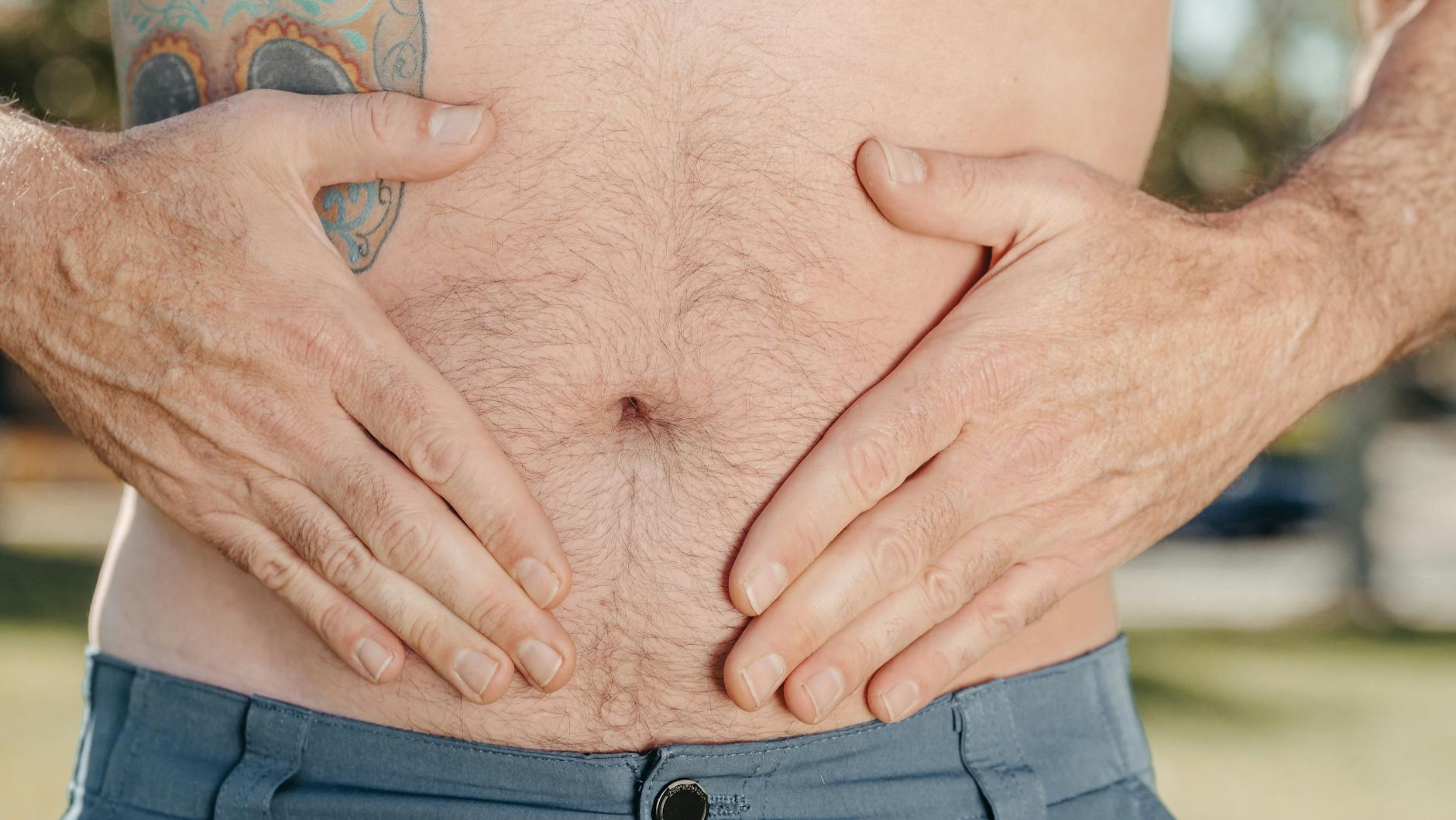
A forward-protruding abdomen, even in people who are not overweight, can signal weak core muscles. When your deep core muscles (particularly the transverse abdominis) are not functioning properly, your abdominal wall loses tension. At the same time, weak muscles often allow the pelvis to tilt anteriorly (forward), which further emphasizes the lower abdomen and flattens the natural curve of your lower back.
This combination creates what appears to be excess belly fat but is really a postural and muscular weakness problem. This pelvic tilt pattern is associated with lower back pain, because the forward tilt increases the curve in your lumbar spine beyond its healthy range. Core strengthening and proper posture can sometimes reduce this appearance without any change in diet or weight loss, simply because you are restoring the structural support that holds your abdomen in and your pelvis in neutral alignment. However, this does not mean you can overcome a genuinely weak core through posture alone—you must also build the muscle endurance to sustain that better alignment over time.
Are You Struggling to Breathe Normally, or Do You Feel Chest Tightness?
Breathing difficulties can result from weak core muscles, particularly when poor posture compresses your lungs and restricts the diaphragm. If you find yourself breathing shallowly, feeling like you cannot take a full breath, or experiencing chest tightness that has no cardiac cause, look at your posture. When you slouch, your ribcage closes, your diaphragm has less room to expand, and your breathing becomes shallow and upper-chest dominant.
Over time, this poor breathing pattern trains your nervous system to expect restricted air, and anxiety can develop around breathing itself. Core strengthening improves breathing by restoring proper ribcage and spinal alignment. Once your posture improves and your core can hold you upright, your diaphragm has room to work again, and your breathing naturally becomes deeper and more efficient. This has subtle but real effects on oxygen delivery, stress response, and even cognition—better breathing means better blood oxygen levels throughout your body and brain.
Is Sciatica Affecting Your Leg, Hip, or Buttock?
Sciatica—pain that radiates down the leg from the lower back—is often triggered by weak core stability. When your core cannot properly stabilize your pelvis, the pelvis may shift or rotate slightly, irritating the sciatic nerve or compressing the nerve root in the lower spine. The pain may feel like a sharp shooting sensation, numbness, tingling, or a dull ache that runs from the buttock down the leg. A weak core does not necessarily cause a disc herniation, but it removes the protective muscular support that keeps your spine and nerve roots safe.
This is an important distinction: if you have sciatica from a disc herniation, core strengthening alone may not resolve it, but it will help prevent worsening and recurrence. Approximately 70–85% of the global population experiences chronic low back pain at some point, and 24–80% of patients experience recurrence within one year. Much of that recurrence is because people treat the acute pain but do not address the underlying core weakness that allowed the problem to develop in the first place. Building core strength is essential for long-term protection and prevention.
Conclusion
Weak core stability is a correctable problem, not an inevitable part of aging or a life sentence of back pain. The eight signs discussed here—lower back pain, poor posture, balance issues, exercise fatigue, postural bulging, breathing difficulty, sciatica, and difficulty maintaining posture during sitting or walking—all point to the same underlying issue: your core muscles need attention. The good news is that core strength responds well to targeted exercise, and many people see improvement within weeks of consistent training.
The most effective approach combines core-strengthening exercises with professional guidance. Research from the National Board of Chiropractic Examiners’ 2025 Practice Analysis found that patients combining spinal adjustments with rehabilitation had better long-term outcomes than those using only one approach. Effective core exercises include planks, bridges, and bird dogs—movements that specifically target the deep stabilizing muscles. Whether you work with a physical therapist, chiropractor, or trainer, the goal is the same: restore your core’s ability to protect your spine and support you through daily life.