Exercises used sits at the center of this dementia and brain health question.
Most spine rehabilitation programs include nine core exercises that work together to restore strength, flexibility, and stability to the back. These exercises—hip bridges, bird dogs, planks, dead bugs, cat-cow stretches, curl-ups, side planks, lumbar rotations, and kneeling back extensions—target different muscle groups while building the deep stabilizer muscles that support the spine. For example, a person recovering from a lower back injury might begin their week with gentle cat-cow stretches to increase spinal flexibility, progress to dead bugs to strengthen core muscles, and eventually add bird dogs and planks as their strength improves. This article explains what each exercise does, why physical therapists recommend them, and how to think about incorporating them into a structured rehabilitation program.
Table of Contents
- What Are the Nine Core Exercises in Spine Rehabilitation?
- Understanding Core Stabilization and Deep Spinal Muscles
- The Role of Flexibility in Spinal Health
- How to Structure a Spine Rehabilitation Program
- Common Mistakes and When to Modify Exercises
- The Connection Between Spinal Health and Overall Mobility
- Modern Understanding of Spine Rehabilitation and Movement
- Conclusion
What Are the Nine Core Exercises in Spine Rehabilitation?
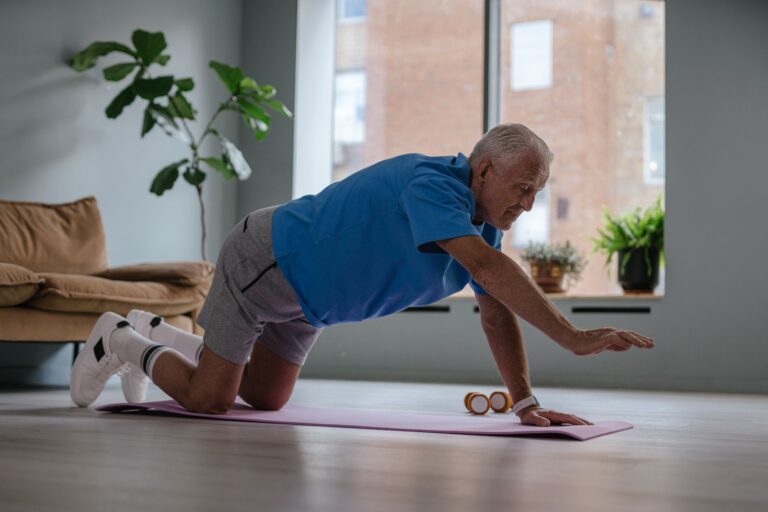
The nine exercises used in most spine rehabilitation programs address different aspects of spinal health. The hip bridge activates the lower back extensors, erector spinae, gluteal muscles, and hamstrings—essentially the posterior chain that keeps your spine supported when you stand or walk. The bird dog exercise works the same back extensors and gluteal muscles but adds a balance component that trains how your nervous system coordinates movement. The plank engages the back extensors, erector spinae, quadratus lumborum, and abdominal muscles all at once, creating what physical therapists call “global stabilization.” These three exercises form the foundation of most programs because they build foundational strength.
The dead bug exercise, despite its unflattering name, is particularly valuable because it isolates the deep core muscles that support the spine and pelvis while you move—something many people struggle with. The cat-cow stretch increases flexibility throughout the spine, hips, shoulders, and neck, addressing the reality that tight muscles in one area force other areas to overcompensate. The curl-up is a more controlled version of a sit-up that strengthens the core without the strain traditional sit-ups place on the neck and spine. Side planks engage the lateral core muscles needed for stability when turning or bending sideways, and kneeling back extensions target the quadratus lumborum and erector spinae from a different angle than regular planks or bridges. lumbar rotations, performed lying on your back with knees bent and gently dropping your knees side-to-side, restore the spine’s ability to rotate—a movement most people lose as they age or recover from injury.

Understanding Core Stabilization and Deep Spinal Muscles
A major shift in spine rehabilitation over recent years has been the emphasis on multifidus muscle activation—the deep spinal stabilizer muscles that don’t show up on the surface but are essential for proper spinal support. exercises like bird dogs and dead bugs specifically train these deep muscles, whereas traditional crunches or superficial exercises don’t. The reason this matters is that weak multifidus muscles leave your spine vulnerable even when you think you’re doing the right movements; your body will compensate by using larger, more superficial muscles that get fatigued quickly and pull the spine out of alignment. A physical therapist might spend two weeks of a rehabilitation program deliberately training only these deep stabilizers before adding heavier or more dynamic exercises.
However, if you have acute pain or very limited mobility, jumping straight into exercises that demand deep core activation can actually aggravate your condition. This is why most programs start with gentler movements like cat-cow stretches and dead bugs in neutral positions before progressing to planks or bird dogs. The progression matters as much as the exercises themselves. A typical spine conditioning program takes 4-6 weeks of consistent practice to show meaningful results, and this timeline assumes you’re combining strengthening, flexibility, and aerobic fitness rather than just doing isolated exercises a few times per week.
The Role of Flexibility in Spinal Health
Flexibility work gets overlooked because it doesn’t build obvious muscle, but tight muscles force your spine into compromised positions. The cat-cow stretch is the most accessible flexibility exercise in rehabilitation programs because it moves the spine through extension and flexion—two fundamental movement patterns—while remaining gentle enough for beginners. Many people with chronic back pain avoid these movements entirely, which actually makes the problem worse; the spine becomes stiffer, movements become more guarded, and eventually even simple activities like reaching for something on a shelf feel risky.
Hip mobility deserves special attention because tight hips don’t just affect the hips—they force the lower back to overcompensate. When your hip flexors and hamstrings are tight, your pelvis tilts in ways that strain the lower back during everyday activities. The hip bridge and lumbar rotation exercises both address hip tightness, though they do so in different ways. The bridge directly strengthens the glutes, which when strong actually help correct hip alignment, while lumbar rotations gently mobilize the joint space and remind your nervous system that rotation is a normal movement.

How to Structure a Spine Rehabilitation Program
An effective spine rehabilitation program combines strengthening, flexibility, and aerobic fitness rather than focusing on exercises alone. The structure typically progresses from gentle mobility work (cat-cow stretches, lumbar rotations) in weeks one and two, adds strengthening exercises (dead bugs, curl-ups, side planks) in weeks three and four, and introduces more dynamic exercises (bird dogs, planks, kneeling back extensions) by weeks five and six. A person beginning rehabilitation might do gentle stretches on days one, three, and five, then add strengthening work on days two and four, with rest days allowing muscles to recover.
The comparison between doing exercises three times per week versus five times per week shows that consistency matters more than frequency. Someone practicing three exercises reliably, five days per week, will see better results than someone attempting eight exercises three times weekly. Starting conservatively also prevents the common mistake of overtraining early and then avoiding exercise for weeks because of increased pain. Your physical therapist or doctor should guide the specific progression, especially if you have underlying spinal conditions, prior injuries, or are older and returning to activity after prolonged inactivity.
Common Mistakes and When to Modify Exercises
A frequent problem is performing exercises with poor form when you’re fatigued. A plank done correctly engages your core; a plank done with your hips sagging because you’re tired can actually strain your lower back. This is why physical therapists recommend starting with easier variations—doing a plank on your knees, for example, or holding it for just 20 seconds—rather than holding a full plank until you fail. Once you’re unable to maintain proper form, the exercise becomes less effective and riskier.
Another limitation to understand is that not all nine exercises are appropriate for everyone or at every stage of recovery. Someone with acute disc herniation might need to avoid lumbar rotation exercises temporarily, while someone with arthritis might find the dead bug position uncomfortable and need modifications. Age, previous injuries, current pain levels, and overall fitness all influence which exercises you should emphasize. This is why the standard recommendation is always to consult with a doctor or physical therapist to determine which exercises are appropriate for your specific rehabilitation goals rather than following a generic program.

The Connection Between Spinal Health and Overall Mobility
The exercises in a spine rehabilitation program don’t exist in isolation—they’re part of a broader effort to restore your ability to move comfortably in daily life. Someone who completes a spine conditioning program should notice improvements not just in their back pain or flexibility, but in their ability to get out of a chair without discomfort, to walk further without fatigue, and to perform household tasks without guarding movements or avoiding certain directions.
For example, a person who couldn’t safely bend forward to pick something off the floor might gradually regain that capability through the combination of strengthening and flexibility work in a structured program. The aerobic fitness component—whether walking, swimming, or cycling—matters because general cardiovascular health and muscle endurance support spinal health. A person with strong legs and cardiovascular fitness can tolerate sitting at a desk or walking for longer periods without the pain that comes from muscles fatiguing too quickly and losing their stabilizing function.
Modern Understanding of Spine Rehabilitation and Movement
Recent research emphasizes that spine rehabilitation is less about finding the perfect exercise and more about moving consistently and developing confidence in your body’s ability to handle varied movements. The nine exercises serve as a structured starting point, but the goal is to progress toward normal, varied activities—gardening, walking on different surfaces, reaching in multiple directions—that build resilience.
Movement variability, rather than perfect adherence to a specific exercise protocol, appears to be protective against future injury. This shift in understanding means that completing a 4-6 week spine conditioning program isn’t the endpoint—it’s the foundation for a more active lifestyle. People who remain active, continue some basic flexibility work, and maintain reasonable strength tend to experience fewer spinal problems over time than people who complete a program and then stop all activity.
Conclusion
The nine exercises used in most spine rehabilitation programs—hip bridges, bird dogs, planks, dead bugs, cat-cow stretches, curl-ups, side planks, lumbar rotations, and kneeling back extensions—work together to restore strength, flexibility, and confidence in your ability to move. A structured program typically lasts 4-6 weeks and combines these strengthening and flexibility exercises with aerobic activity for optimal results.
The progression from gentler movements to more challenging exercises matters as much as the exercises themselves, and individual modifications are often necessary based on your specific condition and goals. If you’re experiencing back pain, mobility limitations, or recovering from a spine-related issue, the first step is consulting with a doctor or physical therapist who can assess your individual situation and recommend which exercises are appropriate for your needs. They can also monitor your progress and adjust your program as your strength and flexibility improve, ensuring that your rehabilitation program supports your specific goals and abilities.
You Might Also Like
- 6 Exercises Often Used in Physical Therapy for Spine Stabilization
- 5 Exercises That Doctors Say May Help Protect the Spine From Injury
- 6 Causes of Chronic Lumbar Spine Pain According to Spine Specialists
For more, see Alzheimer’s Association — clinical trials.