Help a person with dementia, which impairs memory and thinking, find the bathroom by labeling the door and walking with them often. Keep the path clear and lit, and prompt toilet use every 2 to 3 hours around waking, meals and bedtime. Clear cues reduce accidents, rushing and night falls. They also protect dignity by replacing repeated questions with a steady routine.
Medical information disclaimer: This article is for general educational purposes only and does not provide medical advice, diagnosis, or treatment. Always consult a physician or other qualified health professional about symptoms, medications, tests, or treatment decisions.
Table of Contents
- Make the Bathroom Easy to Recognize
- Keep the Route Clear and Lit
- Prompt on a Daily Schedule
- Make Use Quick and Steady
- Check Health Causes When Problems Persist
Make the Bathroom Easy to Recognize
Put a large, high-contrast sign reading Toilet or Bathroom on the door, plus a simple toilet picture. The U.S. National Institute on Aging recommends this direct labeling in its home-safety guidance for Alzheimers disease. Inside, make the toilet stand out.
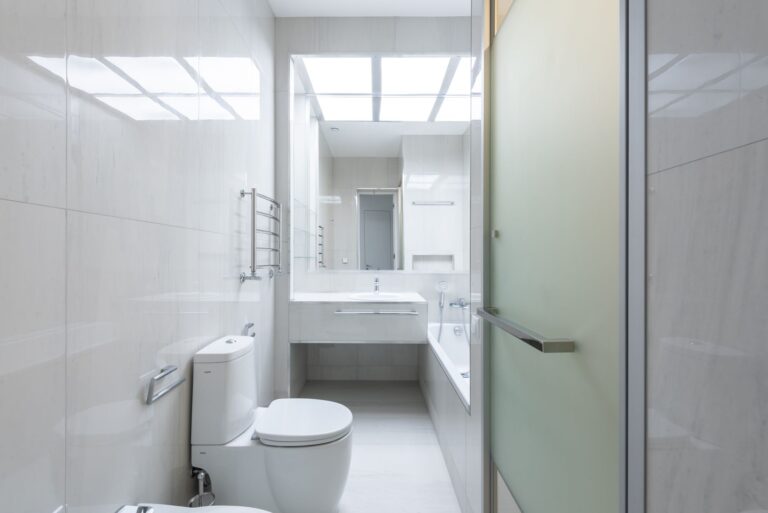
Use a bright blue or red seat on a white bowl and paint the wall behind it a different color. This contrast helps people with visual and perceptual difficulty spot the target. Remove look-alikes that cause errors. Put lids on wastebaskets and other open containers so they are not mistaken for the toilet. Keep only toilet paper and soap in easy view.
Keep the Route Clear and Lit
Clear obstacles from the hallway-to-bathroom path and keep it well lit and clutter free. Mark the route along the floor or wall so the person can follow it quickly and safely.
At night, leave the toilet door open and a light on, or use motion-sensor lights along the route. The UK National Health Service includes this step in its advice on looking after someone with dementia.
- Remove loose rugs, cords, stools and clutter from the hallway.
- Add night-lights or motion-sensor lights near the floor.
- Leave the bathroom door open with the seat lid up and light on.
Prompt on a Daily Schedule
Do not wait for the person to ask or feel the urge. Prompt and walk them to the toilet every 2 to 3 hours. The U.S. National Institute on Aging advises building this prompting into daily routines in its guidance on common medical problems in Alzheimers caregiving.
Tie prompts to natural anchors. Go right after waking, before and after meals, before outings and before bed. Use the same words, same order and same bathroom each time. Stay calm and allow extra time. Short phrases, one step at a time and hand gestures work better than long explanations.
Make Use Quick and Steady
Choose loose clothing with elastic waists that pulls down fast. Avoid buttons, belts and layered outfits that delay sitting and raise accident risk.
Add support where balance is unsteady. A raised toilet seat with grab bars steadies sitting and standing. At night, place a bedside commode or urinal nearby to shorten the trip.
Check Health Causes When Problems Persist
Signs, contrast and routines aid wayfinding but do not treat medical causes of incontinence. Continence Health Australia notes dementia can impair urge awareness, memory and mobility.
Watch for sudden change, burning, fever, straining, hard stools or new leaking after a drug change. Ask the clinic promptly about infection, constipation or medication effects.