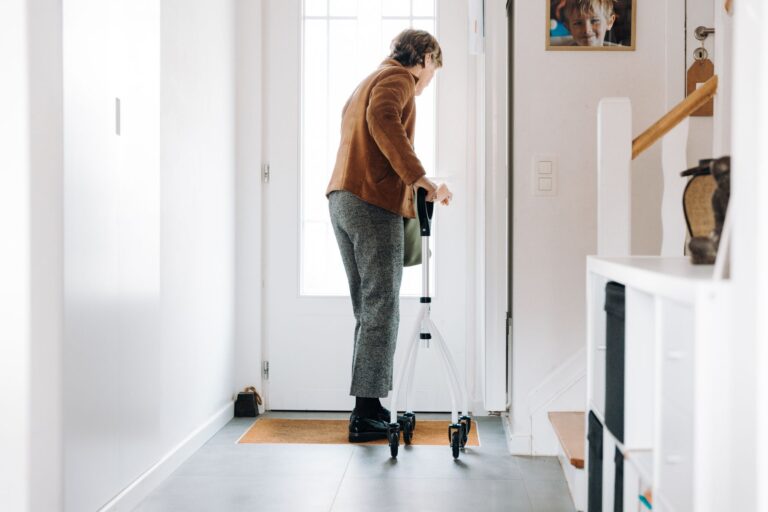
Hide exit doors by painting them the same color as the walls and covering them with removable curtains, screens, or gates so they do not read as exits. Add knob covers, out-of-sight locks, and door alarms to slow an exit and alert you quickly. Wandering in advanced dementia means walking without awareness of danger or destination. Camouflage works because the person no longer recognizes a hidden door as a way out.
Medical information disclaimer: This article is for general educational purposes only and does not provide medical advice, diagnosis, or treatment. Always consult a physician or other qualified health professional about symptoms, medications, tests, or treatment decisions.
Table of Contents
- Make the Exit Blend Into the Wall
- Make Handles and Locks Harder to Notice and Use
- Redirect Attention Before the Door
- Add an Alert Layer in Case Camouflage Fails
Make the Exit Blend Into the Wall
Paint the inside of the exit door the same color as the surrounding wall and trim. Remove visual cues like contrasting frames, exit-style handles, and glass panels when you can. The Alzheimer's Association advises this type of camouflage in Alzheimer's Association guide to camouflaging exits.
Hang a floor-length curtain, folding screen, or removable gate in front of the door for the same effect. Keep the cover easy for caregivers to move aside. Use a plain fabric that matches the wall rather than a bold pattern.
Make Handles and Locks Harder to Notice and Use
Cover the knob with cloth the same color as the door to make it harder to see. Or add a loosely fitting childproof cover, which spins instead of turning the knob. The National Institute on Aging describes these covers in National Institute on Aging wandering guidance.
Add a keyed deadbolt or sliding-bolt lock placed high or low, outside the direct line of sight. The Mayo Clinic News Network recommends this placement to reduce unnoticed exits. Keep the key nearby for fast emergency access by caregivers.
Redirect Attention Before the Door
Place a STOP, DO NOT ENTER, or CLOSED sign at eye level on the exit door. Add a small scenic poster or a camouflage poster, such as a bookshelf image, to draw the eye away from using the door. The National Institute on Aging lists signs and diversion posters as redirection tools.
Create a 2-foot black area in front of the exit with black tape or paint, as described by the Alzheimer's Association. It can look like a hole or drop and act as a visual stop cue. Test one door first and watch whether the person pauses, turns, or steps over it.
Add an Alert Layer in Case Camouflage Fails
Use a chime alarm, warning bell, or smart doorbell that sounds when the door opens. Add pressure-sensitive mats at the exit or bedside for earlier warning.
MedlinePlus lists these alerts in MedlinePlus home safety instructions. Use locked doors and knob covers only when a caregiver is present because they block emergency exit. Keep an ID bracelet on the person, tell close neighbors about wandering risk, and consider a GPS device for outdoor searches.
- Place a mat where the person must step before reaching the exit.
- Set the chime loud enough to hear from the kitchen or bedroom.
- Check batteries and sound weekly.