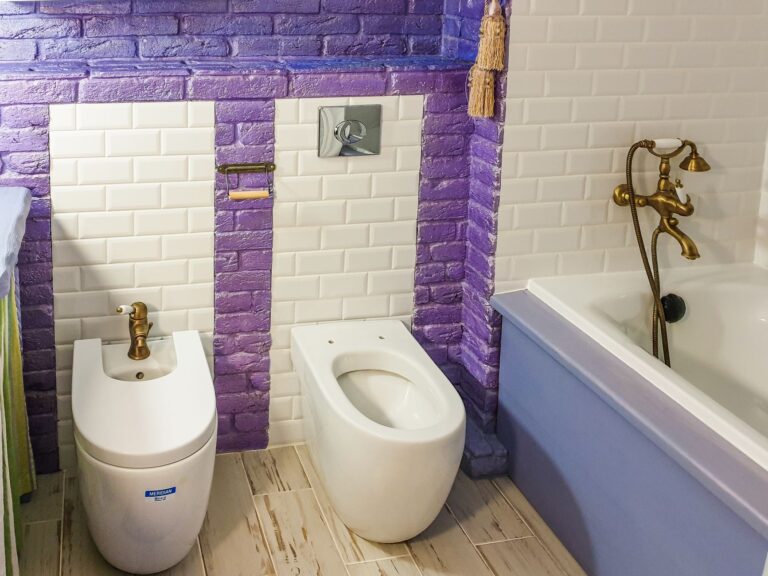
Make the toilet easy to see with strong colour contrast, a clear door sign, and bright even light. Keep the door partly open and the path clear so the person can find and reach it. Dementia describes symptoms that affect memory, thinking, and daily tasks. A white seat on a white pan can disappear, so each change gives the eye a clear target.
Medical information disclaimer: This article is for general educational purposes only and does not provide medical advice, diagnosis, or treatment. Always consult a physician or other qualified health professional about symptoms, medications, tests, or treatment decisions.
Table of Contents
- Make the seat stand out
- Label the door and key touchpoints
- Leave the route open and lit
- Settle floors, mirrors and glare
- Expect support, not a memory fix
Make the seat stand out
Fit a toilet seat in red, dark blue, or black on a white pan. Keep floors and walls white or pale so the dark seat reads as one clear target. The NHS advises this white-on-white fix in its home-environment guidance.
Keep the lid up when the toilet is not in use. Add a contrasting splashback or wall colour behind the pan so the bowl keeps its outline. Choose familiar fittings such as traditional lever taps and a handled flush, a point stressed by the Dementia Alliance International Environmental Design group. Avoid push-button or infrared controls because the handle is easier to recognize.
Label the door and key touchpoints
Put a clear sign on the bathroom door, mounted slightly lower than normal for downward gaze. Pair the single word Toilet with a simple toilet picture in high contrast and matte finish. NHS 111 Wales recommends this word-plus-picture sign in its dementia home guide.
Mark the flush handle and the arms of a raised seat with bright contrasting tape. Label the toilet, sink, and bathroom door with black text on yellow paper to aid finding and sequencing. The UCSF Memory and Aging Center suggests these high-contrast marks in its home safety tips for visual dysfunction.
Leave the route open and lit
Leave the bathroom door at least partly open so the toilet stays in sight. Keep a clear, obstacle-free route from bed or chair to the toilet.
Add automatic sensor lights for night trips so the person does not search for switches. Emoha recommends this open-door, clear-path, and lit-route setup in its dementia-friendly bathroom guide.
- Pick up clutter and secure cords out of the walkway.
- Mark the path with night lights or contrasting tape.
- Use bright, even lighting to cut shadows.
Settle floors, mirrors and glare
The NHS advises matt flooring that contrasts with walls. Remove loose rugs and mats to cut trip risks. Skip gloss and dark patches because shine can look wet and dark areas can look like holes.
Cover or curtain the mirror if the person seems frightened by it. They may mistake the reflection for a stranger in the room. Emoha advises cutting glare, shadows, and echoes from lights, water, and fans to keep the room calm.
Expect support, not a memory fix
Contrast, signs, and lighting make the room easier to read. They do not restore memory, so results differ by person and dementia stage.
Watch use over time and adjust what does not work. Get professional advice before changing rails, seat height, or layout. Ask an occupational therapist to check support, reach, and fall risks before you drill or buy.