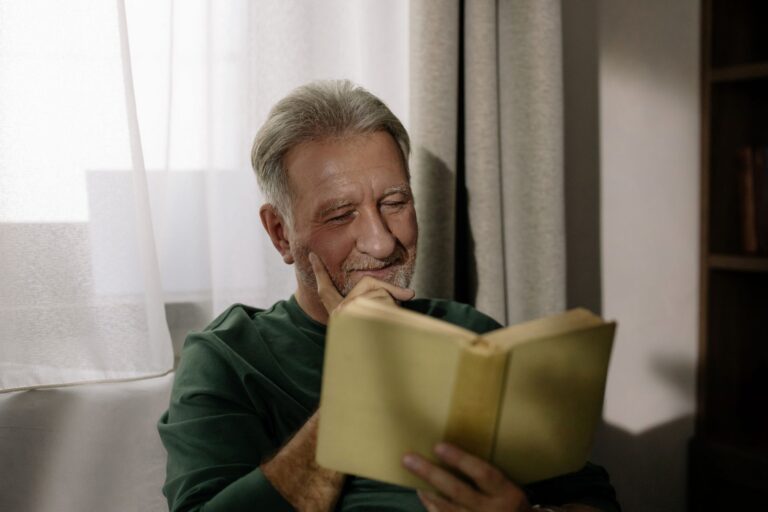
Picture books support communication with Lewy body dementia patients by giving conversation a clear visual anchor. A simple photo plus a short sentence invites looking, pointing, and calm comment instead of strained recall.
Lewy body dementia is a brain disorder that disrupts thinking, attention, and movement. Fluctuating focus and visual changes can make talk uneven across the day. Books lower pressure by letting patient and partner share one image at a time.
Medical information disclaimer: This article is for general educational purposes only and does not provide medical advice, diagnosis, or treatment. Always consult a physician or other qualified health professional about symptoms, medications, tests, or treatment decisions.
Table of Contents
- Why does talk vary so much day to day?
- How do pictures make words easier to follow?
- Which book format keeps attention calm?
- What does research show about benefits?
- How can carers use a picture book well?
Why does talk vary so much day to day?
Lewy body dementia causes shifting attention, disorganized speech, and recurrent well-formed visual hallucinations. These symptoms interrupt conversation and break a person's train of thought. Responses can look very different morning to evening.
According to the Alzheimer's Association's Lewy body dementia guide, fluctuating attention is a core feature. A person may follow a chat clearly at one hour and struggle the next. Picture books fit this pattern because they need no memorized thread.
How do pictures make words easier to follow?
Spoken sentences fade fast when attention wavers. A photo stays present and gives the listener time to process. The partner can point, pause, and repeat a short phrase.
The Lewy Body Dementia Resource Center's communication strategies guide recommends pairing short simple sentences with visual supports such as photographs, drawings, gestures, and written cues. The image carries meaning while words stay brief. That pairing reduces guesswork for both people.
Which book format keeps attention calm?
Simple design works best for fragile focus. Kirklees Council Libraries dementia support advises one uncluttered high-contrast photo per page with a short caption and plain background. The goal is calm, focused talk rather than memory testing.
Personal content adds connection. AuraSense Speech notes that personalized life-story books collect family photos, work objects, and captions in the person's own words. Familiar faces, jobs, hobbies, pets, and places can trigger autobiographical memories. A generic scenery book rarely sparks the same response.
What does research show about benefits?
Photo-prompted reminiscence has modest but real support in dementia care. A 2018 Cochrane review of 22 studies, described in the Cochrane reminiscence review, found some evidence that photo- and object-prompted reminiscence can improve communication, cognition, quality of life, and possibly mood.
A 2023 systematic review of reviews in the PLOS ONE life story review reported positive communication and relationship outcomes from Life Story Book work for people with dementia and carers. Limits matter. Cochrane reviewers and the University of York review found benefits small and varied by setting, with individualized books showing psychosocial benefit while generic materials alone showed little benefit.
How can carers use a picture book well?
Timing and manner shape success more than the number of pages. Lewy Body Dementia Resource Center and AuraSense Speech guidance points to lucid times, good lighting, and minimal noise. Open with an observation, not a test, and follow the patient's lead.
- Pick a rested, alert moment and sit side by side.
- Show one page at a time in clear light.
- Say what you see: "That dog looks proud in the snow."
- Allow pointing, silence, or topic change without correction.
- Stop while the mood stays pleasant and save pages for next time.