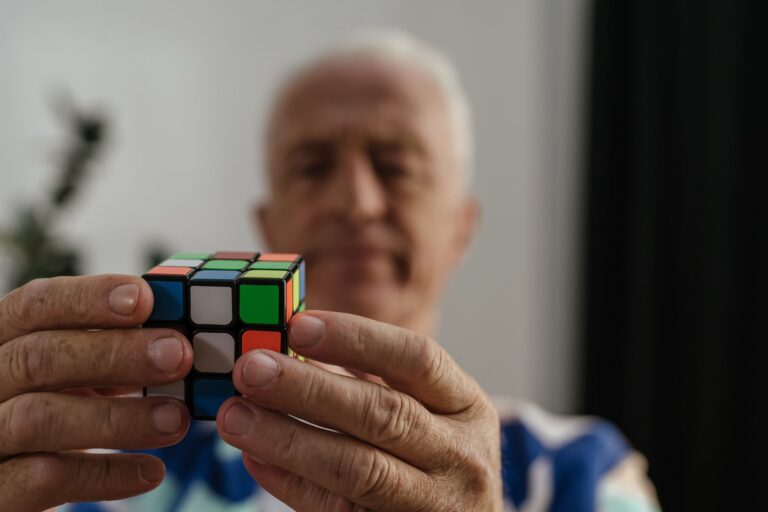
Dementia with Lewy bodies causes vivid, well-formed visual hallucinations, so game choice shifts toward short, calm, familiar play in bright light. Dim, busy, patterned, mirrored, or fast-moving games cause more confusion and distress.
These visions often show people, animals, or children and can appear early in the illness. Stanford Health Care reports that about 80% of people with this dementia develop such detailed visions, which often upset family members more than patients in its Stanford Health Care symptom guide. Pick games that reduce triggers and match alert moments.
Medical information disclaimer: This article is for general educational purposes only and does not provide medical advice, diagnosis, or treatment. Always consult a physician or other qualified health professional about symptoms, medications, tests, or treatment decisions.
Table of Contents
- What do visions add to play?
- Why do light and clutter matter?
- When is the best time to play?
- Which games fit, and which do not?
What do visions add to play?
The Alzheimer's Association diagnostic overview lists recurrent, well-formed visual hallucinations as a core feature of this dementia in its Alzheimer's Association diagnostic overview. A player may greet, follow, or talk to someone who is not there. Family members should treat the moment as real to the player.
Observers often feel more upset than the person does. Do not argue about what is seen. Pause the game, offer reassurance, and redirect with a calm voice.
Why do light and clutter matter?
Low light, nighttime, shadows, patterns, clutter, mirrors, fatigue, and quiet inactive settings often bring on visions, according to the 2026 Frontiers in Aging Neuroscience perspective in its Frontiers in Aging Neuroscience perspective. A dark living room with a patterned rug, glossy table, and mirror can turn game pieces into faces or animals. Bright, even light makes shapes easier to read.
Care guidance favors a simple space and steady routine. Clear the table, face away from mirrors, and turn on overhead lights before play. Keep sessions brief and allow rest between stimulating activities.
When is the best time to play?
Attention and alertness can shift markedly over hours or days. A person may stare, seem drowsy, move slowly, or speak in a disorganized way, then become clearer later. Play only during alert, settled periods.
Keep the invitation low-pressure. Offer one familiar game for ten to fifteen minutes. End while the mood is still good, before fatigue builds.
Which games fit, and which do not?
People with this illness often struggle more with spatial judgment, multitasking, problem-solving, and analysis than with memory. Simple rules, large pieces, plain boards, and one task at a time work best. Avoid games that need fast reactions, scorekeeping, or reading small print in dim light.
Practical care advice favors brief, calm, familiar, well-lit games during alert periods, as summarized by the Lewy Body Dementia Association in its Lewy Body Dementia Association care brief. No controlled trial proves a specific game prevents hallucinations, so watch the individual response. Stop the game and offer rest if visions, fear, or confusion rise.
- Prefer: large-piece dominoes, simple matching pairs, short card sorting, gentle bingo, familiar music listening games
- Avoid: dim escape-style games, busy patterned puzzles, mirror or reflection games, fast video games, long strategy games