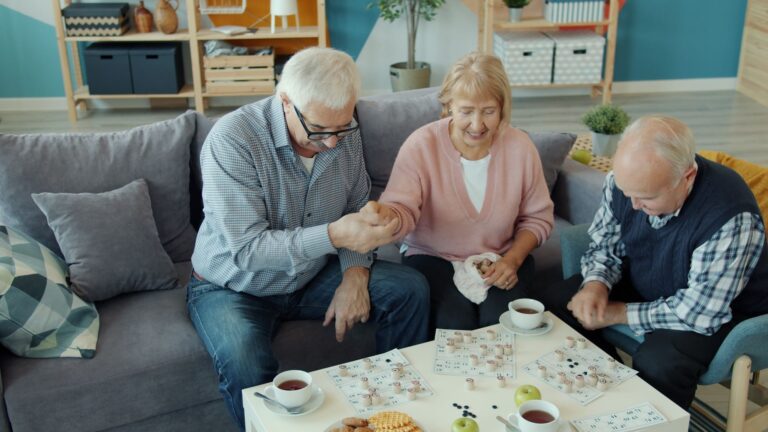
Memory care, round-the-clock housing and support for people with Alzheimer's and dementia, keeps puzzles, cards, board games, video games, and virtual reality in play. Typical tables right now hold large-piece jigsaw puzzles, card-matching games, Connect Four, and Snakes and Ladders.
Life Care Centers of America says facilities schedule organized games and events through the day for stimulation, relaxation, social contact, and purpose in its engagement guide. Staff adapt the same familiar games for different ability levels. Families can often join a table during visits.
Medical information disclaimer: This article is for general educational purposes only and does not provide medical advice, diagnosis, or treatment. Always consult a physician or other qualified health professional about symptoms, medications, tests, or treatment decisions.
Table of Contents
- What is on the table right now?
- Why do staff pick these games?
- What should families do during a visit?
- What are the limits and how to choose well?
What is on the table right now?
Expect jigsaw puzzles, word games, board games, and card games on most days. Some programs also offer video games, virtual reality, and serious games built for dementia care.
Sunrise Senior Living names large-piece jigsaw puzzles, easy card-matching, Connect Four, and Snakes and Ladders as suitable options. Tables use short rounds, clear pieces, and staff help so more residents can join.
Why do staff pick these games?
Allegro Living explains in its memory-care games guide that staff select games to support well-being, connection, recall, and presence in the moment. Games are not tests of skill or memory.
That approach favors familiar play, calm pace, and shared laughter over scores. Life Care Centers of America links daily games to stimulation, relaxation, social contact, and purpose.
What should families do during a visit?
The National Institute on Aging advises caregivers to play board, card, and computer games with a person with Alzheimer's in its caregiver activities page. It urges adapting to current abilities and putting enjoyment above performance.
The Alzheimer's Association includes jigsaw puzzles, art work, and games in its brain-health guidance for lowering cognitive-decline risk. For families, that means a short puzzle or art time counts as useful time together.
What are the limits and how to choose well?
A 2026 meta-analysis reviewed 11 small virtual-reality training trials. It found modest test-score gains with no gain in daily function, quality of life, or mood, as summarized by MentalHealthDaily in its meta-analysis summary. ElderlyDaily recommends simple, familiar, failure-free games and dropping anything that feels like a test.
Use large pieces and print, short rules, and team or assisted play. Bring glasses, hearing aids, and extra time so play stays calm. Leave a game that brings frustration and switch to music, art, or a short walk together.
- pick familiar games with short rules
- use large pieces and large print
- play as a team or with staff help
- stop any game that feels like a test