A low-energy dementia day calls for simple knitting in a steady chair with soft yarn and one tiny task. Set out only what is needed, stay close, and keep sharp tools out of reach. Simple knitting here means holding soft yarn, looping it, or feeling texture without a pattern. The goal is calm hands and company, not a finished scarf.
Medical information disclaimer: This article is for general educational purposes only and does not provide medical advice, diagnosis, or treatment. Always consult a physician or other qualified health professional about symptoms, medications, tests, or treatment decisions.
Table of Contents
- Match the task to today
- Set up a steady seat
- What to bring out — and put away
- Aim for comfort, not output
Match the task to today
The National Institute on Aging advises caregivers to match activities to what the person can do, decide if help is needed, and help them start while leaving room for independence in its adapting activities guidance. Watch for tired eyes, dropped stitches, or restlessness. Offer a smaller step before stopping altogether. Alzheimer's Society UK explains that wool crafts can adapt as dementia changes in its wool crafts activity ideas.
A skilled knitter may still manage a simple square. Someone with later-stage needs may simply enjoy holding soft wool. Start the hands yourself and pass the work over. Let the person hold, pull, or loop for as long as interest lasts.
Set up a steady seat
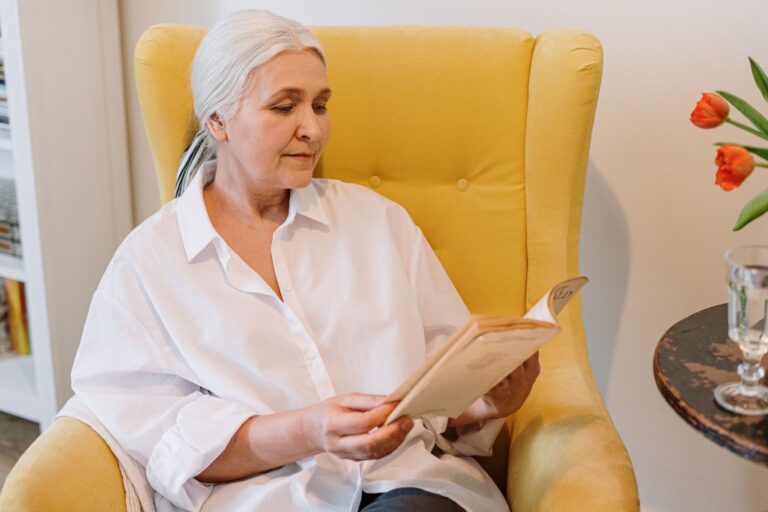
Choose a firm chair with arms, feet flat, and good side light. Clear the path to the bathroom and keep the work at lap level. Keep voices low and the table close.
CDC fall guidance recommends removing trip and clutter hazards, improving lighting, and adding lights and handrails on staircases in its fall prevention checklist. Use this quick reset before you begin: If stairs are near the craft spot, use bright stair lights and rails. Check that chair legs do not rock on mats.
- move cords, loose rugs, and baskets away from feet
- add a lamp or daylight from the side without glare
- keep yarn, water, and phone within arm reach
- stay seated together so no one hurries to fetch items
What to bring out — and put away
Bring one soft yarn ball in a pale color, short thick needles or a started square, and a small pillow for elbows. Leave extra skeins, patterns, pins, and long straight needles in the bag. Fewer choices mean less strain on tired hands.
The U.S. Consumer Product Safety Commission advises that scissors and other sharp-edged items be carried and stored in an enclosed protective case, with adult supervision for vulnerable users, in its school supplies safety release. Keep them out of reach during knitting. Limit unsupervised access to any sharp tool.
- keep out: soft yarn, started knitting, blunt tapestry needle if needed
- put away: scissors, rotary cutters, pins, loose beads
- after the session: return sharps to a closed case in a high cupboard
Aim for comfort, not output
Look for relaxed shoulders, steady breathing, and brief smiles. Allow pauses to stroke the wool or sip water. Stop the stitching and switch to holding yarn when focus fades.
Do not chase a finished piece or promise memory gains. Count success as calm minutes shared. End early, cover legs with a blanket, and leave the soft square where hands can find it tomorrow.