Before starting Leqembi for Alzheimer's, ask about confirmed amyloid, expected slowing of decline, brain swelling and bleeding risk, gene testing, MRI schedule, visit burden, and total cost. Leqembi (lecanemab-irmb), a drug that targets amyloid beta protein in the brain, is only for adults with mild cognitive impairment or mild dementia due to Alzheimer's after amyloid is confirmed. Bring test results, a full drug list, ride and schedule options, and insurance details to the visit. Clear answers on these points help you decide if the demands fit your health and daily life.
Medical information disclaimer: This article is for general educational purposes only and does not provide medical advice, diagnosis, or treatment. Always consult a physician or other qualified health professional about symptoms, medications, tests, or treatment decisions.
Table of Contents
- Are you in the eligible group?
- What change might you notice?
- What are the brain risks and safety checks?
- What do visits involve?
- What will coverage and cost require?
Are you in the eligible group?
Eligibility is narrow and test-based. The Alzheimer's Association states Leqembi is only for adults with mild impairment or mild dementia after amyloid is confirmed.
Confirmation needs a PET scan or spinal-fluid test, as explained on the Alzheimer's Association treatment page. The FDA converted Leqembi to traditional approval after Clarity AD verified benefit. It was the first amyloid beta-directed antibody to make that switch.
What change might you notice?
In Clarity AD, 1,795 early-Alzheimer's patients were randomized for 18 months. The New England Journal of Medicine trial report records 27% slowing on CDR-SB, described in the New England Journal of Medicine trial report. Scores worsened 1.21 on drug versus 1.66 on placebo over 18 months.
Both groups worsened. Treatment slows decline rather than restores memory or thinking. Ask what a small slowing would mean for daily tasks over a year.
What are the brain risks and safety checks?
FDA prescribing information warns of ARIA swelling and bleeding risks in the FDA boxed warning label. Symptoms can include headache, confusion, and signs of brain bleeding. Rare cases involve serious or fatal brain bleeds. People with two ApoE ε4 copies face markedly higher ARIA risk.
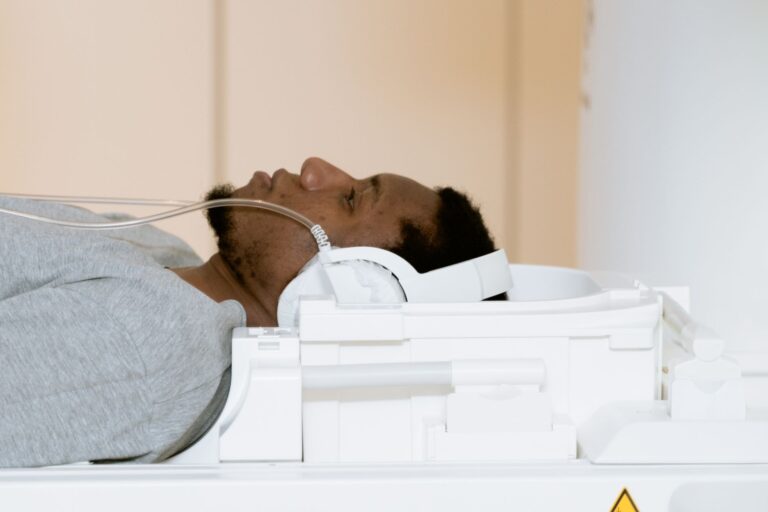
The label directs ApoE ε4 testing before starting to guide risk talk and monitoring. Treatment needs a recent baseline brain MRI plus surveillance MRIs during initiation. The label generally calls for scans before the 5th, 7th and 14th infusions. Risk clusters in the first 14 weeks, so vigilance is highest then.
- Confirm ApoE ε4 testing before the first dose.
- Schedule baseline MRI plus follow-ups before the 5th, 7th and 14th infusions.
- Ask who to call day or night for headache, confusion, or bleeding signs.
What do visits involve?
Standard initiation is 10 mg/kg intravenously over about one hour every two weeks. Eisai and Biogen state this schedule for intravenous start. FDA also approved once-weekly subcutaneous Leqembi Iqlik as an initiation dose.
Eisai and Biogen planned U.S. launch in late August 2026. Ask about ride time, time off, and how missed doses are handled.
What will coverage and cost require?
CMS covers Leqembi under Part B only with evidence development under NCD 200.3. The patient must have mild cognitive impairment or mild dementia with physician-team registry participation. MedicareFAQ puts list price near $26,500 per year.
Standard 20% Part B coinsurance after the deductible is about $5,300 yearly for the drug alone. That excludes infusions, MRIs, PET or spinal-fluid testing, and supplemental coverage effects. Ask the clinic for a written yearly estimate that adds drug coinsurance, infusions, scans, and testing.
You Might Also Like
- The Third FDA-Cleared Alzheimer’s Blood Biomarker Test in 2026: Result Interpretation Questions for Memory Clinic Patients
- The Ideal Dementia Care Map Discussed by NIA in 2026: Questions Long-Distance Caregivers Can Ask Local Care Programs
- Questions to Ask an Elder-Law Attorney About Veterans Dementia Benefits and Dementia