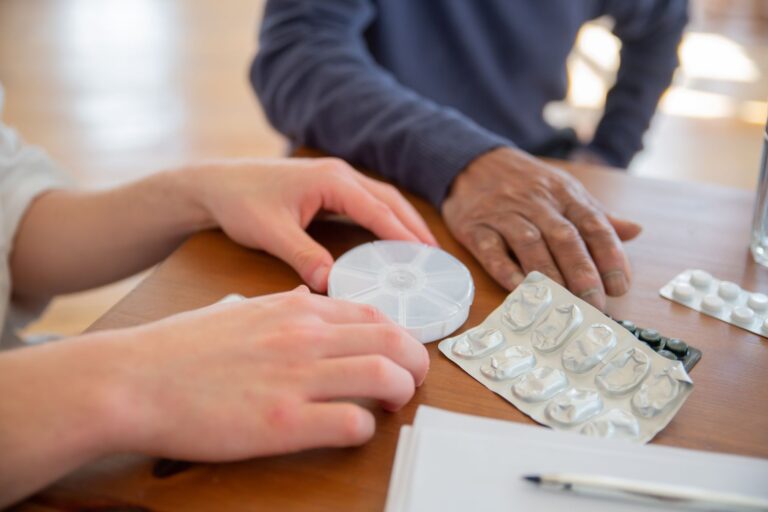
A realistic goal for Aricept is steadier attention, memory, and daily activities for a time, not a cure or a halt to decline. Aricept (donepezil) is an acetylcholinesterase inhibitor, a drug that raises a brain chemical tied to mental function, when a caregiver manages daily treatment. The Cleveland Clinic explains that donepezil supports attention, memory, and ability to engage in daily activities but does not cure dementia or Alzheimer's Cleveland Clinic's donepezil guide. The Los Angeles County Department of Mental Health notes that no Alzheimer's medication stops the disease itself, though cholinesterase inhibitors may delay worsening for a limited time Los Angeles County Alzheimer's medications fact sheet.
Medical information disclaimer: This article is for general educational purposes only and does not provide medical advice, diagnosis, or treatment. Always consult a physician or other qualified health professional about symptoms, medications, tests, or treatment decisions.
Table of Contents
- What improvement looks like day to day
- How dosing fits a caregiver routine
- Which side effects need fast attention
- How to judge whether it helps
What improvement looks like day to day
Eisai Inc.'s DailyMed label states efficacy in mild, moderate, and severe dementia of the Alzheimer's type. That does not mean sharper thinking every day. It means more steady engagement with familiar tasks and conversation. MedlinePlus states that donepezil controls symptoms for a time but will not prevent future loss of mental abilities.
The county fact sheet adds that these drugs may help control some behavioral symptoms. A useful caregiver goal is fewer lost steps during dressing, meals, or evening routine. Do not set prevention as the goal. An NIA-funded three-year trial in mild cognitive impairment found lower progression to Alzheimer's during year one but no overall benefit by year three. The study supports no general use to forestall Alzheimer's.
How dosing fits a caregiver routine
Eisai Inc.'s DailyMed label lists 5 to 10 mg once daily for mild-to-moderate disease and 10 to 23 mg once daily for moderate-to-severe disease, at the same time each evening with or without food the DailyMed FDA label for Aricept. A caregiver can anchor the dose to brushing teeth or bedtime. Keep the same time daily.
Track each dose, missed doses, and reason for delay. Bring that record to visits. Do not change the dose on your own.
Which side effects need fast attention
The DailyMed FDA labeling lists nausea, diarrhea, insomnia, vomiting, muscle cramps, fatigue, and anorexia as common reactions, with 23 mg daily also linked to weight loss the DailyMed FDA labeling for donepezil. Close observation is needed at start and after dose increases.
Food timing, fluid intake, weight, and sleep help show tolerance. Watch closely for warning signs named in the same labeling: Call the prescriber promptly when any appear. Note date, time, dose taken, and symptom.
- vomiting, black stools, or vomit that looks like coffee grounds
- unusually slow pulse, fainting, or breathing trouble
- trouble urinating, seizure, or asthma worsening
How to judge whether it helps
Pick two or three daily markers before starting. Attention during a short task, recall of a recent event, and calm participation in care work well. Record brief notes each evening.
Compare two-week blocks rather than single good or bad days. Expect steadiness or slower decline, not return to prior ability. Limited-time benefit is the stated pattern. Share the log at each visit and ask whether the current dose still fits daily function and side effects.