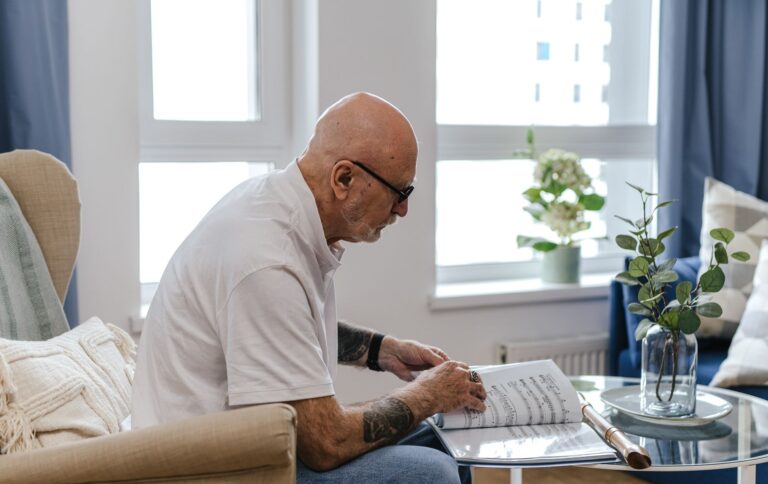
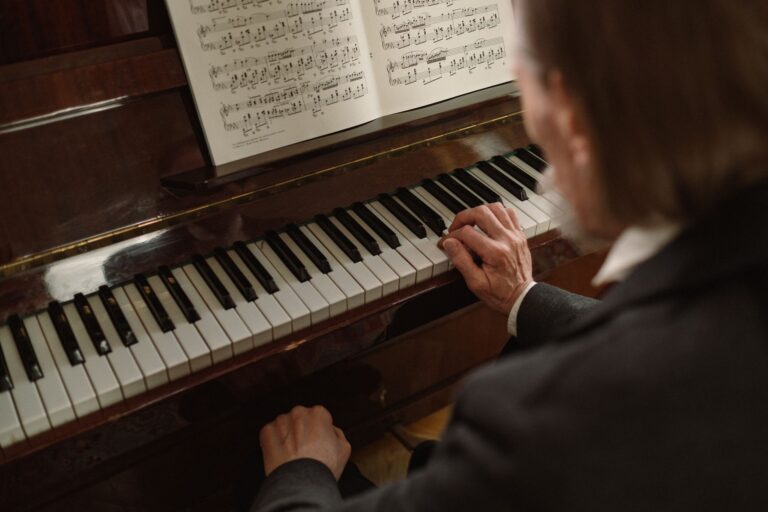
Regular music listening and playing do not have proven power to prevent Alzheimer's disease. Large observational studies link them with lower dementia risk, and seated options make participation possible with limited mobility. Alzheimer's disease is a brain disorder that slowly damages memory and thinking. The research question is whether music practice lowers that risk or only supports mood and daily function.
Medical information disclaimer: This article is for general educational purposes only and does not provide medical advice, diagnosis, or treatment. Always consult a physician or other qualified health professional about symptoms, medications, tests, or treatment decisions.
Table of Contents
- What large studies linked to music
- Why this is not proof of prevention
- What works with limited mobility
- How to build a steady routine
What large studies linked to music
Monash University followed 10,893 Australians age 70 and older who started free of dementia. Those who always listened to music had 39% lower dementia risk and 17% lower risk of impairment without dementia than never, rare, and sometimes listeners, according to the Monash University publication page. In the same cohort, often or always playing an instrument was tied to 35% lower dementia risk.
Combined listening plus playing was tied to 33% lower dementia and 22% lower impairment risk after age, sex, and education adjustment. Researchers in the German DELCODE study tied lifetime musical activity to better global cognition, working memory, executive function, language, and visuospatial skill. The same Frontiers in Psychology report found no link to learning and memory scores.
Why this is not proof of prevention
The National Institute on Aging states that nothing has definitive evidence for preventing Alzheimer's disease. It calls evidence for blood-pressure control, physical activity, and cognitive training encouraging but inconclusive, as described in National Institute on Aging guidance. That distinction matters for music claims.
An association means music users developed dementia less often in one study period. It does not show that music caused the difference. A 2025 Cochrane review of 30 trials with 1,720 mostly care-home residents found music-based therapy probably eases depressive symptoms. The same review found it unlikely to improve cognition, agitation, or aggression, with uncertain effects beyond four weeks, according to the Cochrane findings summary.
What works with limited mobility
Limited mobility does not require passive listening only. Keystone Bluffs Assisted Living describes seated sing-alongs, hand drums, shaker eggs, and guided listening for people with limited mobility or dementia.
These forms need no standing, walking, or steady hands. They still allow rhythm, voice, choice, and group contact. Practical low-effort options include: More detail appears in the Keystone Bluffs activity guide.
- join a seated group sing-along once or twice weekly
- tap a hand drum or shake shaker eggs during familiar songs
- use guided listening in a supported chair with simple prompts
How to build a steady routine
Pair one listening habit with one active habit. Listen daily at a set time, then add one short seated playing or singing session each week. Keep sessions brief, regular, and enjoyable rather than demanding.
Choose familiar songs, comfortable volume, and a stable seated position. Track mood, sleep, and participation rather than memory scores. Ask the care team to match volume, timing, and group size to hearing, energy, and daily routine.