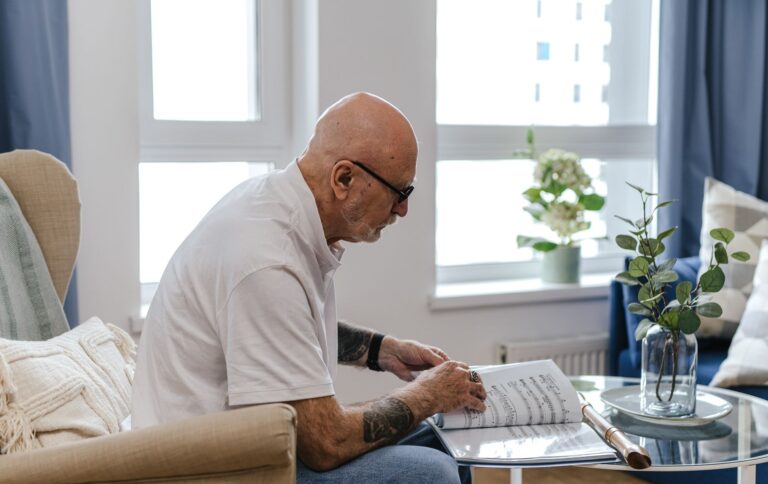
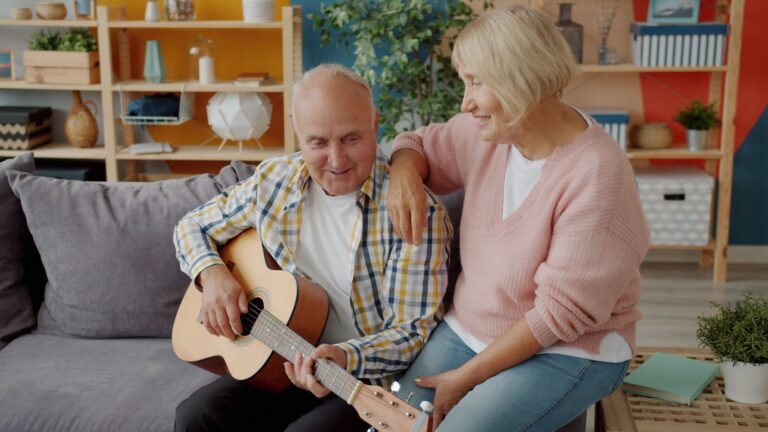
A realistic low-mobility dementia prevention routine pairs daily seated listening with short singing or instrument practice, chair exercise, social contact, and hearing and vision care. A multidomain routine means combining physical activity, mental challenge, healthy eating, and blood-pressure and weight monitoring in one weekly pattern. Adults who always listened to music had markedly lower risk than less-engaged peers in a large older-adult cohort, according to Harvard Health's report on the Monash study. The goal is steady participation, not long or strenuous sessions.
Medical information disclaimer: This article is for general educational purposes only and does not provide medical advice, diagnosis, or treatment. Always consult a physician or other qualified health professional about symptoms, medications, tests, or treatment decisions.
Table of Contents
- What does music add to brain health?
- What does a proven routine look like?
- How do you adapt it for limited mobility?
- What else protects the benefit?
- What are the limits of the evidence?
- Frequently Asked Questions
What does music add to brain health?
Always listening to music, versus never, rarely, or sometimes, was associated with 39% lower dementia risk and 17% lower cognitive-impairment risk over about seven years. The finding comes from 10,893 cognitively healthy adults age 70 and older.
Adults who both listened to and played music had 33% lower dementia risk and 22% lower cognitive-impairment risk than less-engaged peers. Listening can be daily background music, while playing can mean singing, clapping rhythms, keyboard, recorder, ukulele, or another accessible instrument.
What does a proven routine look like?
Two multidomain lifestyle programs improved global thinking over two years in 2,111 adults ages 60 to 79 at elevated risk, according to the Alzheimer's Association summary of U.S. POINTER results.
The more structured and accountable program improved thinking more. That structured recipe used aerobic activity four times weekly, strength and flexibility twice weekly, computer brain training three times weekly, MIND-diet eating, and blood-pressure and weight monitoring. Music fits best as the enjoyable mental and social layer around those habits.
How do you adapt it for limited mobility?
Use a stable, armless chair with feet flat and knees at right angles. NHS guidance for limited mobility includes sit-to-stands, ankle movements, arm raises, and twice-weekly strength-and-balance sessions, described in North Tees and Hartlepool NHS balance guidance. A workable weekly pattern is:.
- Listen while seated each day, then add five to ten minutes of singing, humming, rhythm tapping, or simple instrument practice.
- Add short chair movements before or after music, plus two weekly strength-and-balance sessions as tolerated.
- Share one music session weekly by phone, video, group sing, class, or family listening.
- Keep scheduled brain training, MIND-style meals, and blood-pressure and weight checks in place.
What else protects the benefit?
About 45% of dementia cases worldwide are associated with 14 modifiable factors, according to BrightFocus Foundation's summary of the Lancet Commission. The listed factors include physical inactivity, hearing loss, depression, social isolation, hypertension, diabetes, and vision loss.
That makes hearing and vision care part of the routine, not an extra. Get hearing checked, use prescribed hearing aids, update glasses, treat low mood, control blood pressure and blood sugar, and protect regular social contact.
What are the limits of the evidence?
The music results are observational associations from self-reported listening and playing in healthy volunteers. U.S.
POINTER showed two-year cognitive improvement, with a longer extension still needed to judge longer-term dementia risk. Treat music as one consistent piece of a broader prevention pattern. If dizziness, chest pain, falls, sudden hearing change, depression, or memory decline occur, seek prompt medical advice.
Frequently Asked Questions
Do I need to play an instrument to benefit?
No. Listening alone was linked to lower risk, while both listening and playing together were linked to lower risk than less engagement.
What if standing exercise is unsafe?
Stay seated for music and movement, use a stable armless chair, and focus on sit-to-stands, ankle movements, arm raises, social contact, brain training, diet, and vascular monitoring.