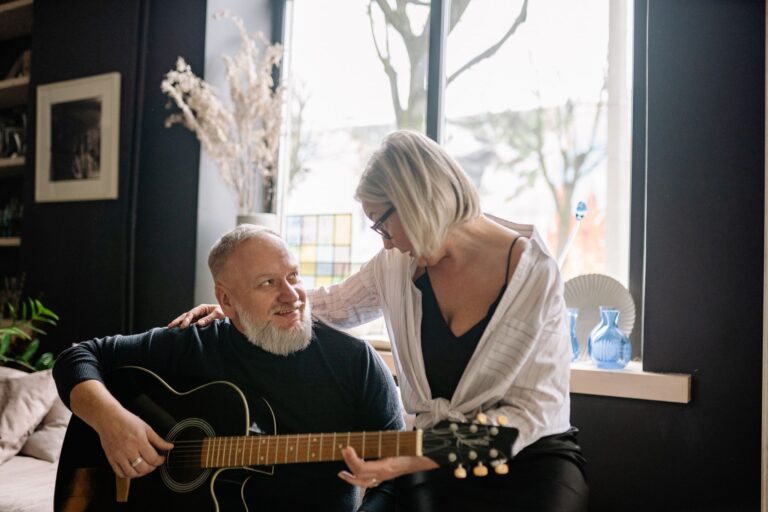
Building music practice into a midlife dementia prevention routine means adding short, regular listening and playing to proven health habits. A realistic pattern is daily listening you enjoy plus two or three brief practice sessions each week, often with other people.
A dementia prevention routine means daily habits that lower long-term risk, not a cure or guarantee. In midlife, that mix matters because blood vessel, hearing, activity, thinking, and social factors all shape later brain health. Music fits as enjoyable thinking and social time, not as a solo fix.
Medical information disclaimer: This article is for general educational purposes only and does not provide medical advice, diagnosis, or treatment. Always consult a physician or other qualified health professional about symptoms, medications, tests, or treatment decisions.
Table of Contents
- What music habits link to lower risk?
- What cannot music promise?
- How does music fit stronger protections?
- What does a doable midlife week look like?
What music habits link to lower risk?
Monash University followed 10,893 healthy Australians age 70 and older living in the community. Always listening was linked with 39% lower dementia risk. That same habit was linked with 17% lower risk of milder impairment, Monash University reports in its publication record. Monash University found often or always playing an instrument was linked with 35% lower dementia risk only.
It showed no clear link to milder impairment in that older group. A practical takeaway is simple: listening supports daily consistency, while playing adds active learning. In the same Monash cohort, doing both was linked with 33% lower dementia risk and 22% lower impairment risk. Always listening was also linked with better overall thinking and memory over time. For readers, the pair covers more ground than either habit alone.
What cannot music promise?
These are observational links in initially healthy older adults. The analysis adjusted only for age, sex, and education, Monash University notes in its study methods. That leaves room for reverse causation or healthier lifestyles to explain part of the link. There is no proven musical dose for prevention.
The NIH toolkit from NCCIH and NIA aims to standardize research, not prescribe listening time. Treat music as promising support, not proof. The volunteers were 70 and older, so midlife readers should not expect the same numbers. Use music to build thinking, mood, and social habits now that you can sustain later.
How does music fit stronger protections?
WHO's risk-reduction guideline strongly recommends physical activity for adults with normal thinking, as summarized by Guideline Central in its guideline summary. It also conditionally encourages thinking activities and social activity, plus care for midlife high blood pressure, diabetes, cholesterol, and hearing loss. Alzheimer's Society UK advises regular movement as one of the best ways to lower risk.
It also points to protecting hearing and vision and exercising with others to stay consistent. That supports social or group music, as explained in its risk reduction guide. UCL psychiatry professor Gill Livingston led the 2024 Lancet Commission on dementia. It linked 14 modifiable lifespan factors to about 45% of cases worldwide, UCL News reports in its dementia research update.
What does a doable midlife week look like?
Keep the bar low enough to repeat. Tie music to meals, commutes, walks, or a class you already attend. These times aid habit, not a proven dose.
Pick one instrument, keep it visible, and track sessions on a calendar. If you miss a day, resume the next slot without doubling time. Start with hearing: book a hearing check this month and keep listening volume safe while you build the habit.
- Listen daily to music you like, during a walk or chores
- Practice one instrument for 15 to 20 minutes, two or three times weekly
- Make one session social, with a group, class, friend, or family singalong
- Protect hearing with safe volume and ear care during loud play