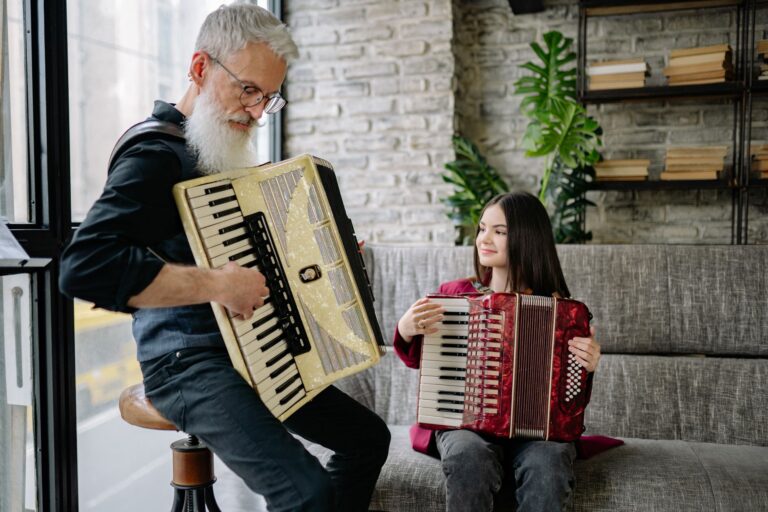
Start with short, regular taught or group lessons, often on piano or keyboard, and build time slowly with rests, good posture, and controlled volume. Continued playing is linked to better memory skills than taking one brief course and then stopping.
Working memory means holding and using information for a short time. Executive function means focusing, planning, and switching between tasks. For readers in midlife, a steady routine offers both mental engagement and a safer path for ears, hands, and balance.
Medical information disclaimer: This article is for general educational purposes only and does not provide medical advice, diagnosis, or treatment. Always consult a physician or other qualified health professional about symptoms, medications, tests, or treatment decisions.
Table of Contents
- What steady playing is linked to
- Which setup helps you keep going
- How to keep sound safe
- How to avoid strain and overuse
- When to pause and get checked
What steady playing is linked to
Kyoto University researchers followed 53 healthy older adults, mean age 73, for four years after four months of new instrument training. Those who kept playing preserved verbal working memory and right putamen volume, while those who stopped declined, according to Kyoto University research news. University of Exeter PROTECT researchers studied more than 1,000 adults over age 40, mean age 68.
Current playing, especially piano or keyboard, was linked to better working memory and executive function than never playing or stopping, reported in University of Exeter news. University of Sheffield and Western Sydney researchers also found older beginner pianists improved learning and memory, with improvisation giving broader benefits than replication alone. The Exeter data are observational, and the Kyoto continuation group was small and healthy. The findings show association and maintenance with continued practice, not assured dementia prevention for every midlife beginner.
Which setup helps you keep going
Choose an instrument you can practice often without strain, such as piano or keyboard. Taught or group lessons add structure, feedback, and social contact. That structure supports social and mental engagement during learning.
Begin with short regular sessions and raise playing time step by step, not with sudden long practices. Ask the teacher for improvisation tasks once basic skills feel stable. Improvisation here means creating short musical ideas, not only copying set pieces.
How to keep sound safe
The NIDCD states long or repeated exposure at or above 85 dBA can cause hearing loss, with louder sounds causing harm faster. dBA is a loudness unit weighted for human hearing.
The agency advises lower volume, more distance from speakers, and earplugs or earmuffs, described in NIDCD hearing guidance. CDC NIOSH sets 85 dBA averaged over eight hours as the recommended exposure limit, with safe time halving every three decibels. The agency warns musicians and venue staff face music-induced hearing loss and tinnitus above the guide of 82 to 85 dB(A) over eight hours.
How to avoid strain and overuse
Baylor University School of Music advises limiting continuous playing to 45 minutes and resting about 10 minutes each hour. It also advises checking posture and alignment during practice, detailed in Baylor University musician health guidance.
Use less force than feels necessary, especially on keys or strings. Keep wrists, fingers, and shoulders near the middle of their range, not bent hard at the ends. These habits lower risk of tendonitis, which is tendon irritation from overuse, and other strain injuries.
When to pause and get checked
Stop a session and rest if sound seems muffled, ears ring, or hands ache. Do not push through dizziness, sharp pain, or numbness.
Book a medical review promptly for any of these signs, and bring notes on instrument, session length, and volume setting. Small steady sessions with teaching support protect progress while the cause gets checked.
- Hearing loss after loud practice
- Hand pain during or after playing
- Dizziness during or after playing