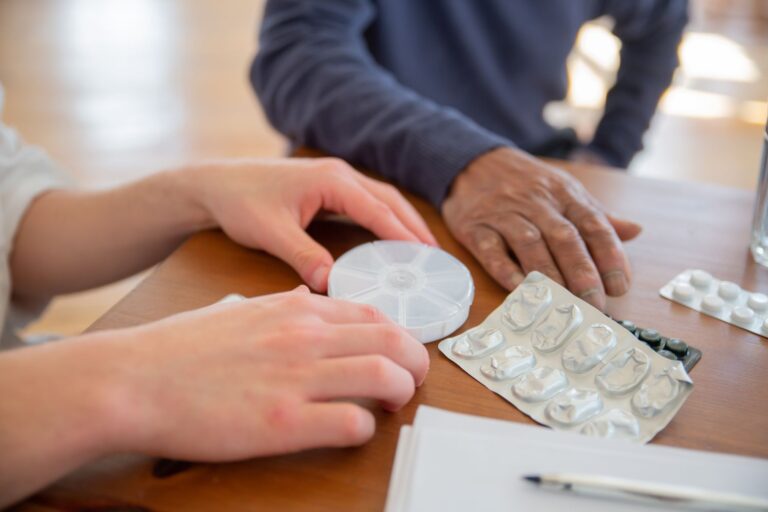
A clinical review of donepezil when a caregiver manages treatment checks whether memory, function, and behavior gains still justify daily use. The next steps set dose routine, side-effect checks, and when to call the doctor. According to the U.S.
National Library of Medicine DailyMed, donepezil is an acetylcholinesterase inhibitor indicated for dementia of the Alzheimer's type the DailyMed drug information. It raises brain acetylcholine to support mental function, not cure Alzheimer's. A caregiver-managed review tracks daily intake, response, and tolerance between visits.
Medical information disclaimer: This article is for general educational purposes only and does not provide medical advice, diagnosis, or treatment. Always consult a physician or other qualified health professional about symptoms, medications, tests, or treatment decisions.
Table of Contents
- What benefit should the review test?
- How do caregivers handle the daily dose?
- Which side effects need a call?
- What questions bring a clear next step?
What benefit should the review test?
Donepezil treats cognitive symptoms across mild, moderate, and severe Alzheimer's disease. The Alzheimer's Association describes rivastigmine and galantamine for mild-to-moderate disease, which makes stage fit part of the review. The caregiver can compare current memory, daily tasks, and behavior with the period before treatment.
The review should ask whether effects on memory, function, and behavior remain worthwhile rather than assuming benefit. Small changes matter here, such as following a recipe, handling evening routine, or fewer distressed reactions. If no clear help remains, the doctor can advise on continuing, adjusting, or stopping.
How do caregivers handle the daily dose?
DailyMed lists a usual start of 5 mg once daily in the evening before retiring. Mild-to-moderate disease uses 5 to 10 mg daily, while moderate-to-severe disease may use 10 to 23 mg daily after titration and tolerance checks. The doctor sets the target and pace.
MedlinePlus directs a caregiver to give one dose at the same time each evening, with or without food. The 23-mg tablet must be swallowed whole. The orally disintegrating tablet goes on the tongue to dissolve, then is followed with water.
- Give one dose at the same evening time; do not double after a miss.
- After 7 or more days without donepezil, call the doctor before restarting, as MedlinePlus advises the MedlinePlus dosing directions.
- Keep a short log of doses, sleep, appetite, and falls for the next visit.
Which side effects need a call?
DailyMed lists common reactions including nausea, diarrhea, vomiting, insomnia, muscle cramps, fatigue, decreased appetite or anorexia, and weight loss. Risk rises at initiation, after dose increases, and with 23 mg daily. A caregiver can watch meals, weight, sleep, and daytime energy for two weeks after any change.
Some effects need prompt care. According to DailyMed in the prescribing information, donepezil can exaggerate succinylcholine muscle relaxation during anesthesia, cause vagotonic bradycardia or heart block, and provoke vomiting or occult GI bleeding the DailyMed prescribing information PDF. Disclose donepezil before surgery.
- Fainting, very slow pulse, black stools, or vomited blood need same-day medical advice.
- Repeated vomiting, dehydration, sharp weight loss, or new confusion need a dose review.
- Bring all stomach, heart, bladder, and sleep medicines to the medication check.
What questions bring a clear next step?
A pharmacist-led outpatient consultation improved understanding of dementia and donepezil pharmacology and improved adherence and persistence, reported in Patient Preference and Adherence via PubMed Central the PubMed Central study summary. That support points to asking the pharmacist about administration, adverse effects, interactions, and missed-dose handling. Use one pharmacy so the interaction screen stays complete.
Ask whether evening dosing still fits sleep and caregiving cover. Ask what change would trigger a dose pause, a visit, or an emergency call. Ask when benefit, function, and goals get rechecked, and who receives the update. Bring the pill bottles and a one-week note on doses, appetite, sleep, pulse, and behavior to that visit.