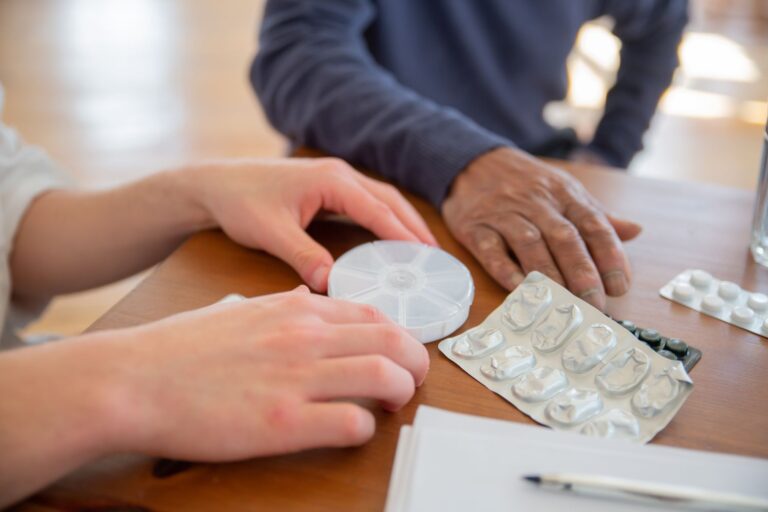
When a caregiver manages donepezil treatment, track fainting, slow pulse, bleeding signs, appetite and weight change, and missed or extra doses. Donepezil is a once-daily prescription medicine taken in the evening, so the caregiver sets the routine and watches the response. Caregivers often spot problems the patient misses. A steady schedule, a short daily check, and quick calls to the doctor keep small issues from turning serious.
Medical information disclaimer: This article is for general educational purposes only and does not provide medical advice, diagnosis, or treatment. Always consult a physician or other qualified health professional about symptoms, medications, tests, or treatment decisions.
Table of Contents
- Give it at the same time every evening
- Which early reactions should you watch?
- When do heart and stomach signs need a fast call?
- What if a dose is missed?
- How do you prevent overdose and surgery problems?
Give it at the same time every evening
Give donepezil once daily in the evening before bedtime, with or without food. Keep the same time each day to make missed doses easier to notice.
The 23-mg tablet must be swallowed whole without splitting, crushing, or chewing. The U.S. National Library of Medicine DailyMed publishes these steps in evening dosing directions in the FDA label.
Which early reactions should you watch?
Caregivers may notice nausea, diarrhea, insomnia, vomiting, muscle cramps, fatigue, and decreased appetite. These reactions often ease after the patient takes donepezil for a while.
Track appetite, weight, and strength more closely with the 23-mg once-daily dose because it is specifically linked to weight loss. Note frailty and fall risk too, since less eating and lighter weight can reduce steadiness.
- Log meals, nausea, bowel changes, sleep, cramps, and tiredness for the first weeks
- Weigh weekly with the same scale, clothes, and time of day
- Call the doctor about ongoing weight loss, repeated vomiting, very poor appetite, or more falls
When do heart and stomach signs need a fast call?
Donepezil can slow the heart nodes and cause bradycardia or heart block. Call the doctor immediately if the patient faints, especially with existing heart disease.
Donepezil also increases stomach acid and raises ulcer and bleeding risk. The U.S. National Library of Medicine DailyMed describes this bleeding risk in ulcer and bleeding precautions in the FDA label.
- Watch for fainting, very slow pulse, dizziness, black stools, vomit that looks like coffee grounds, or stomach pain
- Risk is higher with ulcer history or concurrent aspirin or NSAID use
- Bring the drug list and bleeding history to every visit
What if a dose is missed?
If a dose is missed, skip it and give the next dose at the normal time the next day. Do not double the dose to catch up.
If more than a week was missed, contact the doctor before restarting. The UK National Health Service gives this rule in how and when to take donepezil.
- Keep a pill box, phone alarm, and written check-off
- Ask who may give the dose when the main caregiver is away
- Store donepezil away from children because one swallowed tablet can be dangerous
How do you prevent overdose and surgery problems?
Extra donepezil can cause severe nausea, vomiting, drooling, sweating, slow heartbeat, low blood pressure, breathing difficulty, collapse, and seizures. The National Capital Poison Center warns in its donepezil toxicity warning for caregivers that even one tablet in a child or a few extra adult doses has required days of hospitalization.
Donepezil likely exaggerates succinylcholine-type muscle relaxation during anesthesia. Tell surgeons and dentists about use before surgery, dental surgery, or emergency procedures.