To simplify watercolor painting for late-stage dementia, help the person begin and start the brush movement for them. Use only non-toxic paints and soft brushes, give basic instruction, and keep each step tiny. Late-stage means the person needs hands-on help for most actions. Match the activity to current abilities, keep sessions short, and value touch and time together over a finished picture.
Medical information disclaimer: This article is for general educational purposes only and does not provide medical advice, diagnosis, or treatment. Always consult a physician or other qualified health professional about symptoms, medications, tests, or treatment decisions.
Table of Contents
- Start and guide each movement
- Which materials reduce mess and risk
- How do you fit it into the day
- What should success look like
Start and guide each movement
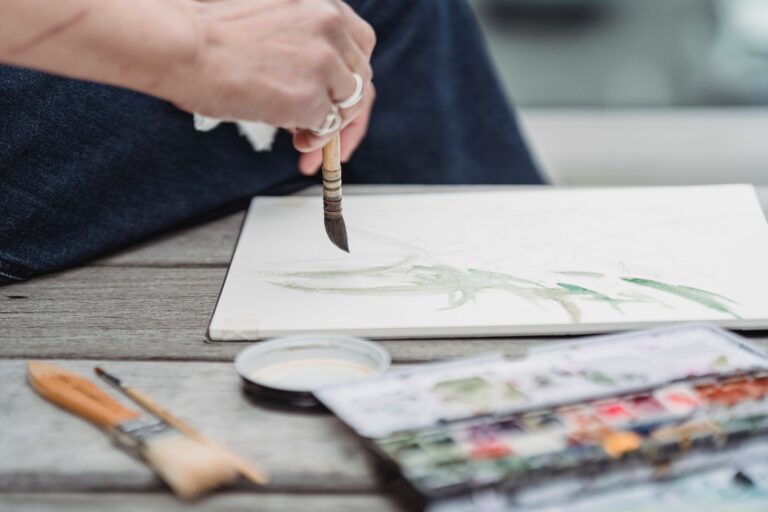
Set out paper, water, and one color before you sit down. Sit beside the person and place the brush in sight. Make the first stroke yourself, then invite them to continue.
The Alzheimer's Association's art guidance advises helping begin art in middle- to late-stage Alzheimer's and starting the brush movement. Maria's Place instructs caregivers to guide step by step when the person can hold a brush or pen, using hand-over-hand support as needed. For watercolor pencils, it suggests coloring first, then wetting one area at a time.
Which materials reduce mess and risk
Choose non-toxic watercolors and soft brushes, with no sharp tools. The Alzheimer's Association advises only safe materials in middle- to late-stage Alzheimer's and avoiding toxic substances and sharp tools.
Alzheimer's Society UK reports that Aquapaints reveal color by brushing plain water over pre-printed outlines, as described in how Aquapaints work. They produce colorful pictures while avoiding paint mess and spills.
How do you fit it into the day
The National Institute on Aging's activity guidance advises adapting activities to current abilities and interests, keeping a similar daily time, breaking tasks into manageable steps, and accepting watching as participation. Pick a calm time when the person is alert, and keep it brief.
Stop while attention lasts. If they only watch, stay with them and describe colors and movement. Try again another day without pressure.
- Offer painting at the same time each day
- Break it into one tiny step at a time
- Let watching count as participation
What should success look like
The Alzheimer's Foundation of America lists tactile, free-style artmaking and active music listening as potentially beneficial expressive activities in late or severe Alzheimer's. That supports a shift from finished pictures to sensory process. UsAgainstAlzheimer's advises giving watercolors, acrylics, or pastel chalks for free expression to engage, comfort, communicate, and bring joy at home or in care communities.
Keep the focus on comfort and engagement. A 2020 trial of 8-week visual-art training in dementia, published in Frontiers in Psychology, found no group difference in cognition or working memory in the trial report. Delayed-recall effects were undetermined, so treat simplified watercolor as comfort and engagement rather than cognitive treatment.