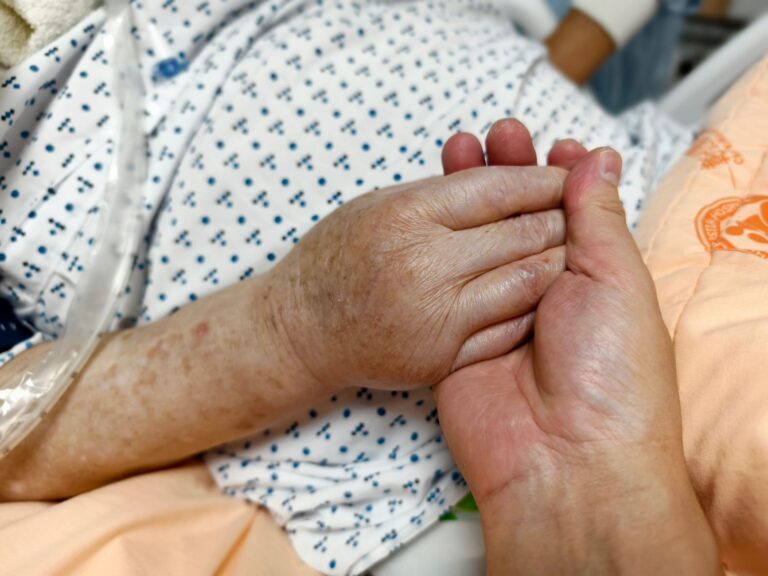
Contractures — shortening and loss of flexibility in muscles, ligaments and connective tissue around an inactive joint — reduce range of movement after prolonged immobilization. For bedbound dementia patients, positioning and range-of-motion care keeps joints looser to support transfers, feeding posture and comfort. Joint contractures are very common in persons with dementia confined to bed in the terminal stage, and they impair transfers, feeding posture and quality of life while increasing caregiver burden, according to a case series published in PMC in the early occupational therapy report. Pain, stiffness and pressure problems often follow when joints stay bent and unused.
Medical information disclaimer: This article is for general educational purposes only and does not provide medical advice, diagnosis, or treatment. Always consult a physician or other qualified health professional about symptoms, medications, tests, or treatment decisions.
Table of Contents
- How do contractures affect daily care?
- How should the body be positioned?
- How often should position change?
- What does range-of-motion care involve?
How do contractures affect daily care?
A stiff elbow makes dressing and washing harder. A stiff ankle makes foot placement unsafe for assisted transfers. A stiff jaw, neck or trunk makes upright feeding posture harder to hold. Clinicians also describe acquired deforming hypertonia as joint deformity with reduced range and stronger resistance to passive movement.
It causes functional loss, discomfort, limited activity and often pain. Families usually notice it as arms that stay drawn inward, hands that stay closed, or knees that stay bent. Progressive knee flexion can make lying flat impossible. Weight then concentrates on the heels, pressure offloading becomes very difficult, and side-to-side positioning becomes necessary.
How should the body be positioned?
Good support, correct alignment in lying and sitting, and regular position changes reduce contracture risk, pressure-sore risk and spasticity severity, according to the Hong Kong Department of Health Elderly Health Service in its physiotherapy management guidance. Keep shoulders, hips, knees and ankles in neutral alignment rather than letting them slump or twist.
- Use firm pillows to support arms, keep knees slightly separated and keep ankles from dropping.
- Protect bony areas by minimizing pressure over heels, elbows, hips and sacrum.
- Realign the head, trunk and limbs each time the person is moved.
- Use side-lying positions when bent knees prevent comfortable supine lying.
How often should position change?
Bed-bound elders should change position frequently, with turning every 2 hours as the standard. Frequent turning limits continuous pressure over bony prominences and interrupts the stillness that lets tissue shorten. Set a visible rotation order, such as left side, back, right side.
Check skin at each turn for redness over heels, hips, elbows and tailbone. Adjust pillows at each turn so support does not flatten or shift. If sitting is used, keep sitting time short and alignment upright. Return to bed positioning before posture collapses or sliding begins.
What does range-of-motion care involve?
Early occupational-therapy prevention combines passive range-of-motion with positioning and fitted devices, according to the PMC case series in its early prevention findings. Devices may include an elbow immobilizer, resting hand splint, knee immobilizer or ankle-foot orthosis, tailored to the patient. Move each at-risk joint gently through its available range without forcing.
Stop if there is sharp resistance, pain, swelling or skin breakdown over the joint. Ask a nurse, physician, occupational therapist or physiotherapist to set the safe range, repetitions and splint schedule. Without proper intervention, contracture can progress to irreversible fibrotic change, cartilage damage, stiffness and joint deformity that seriously limit mobility and daily activities.