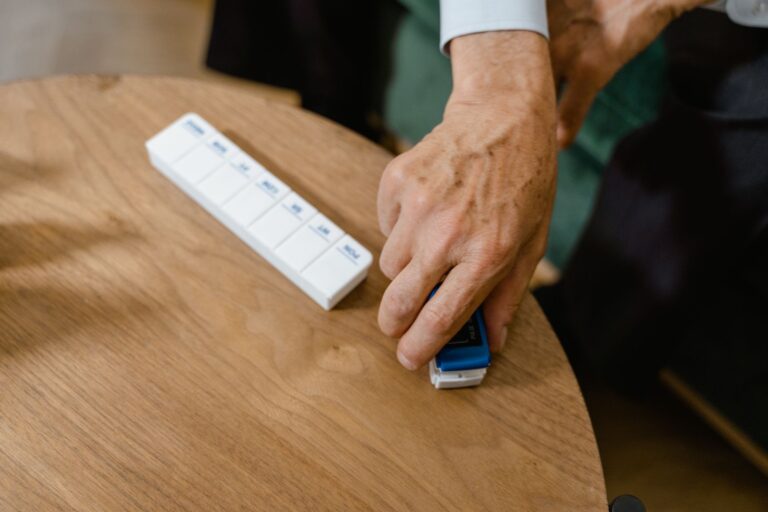
Countertop smart dispensers from Hero and MedaCube help caregivers reduce dosing errors, along with the FDA-cleared EMMA system and color-coded pill organizers. A pill dispenser is a storage device that holds sorted doses and prompts the person to take the right dose at the right time. For dementia care, missed doses, extra doses, and pill mix-ups are common risks. Reminders, locked compartments, and caregiver alerts add a practical safety layer at home.
Medical information disclaimer: This article is for general educational purposes only and does not provide medical advice, diagnosis, or treatment. Always consult a physician or other qualified health professional about symptoms, medications, tests, or treatment decisions.
Table of Contents
- How do countertop dispensers get the right dose out?
- How does a caregiver know a dose was missed?
- Can a low-cost organizer still reduce mistakes?
- Where does automation still need caution?
How do countertop dispensers get the right dose out?
Hero Health says its countertop smart dispenser holds a 90-day supply of up to 10 medications and signals dose time with sound and blinking light, then sorts and dispenses that dose after one button press, described on Hero's product page. The single-button step matters for dementia care because the person does not sort pills by hand.
PharmAdva says MedaCube's lockable countertop dispenser holds up to 16 medicines and a 90-day supply, shows pill pictures for each dose, and uses a tilt sensor to flag possible tampering, spillage, or incorrect dosing, described on the MedaCube usage guide. A photo of the expected pills helps a caregiver or person with early memory loss spot a problem before swallowing.
How does a caregiver know a dose was missed?
Hero Health pairs its dispenser with an app that gives pill-time reminders, missed-dose alerts, and an adherence log, plus remote caregiver monitoring, passcode protection, maximum dispense limits, and low-pill alerts. A caregiver can check the log, change settings from afar, and limit how much medicine can be dispensed at once.
MedaCube sends a text or call to designated caregivers when a dose is late, missed, supplies run low, or power fails. A late notice sends after about one hour, and a missed dose is declared halfway to the next dose. Practical steps for families include:.
- list two contacts so one backup sees every late-dose text
- keep the dispenser plugged in where its light and sound are noticed
- refill when the low-pill alert first appears, not at zero
Can a low-cost organizer still reduce mistakes?
A systematic review of polypharmacy adherence found color-coded pill organizers reduced dosage errors by 67% in cognitively impaired elderly people, with those patients plus their caregivers as the main beneficiaries, reported by Cureus in the review record. Color coding is the key feature because matching a color and time slot is easier than reading small labels.
This option fits early memory changes, stable drug lists, and tight budgets. A caregiver still needs to fill the organizer carefully, watch for changes in prescriptions, and check that Sunday-through-Saturday slots stay accurate.
Where does automation still need caution?
Wards using automated dispensing cabinets connected to computerized prescribing had 1.0% dispensing errors versus 5.0% with traditional storage, with fewer interruptions and faster pillbox preparation per drug, reported in the hospital pharmacy study. The FDA-cleared Electronic Medication Management Assistant, called EMMA, stores and dispenses home prescriptions on schedule to reduce drug-identification and dosing errors while letting clinicians monitor outpatient adherence.
Automation does not remove selection risk. ISMP recommends typing at least the first five letters of a drug name during cabinet-override searches and restricting override access to prevent wrong-drug choice. For home caregivers, the parallel is to lock override access, keep passcodes private, and confirm each new prescription in the dispenser after every pharmacy change.