Indoor gardening for early-stage dementia means caring for a few safe, easy plants indoors with simple tools and close support. It can support engagement, movement, and daily routine, but it is not a treatment for Alzheimer's. Early-stage dementia means memory and thinking changes are present but many daily abilities remain. A small windowsill herb pot can give a clear role without demanding strength, travel, or complex steps.
Medical information disclaimer: This article is for general educational purposes only and does not provide medical advice, diagnosis, or treatment. Always consult a physician or other qualified health professional about symptoms, medications, tests, or treatment decisions.
Table of Contents
- What indoor gardening can offer
- Which plants and tasks fit best
- How do you set up light, pots, and water
- How do you keep supplies and pest control safe
What indoor gardening can offer
UF/IFAS Extension reports gardening may support well-being, engagement, and quality of life through its gardening benefits guidance. It points to physical activity, sensory stimulation, social connection, and meaningful roles as the likely pathways. For early-stage use, that means short shared tasks with a visible result.
Watering herbs together can anchor morning routine and conversation. The Alzheimer's Foundation of America says plant care can enhance memory and attention in its dementia gardening activity guide. It recommends simple indoor tasks such as growing windowsill herbs or microgreens. Touching, smelling, and naming rosemary, mint, and lavender gives focus without multistep instructions.
Which plants and tasks fit best
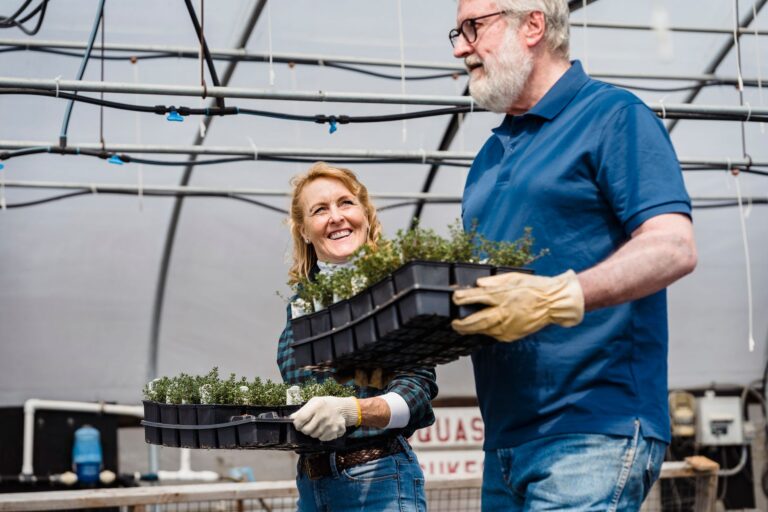
Choose plants for smell, touch, and easy recognition. Rosemary, mint, and lavender offer distinct scent and texture for identification games. Microgreens and culinary herbs grow fast and reward daily checking.
The Alzheimer's Society UK advises sensory plants for smell and touch and avoiding anything toxic to touch or eat and anything with thorns or prickles. Before buying ornamentals, check the University of Connecticut Extension safe-versus-toxic houseplant list. It lists plants such as yew and ZZ plant as toxic and identifies separate non-toxic alternatives.
How do you set up light, pots, and water
Clemson Cooperative Extension advises about six hours of direct sun from a south- or west-facing window for herbs in its indoor herb light guidance. Without that window, place plants 6-12 inches below two 40-watt cool-white fluorescent bulbs for 14-16 hours daily. Keep pots away from radiators and heat vents.
Clemson Cooperative Extension Home and Garden Information Center advises containers with bottom drainage holes plus a saucer or tray. Use only containers that never held toxic products. Water until water runs from the drainage holes.
- Pick one or two small pots to keep lifting and watering easy.
- Place tray first, then pot, near the chosen window or light.
- Label each plant with large print for easy identification.
- Keep soil, water can, and easy-grip trowel together in one bin.
How do you keep supplies and pest control safe
Use adapted tools that reduce grip strain and bending. The Alzheimer's Society UK points to long-handled or easy-grip tools such as an Easi-Grip trowel. Keep sharp tools, ties, and clips stored out of reach between sessions. Match the task to the day and stop before fatigue.
For pests, the U.S. Environmental Protection Agency advises preferring non-chemical control first and reading the entire pesticide label. It also advises never exceeding the labeled dose, removing or covering food during indoor use, and keeping people and pets away until dry or as labeled. If a person mouths or swallows part of a risky plant, Children's Hospital of Philadelphia Poison Control guidance says contact a physician or Poison Control at 1-800-222-1222 immediately through its poisonous plants guidance because advice varies by plant, amount, and timing.