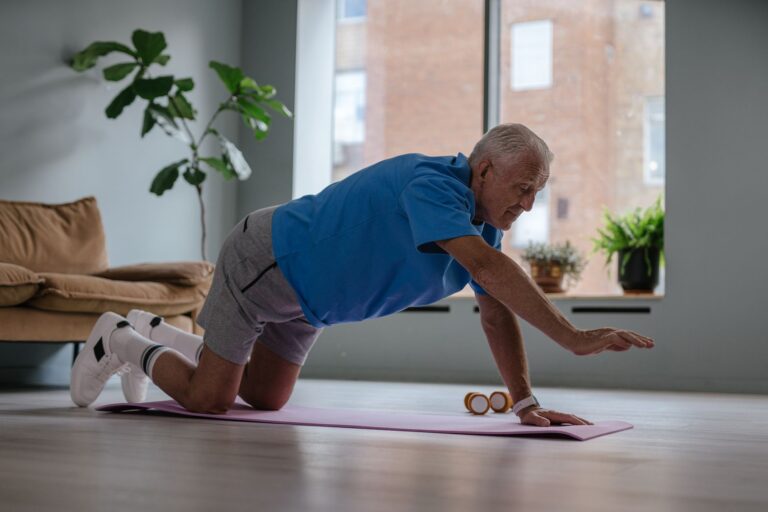
Simplify strength work for late-stage dementia by keeping moves seated, short, supported, and guided one step at a time. Use daily leg moves such as sit-to-stand, heel raises, marching in place, and arm circles in 10-15 minute bouts.
Late-stage dementia means advanced illness with severe memory loss, limited communication, and need for full help with movement and care. Even then, gentle activity can preserve posture muscles and support balance, mood, sleep, and independence. The Alzheimer's Society notes that position changes, brief unsupported sitting, and shifting sideways on a bed edge help keep posture muscles active in its Keep Moving guide.
Medical information disclaimer: This article is for general educational purposes only and does not provide medical advice, diagnosis, or treatment. Always consult a physician or other qualified health professional about symptoms, medications, tests, or treatment decisions.
Table of Contents
- How should the session look?
- How do you cue each move?
- Which moves build useful strength?
- How do you keep practice safe?
How should the session look?
Pick a quiet, familiar spot at the same time of day. Use a sturdy chair with arms, pushed against a wall, with feet flat and hips supported. Keep sessions brief and calm, with water nearby and little background noise.
Keep one order for moves so the routine feels familiar. Plan for 10-15 minutes, then rest or repeat later if energy allows. Short bouts fit limited focus and lower fatigue.
- Use the same chair, place, and time
- Clear clutter, cords, and loose rugs
- Offer glasses, hearing aids, and supportive shoes
- Stay close enough to guide and steady
How do you cue each move?
Give one short instruction at a time and show the move first. Say "lift your knees," then march with the person for a few beats. Wait, praise the effort, then give the next step. Keep words simple and pair them with touch, gesture, or gentle hand guidance.
The University of Arizona Center on Aging caregiver guide advises single instructions, live demonstration, steady order, and a calm setting to lower confusion in the Dementia Exercise guide. Avoid loud rooms, crowds, music with lyrics, and rapid changes. If attention fades, pause and return to a known move. End while the effort still feels good.
Which moves build useful strength?
Focus on legs and trunk because they support sitting, standing, and transfers. Good choices are repeated sit-to-stand from a stable chair, mini knee bends holding support, heel raises, seated leg lifts, and seated marching. Add slow arm circles for shoulder comfort and posture. Progress only when form stays safe and steady.
Add one or two repetitions first, then consider a light band for arms or legs. The MDPI Geriatrics home program describes the same path: chair sit-to-stand, mini squats, and heel raises, advanced by repetitions or light bands when safe. Match the move to the day. On tired days, practice shifting weight sideways on the bed edge or sitting upright briefly without back support. On stronger days, do two short rounds with rest between.
How do you keep practice safe?
Supervise every session and keep a rail or sturdy chair within reach. CDC fall-prevention resources stress supervision, stable support, clear walking paths, good lighting, and supportive footwear through its caregiver fall-prevention resources. There is no set frequency or intensity for dementia, so aim for gradual progress. Exercise & Sports Science Australia reports benefit even below 150 minutes per week while working toward age-65-plus activity goals.
Activity supports strength and daily function, but the Alzheimer's Society factsheet notes it has not been shown to slow or stop dementia itself. Do not force stiff limbs. In severe paratonia with involuntary resistance, routine passive movement showed no gain in tone, pain, or caregiver burden. Stop the move, ease back to a comfortable supported position, and try gentle repositioning later.