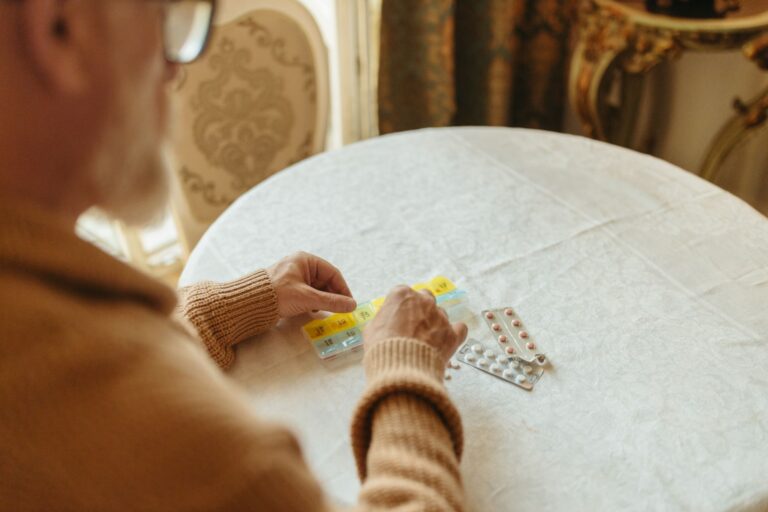
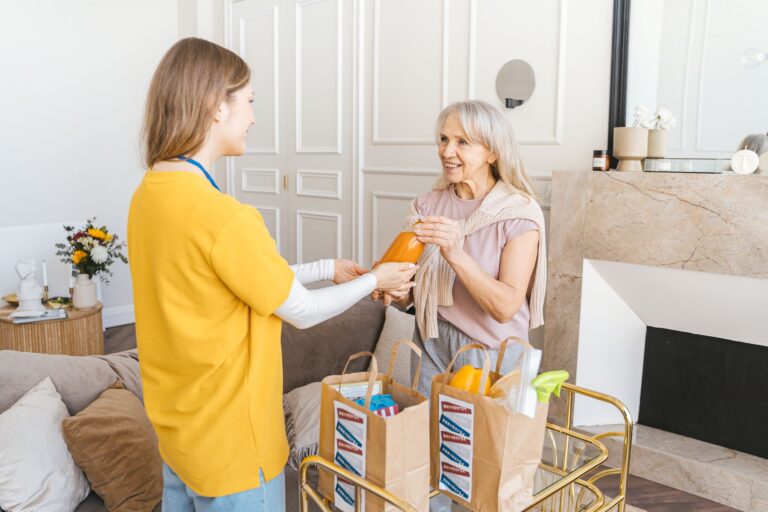
No-cook food preparation gives people with dementia a hands-on kitchen activity without the risks of heat or sharp tools. Memory care programs run it two ways: a one-on-one pairing between a caregiver and one participant, and a group format where several residents each handle one step of a shared recipe. The choice between the two formats isn't just about staffing. It changes how the activity is structured, how much a participant can do independently, and what safety checks a leader has to run before anyone touches food.
Medical information disclaimer: This article is for general educational purposes only and does not provide medical advice, diagnosis, or treatment. Always consult a physician or other qualified health professional about symptoms, medications, tests, or treatment decisions.
Table of Contents
- The One-on-One Format
- The Group Format
- Matching the Format to the Person
- Safety Still Applies Without a Stove
The One-on-One Format
In Montessori-Based Dementia Programming, the one-on-one version pairs a single caregiver with a single participant for a no-cook task such as assembling a sandwich or mixing a simple salad. Developed by researcher Cameron Camp, the protocol calls for the partner to physically guide or manipulate the ingredients when the participant can no longer hold or manage materials alone, rather than taking the task away from them entirely. This format works best for residents whose dementia has progressed far enough that a shared recipe would move faster than they can follow.
The partner breaks the task into hand-over-hand steps, keeping the participant's hands on the food as long as possible even when they can't initiate or sequence the steps themselves. A Melbourne-area randomized trial across nine aged-care facilities found that personalized one-to-one Montessori-based sessions nearly doubled active engagement time compared with a non-personalized one-to-one activity, while agitation counts dropped under both conditions. The gain came specifically from tailoring the task to each resident, according to the Australian Catholic University research bank, not from the one-on-one format alone.
The Group Format
The group version turns a single no-cook recipe, such as fruit salad, into a shared project. Each participant is assigned one step — washing, cutting with a butter knife, stirring, or plating — so the whole group completes the dish together rather than each person making their own portion. The same CEN4ARD protocol treats this as a distinct structure from the one-on-one pairing, built around role assignment rather than individual guidance.
A controlled study comparing two group-based cooking approaches — one matched only to residents' interests, the other matched to both interests and skills — found no difference in agitation levels between them. That result suggests the group structure itself, not just how well tasks match individual interests, is what drives engagement, per the Dementia Centre's BPSD intervention guide. Group sessions also work well as recurring programming. A UK care home runs a weekly cookery club where baking sessions engage residents' senses and evoke reminiscence, and the activity stays accessible to residents with a wide range of abilities working side by side, as reported by Care Industry News.
Matching the Format to the Person
Neither format is automatically better. A systematic review of 15 studies on Montessori-based programs in residential aged care found that these programs significantly improved feeding and eating difficulty, with mixed effects on nutritional status — but the outcomes depended on tailoring tasks to each resident's cognitive capacity and preferences rather than running one fixed protocol, according to a systematic review on PMC.
In practice, that means checking a few things before assigning someone to a group session versus a one-on-one pairing: The Alzheimer's Association recommends building any activity, including kitchen tasks, around what the person still enjoys and can still do, helping them start the task since planning and initiating steps are often impaired skills in dementia, and ending or modifying the activity if attention wanes or frustration rises. That guidance applies whether the activity is running one-on-one or as a group, per the Alzheimer's Association's activities guidance.
- Can the person follow a multi-step sequence, or do they need each action demonstrated individually?
- Do they still enjoy social settings, or does a group bring on frustration or overstimulation?
- Can they physically hold and manipulate food and utensils, or does the task need to be done hand-over-hand?
- Has their engagement or agitation changed recently, which may call for switching formats?
Safety Still Applies Without a Stove
"No-cook" removes burns and flame risk, but it doesn't remove every hazard. The Alzheimer's Association warns that dementia can blunt a person's sensitivity to temperature extremes, and advises supervising any kitchen activity, locking away knives, and using caution even with food that was heated in a microwave before serving, according to safety guidance from the Alzheimer's Association's Kansas City chapter. Texture is the other hazard that's specific to group sessions.
Activity-coordinator guidance for group dementia programs recommends keeping food textures uniform across a shared no-cook recipe so every participant can chew and swallow it safely, and avoiding choking risks like shredded coconut or whole nuts when residents with different abilities are working on the same dish, per discussion on the Golden Carers activity-planning forum. That matters more than it might seem, because swallowing difficulty — dysphagia — is common enough in dementia that a single standard recipe can't safely serve an entire group. A Brain Canada–funded project, the Dysphagia Cooking Club, is developing texture-adapted recipes specifically for people with dementia and swallowing problems, which reflects how often a group menu needs individual texture adjustments rather than one fixed version for everyone, according to Brain Canada's funded grants page.
- One-on-one: adjust the task to the individual's physical and cognitive ability, step by step.
- Group: adjust the recipe's texture to the most restrictive need in the room, then assign steps by remaining ability.