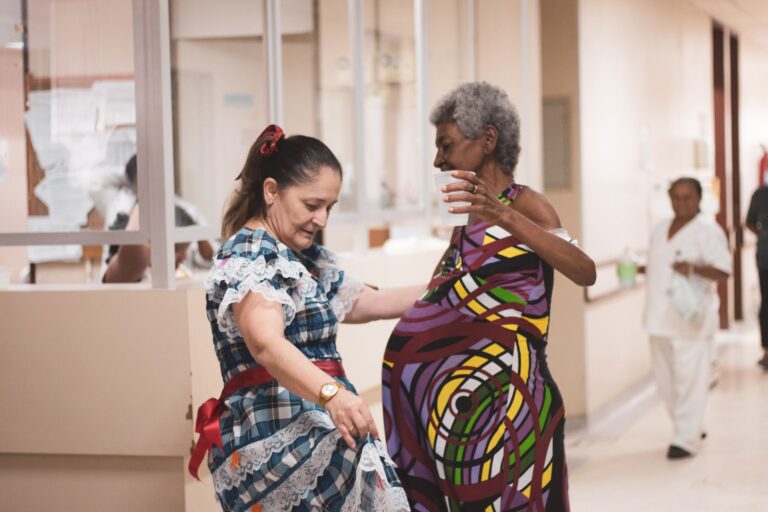
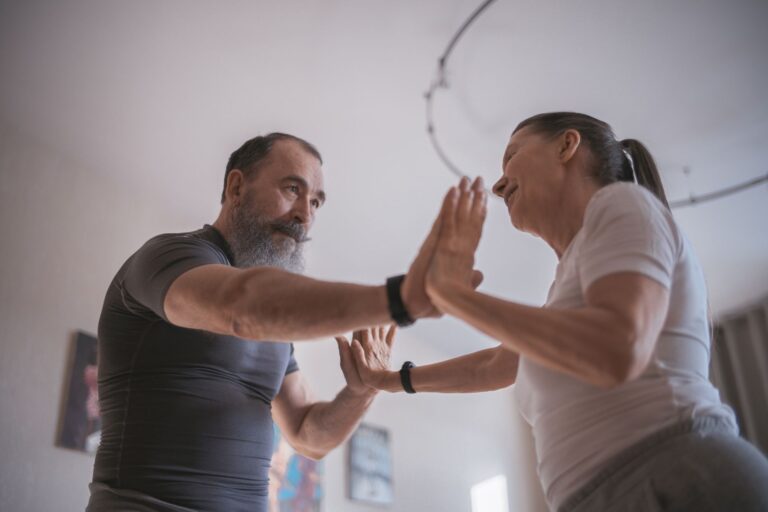
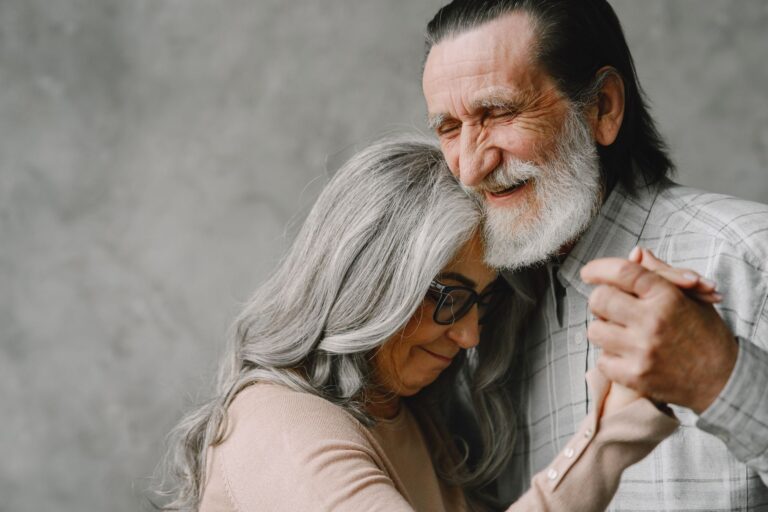
Dancing for Alzheimer's works best as short, supervised, adapted movement with a sturdy chair nearby, supportive shoes, and a clear, well-lit space. Start slowly with low-intensity steps, keep water close, and check the plan with a health provider.
Adapted dance means simple seated or standing steps matched to balance, leg strength, and attention. The University of West Florida reports that 12 weeks of adapted dance was feasible and enjoyable for people with Alzheimer's and related dementias, increasing beneficial physical activity and improving quality of life University of West Florida trial summary. A 2024 systematic review and meta-analysis published through NIH/PMC concluded that dance movement interventions are an effective, affordable, and engaging non-drug complementary treatment for older adults with mild cognitive impairment, Alzheimer's disease, and dementia 2024 Ageing Research Reviews meta-analysis.
Medical information disclaimer: This article is for general educational purposes only and does not provide medical advice, diagnosis, or treatment. Always consult a physician or other qualified health professional about symptoms, medications, tests, or treatment decisions.
Table of Contents
- What does the research support?
- What supplies do you need?
- How should you set up the room?
- How can you keep dance sessions safe?
What does the research support?
The University of West Florida program enrolled 16 physically healthy adults ages 69-97 who did modified line dancing for 60 minutes twice weekly. Researchers assessed agitation, balance, gait, leg strength, and caregiver burden.
That result is encouraging but narrow. The group was very small, physically healthy, and attended adult day care, so it does not prove safety or benefit for frail adults, advanced dementia, or unsupervised home dancing. Caregivers should treat home dance as supported activity, not therapy alone.
What supplies do you need?
A home model described from NIA Go4Life needs only a stable chair, light hand weights or evenly weighted household objects, and a towel. Sessions can cover warm-up, strength, balance, flexibility, and cool-down. Keep the kit simple and within reach:.
- stable, non-rolling chair for support and seated steps
- supportive, closed-toe shoes with non-slip soles
- water for before, during, and after movement
- towel and light weights or matched cans or bottles
- music with a steady, calm beat and easy stop control
How should you set up the room?
CDC fall-prevention resources advise bright home lighting, clearing clutter and trip hazards, using grab bars and safe footwear, and checking with a health provider on exercise choice CDC fall-prevention resources. Choose a flat, non-slippery floor with room to step sideways without hitting furniture.
Place the chair on a stable surface where the dancer can touch it quickly. Remove rugs that slide, cords, pet toys, and low stools from the dance path. Keep the phone, water, and a second person or call button nearby.
How can you keep dance sessions safe?
The National Institute on Aging advises starting slowly with low-intensity moves, wearing appropriate supportive shoes, keeping a sturdy chair or person nearby for balance, and drinking water before, during, and after NIA exercise safety brochure. Begin with marching in place, weight shifts, side steps, and gentle arm swings. Stop if chest pain, dizziness, unusual shortness of breath, joint pain, or sudden confusion occurs.
Use brief, repeatable routines rather than long new choreography. A regular moderate routine matters for brain health, and a 15-year analysis of 459 people found autosomal-dominant Alzheimer's carriers exercising about 150 minutes weekly showed better cognition. For home dance, two shorter supervised sessions per week are easier to sustain than one tiring session.