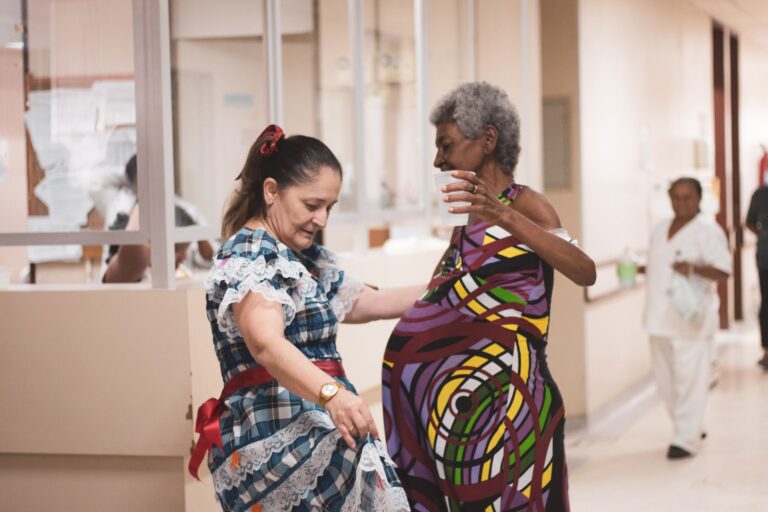
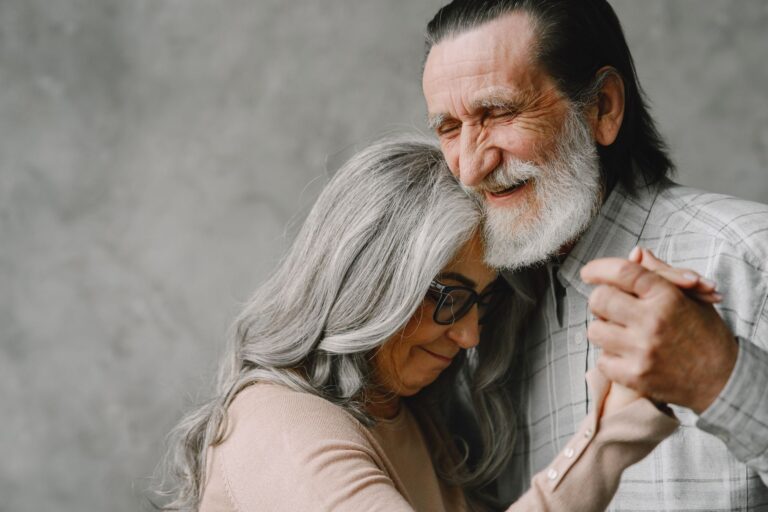
This guide shows dementia caregivers how to lead short, safe dance sessions at home. You choose familiar music, clear a small space, and move together for a few minutes.
No lessons or special fitness are needed. Dance here means simple rhythmic movement, seated or standing, done with music. For caregivers, it offers shared activity that supports stamina, thinking, and mood.
Medical information disclaimer: This article is for general educational purposes only and does not provide medical advice, diagnosis, or treatment. Always consult a physician or other qualified health professional about symptoms, medications, tests, or treatment decisions.
Table of Contents
- What can dance do for memory and mood?
- How do you make dancing safe?
- What are the steps for a 10-minute session?
- How do you build a weekly habit together?
What can dance do for memory and mood?
Global cognition means overall thinking, including memory and attention. A 2023 review of 29 studies with 1,708 participants ages 63.8 to 85.8 was summarized by the U.S. National Library of Medicine.
In 8 pooled randomized trials, dance significantly improved global cognition, memory and balance and significantly decreased depression abstract of the pooled review. In practice, that can look like better recall of a song, steadier steps, and lighter mood. Effects vary by person and program, so use dance as daily enrichment alongside usual care.
How do you make dancing safe?
The National Institute on Aging links memory problems to higher fall risk from muscle loss, balance issues, gait changes and postural hypotension falls prevention guide. Mild cognitive impairment means early thinking changes that do not block daily life. Postural hypotension means a brief blood-pressure drop on standing that can cause dizziness.
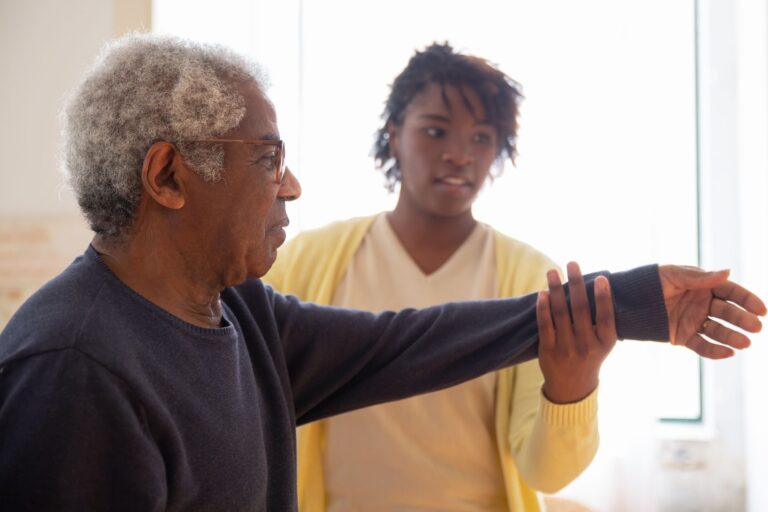
Clear furniture, cords and rugs from a small area. Keep a sturdy chair or wall within reach and offer seated dancing. Supervise closely and stop if dizziness, pain or confusion appears.
What are the steps for a 10-minute session?
Pick one or two familiar songs the person enjoys. Start seated, warm the shoulders and tap the feet, then add simple steps.
Let the person lead gestures when possible and copy their rhythm. End with slow music, deep breaths and a chair rest.
- Clear space and place supports in reach.
- Play familiar music and invite movement, not performance.
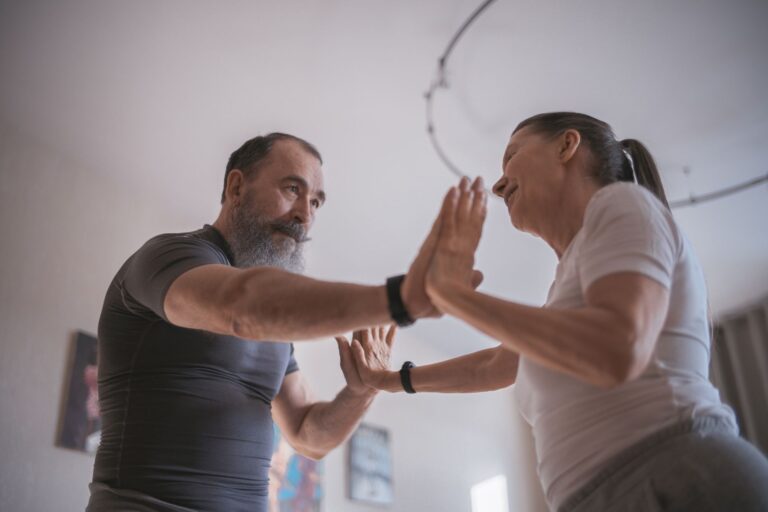
- Mirror gestures, clap, sway, step side to side.
- Talk, smile and pause for water and rest.
How do you build a weekly habit together?
The Centers for Disease Control and Prevention says older adults need 150 minutes weekly of moderate aerobic activity activity guidelines for older adults. Seventy-five minutes of vigorous activity, or an equivalent mix, also meets the target. Short dance bouts can count toward a 30-minutes-a-day, 5-days-a-week target.
The National Institute on Aging advises caregivers to exercise often and add music to joint exercise when it helps engagement caregiving and self-care guide. Schedule dances after breakfast, keep sessions short at first, then add a song each week. Mark each dance bout on a fridge calendar to build the weekly total.