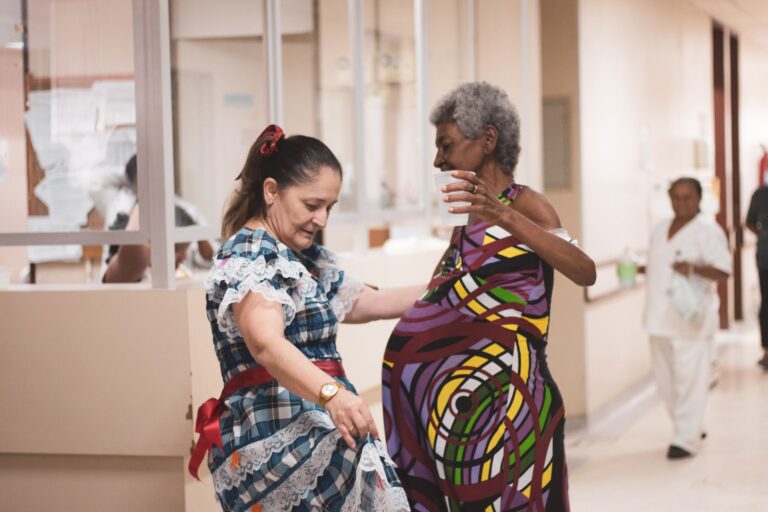
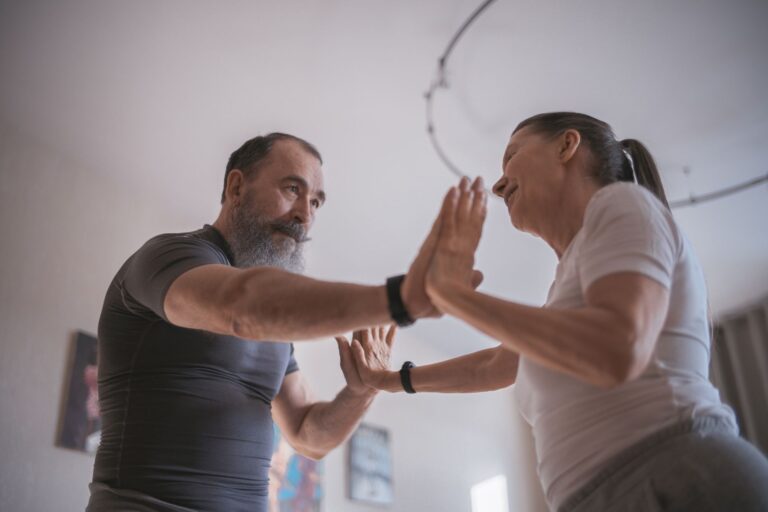
Adapt dance to dementia stage by keeping early-stage sessions active and social, then making later-stage sessions shorter, simpler, and closely supervised. Dancing for dementia means guided movement to music that fits ability, seated or standing, with a partner.
Early choice sets safety and enjoyment. Light guidance works at first. More hands-on support, slower music, and a clear space matter later.
Medical information disclaimer: This article is for general educational purposes only and does not provide medical advice, diagnosis, or treatment. Always consult a physician or other qualified health professional about symptoms, medications, tests, or treatment decisions.
Table of Contents
- Early stage: keep it active and social
- Later stages: shorter, simpler, and supervised
- No dance skill? Improvise with music and story
- Why music still reaches late dementia
- What benefits and limits should you expect?
Early stage: keep it active and social
People with early-stage Alzheimer's can often enjoy ballroom, line, or Zumba Gold, according to Carolina Hearts Home Care. A partner or instructor gives light guidance and oversight. Familiar steps and social contact keep the activity engaging.
Pick classes with clear instruction and steady pacing. Stay with the person, but let them lead when able. Stop and rest if focus or balance slips.
Later stages: shorter, simpler, and supervised
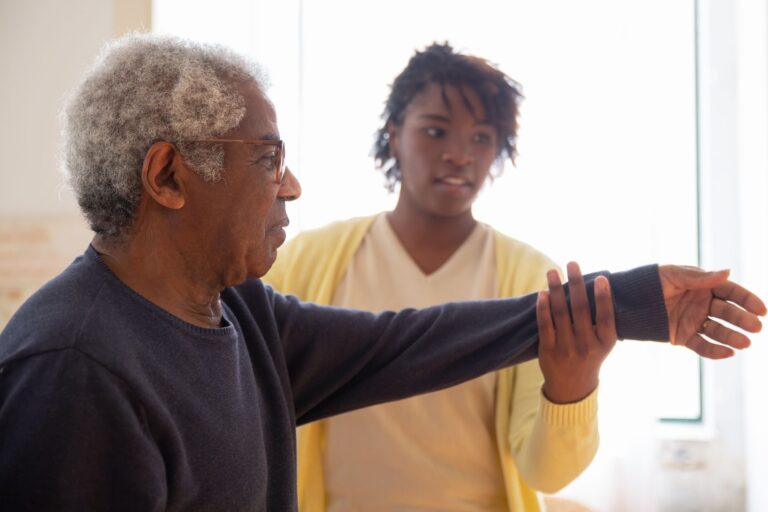
People in middle-to-later stages need more supervision and shorter sessions, according to Carolina Hearts Home Care. Use seated-or-standing options, slower tempos, and one-step cues. Keep the floor clear, stable, and fall-safe.
Offer one prompt at a time, such as sway, tap, or clap. Mirror the move and allow extra time. End before fatigue, confusion, or frustration builds.
No dance skill? Improvise with music and story
No experience is needed. Dance for PD describes a TimeDances with TimeSlips format that invites people to move, improvise, and create stories through music and imagination. It works seated or standing with care partners.
Try a familiar song and suggest a scene, such as a parade or seaside walk. Copy arm gestures, facial expressions, and rhythm. Let the person add their own moves.
Why music still reaches late dementia
Northwestern University researchers report that patients often keep the ability to dance and sing after language fades. Musical-memory brain regions such as the cerebellum are affected much later in Alzheimer's disease.
That means rhythm, humming, and swaying can still connect. Use songs from younger years. Hold hands, keep eye contact, and follow their tempo.
What benefits and limits should you expect?
A 12-week adapted dance program was found feasible and enjoyable for people with Alzheimer's and related dementias by University of West Florida researchers. In a small Journal of Alzheimer's Disease study of 16 people, reported by Knowridge in a study summary, dance eased agitation and mood problems and improved memory and physical ability versus bingo, puzzles, and crafts.
A 2021 systematic review and meta-analysis in Frontiers in Psychology found dance significantly decreased depression compared with controls, described in the full review. Yet a 2026 review of 209 randomized trials, detailed in the Frontiers in Physiology analysis, ranked dance highest for global cognition on MoCA without a statistically significant edge over other exercise. Use dance to support mood, movement, and quality of life alongside medical care and safe activity planning.