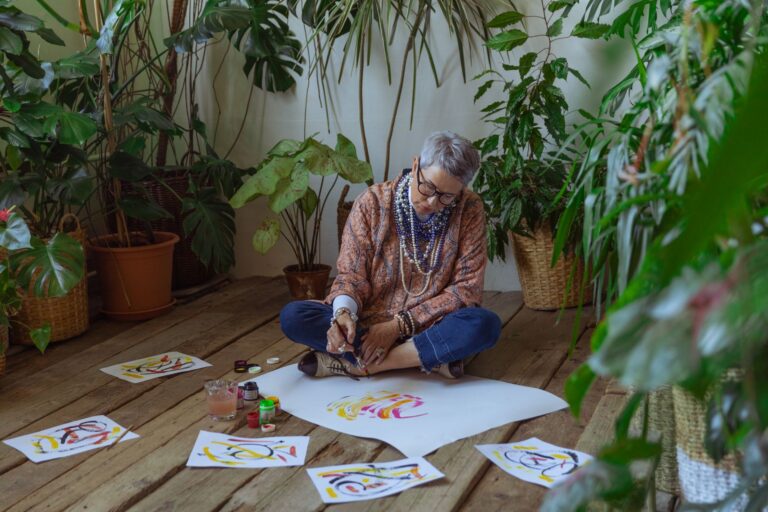
Watercolor painting for dementia means using simple, water-based painting to support expression and engagement at each ability level. Early on, offer familiar subjects and conversation; in middle and later stages, simplify choices and welcome abstract color and movement. The Wisconsin Chapter of the Alzheimer's Association offers watercolor expression through Memories in the Making for mild cognitive impairment and early- to middle-stage dementia Wisconsin early-stage social programs page. No prior art experience is needed.
Medical information disclaimer: This article is for general educational purposes only and does not provide medical advice, diagnosis, or treatment. Always consult a physician or other qualified health professional about symptoms, medications, tests, or treatment decisions.
Table of Contents
- Why choose watercolor?
- What does early-stage painting look like?
- How do you adapt for the middle stage?
- How do you support later stages?
Why choose watercolor?
Program leaders recommend watercolor for dementia because the paints are non-toxic and wash easily from clothing, according to a Psychology Today interview Psychology Today interview. A fresh sheet of paper allows a calm restart when a painting brings frustration. University of Kentucky researchers studying mild-to-moderate dementia asked participants to make paintings, sculptures, or collages.
The activities engaged focus, problem-solving, tolerance for ambiguity, imagination, emotion, and hand-eye coordination. Small setup choices keep attention on painting rather than cleanup. Use washable covers, large brushes, limited colors, and sturdy paper.
What does early-stage painting look like?
An Alzheimer's Association program description shared via Near Southside notes that people in early stages often paint recognizable liked objects and tell life stories. Invite that storytelling without testing memory.
Offer a cup, flower, pet, or familiar street as a starting prompt. Ask what the painter likes about the subject and follow the answer. Keep instruction short and leave room for personal choices.
How do you adapt for the middle stage?
The Alzheimer's Foundation of America places simple creative-arts instruction and watercolor painting among middle-stage expressive activities, alongside singalongs, dancing, walks, and pet therapy Alzheimer's Foundation of America guide to therapeutic activities. At this stage, shorten steps and reduce choices.
Senior Helpers advises caregivers to match the art task to current ability and disease stage. Practical starters include watercolor painting, clay modeling, or adult coloring books.
- Offer two or three colors at a time.
- Demonstrate one brushstroke, then invite copying.
- Praise effort and color use, not accuracy.
How do you support later stages?
The same program description notes that people in later stages often make abstract watercolors with poetic titles. Treat color, movement, and rhythm as the message. Ask what title the painter wants, and write it down exactly.
Dementia has no cure and usually progresses to constant-care needs, University of Kentucky researchers note. So view watercolor as supportive engagement for mood, sociability, and participation rather than disease reversal. Stop while energy is positive and save the paper for next time.