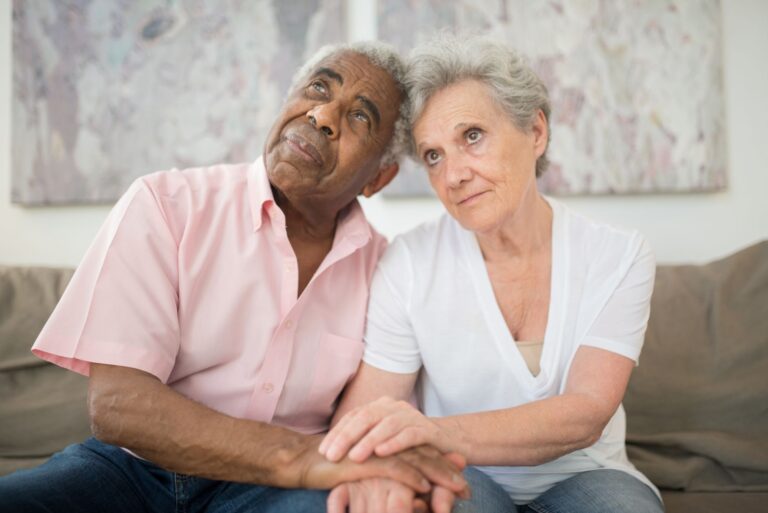
Chronic loneliness — a persistent feeling of disconnection from others — is linked to higher dementia risk even when Alzheimer's runs in the family. The added risk applies across genetic risk levels, so family history does not remove it and loneliness does not decide the outcome.
Loneliness differs from living alone. It reflects unmet social needs, not headcount. For readers with a parent or sibling with Alzheimer's, the question is practical: how much weight to give loneliness, and what helps.
Medical information disclaimer: This article is for general educational purposes only and does not provide medical advice, diagnosis, or treatment. Always consult a physician or other qualified health professional about symptoms, medications, tests, or treatment decisions.
Table of Contents
- How strong is the loneliness link?
- Does family history change the effect?
- Why the link is not proof of cause
- What helps when both risks apply
How strong is the loneliness link?
A 2024 meta-analysis of 21 longitudinal samples followed 608,561 adults. Florida State University researchers reporting via Neuroscience News found loneliness raised all-cause dementia risk by about 31 percent. The same analysis linked loneliness to 39 percent higher Alzheimer's risk and 74 percent higher vascular dementia risk. It also linked loneliness to 15 percent higher risk of cognitive impairment, independent of age and sex, according to the Neuroscience News summary of the meta-analysis.
In Framingham cohorts of 2,308 dementia-free adults, loneliness predicted higher 10-year dementia incidence. Boston University and Framingham researchers reporting via MedicalXpress found risk more than doubled at age 80 or younger. Among adults ages 60 to 79 without the APOE e4 gene variant, risk tripled. Loneliness also tracked with poorer executive function and lower brain volume.
Does family history change the effect?
For late-onset Alzheimer's, genes set the starting odds. Harvard Health Publishing notes that inheriting one APOE e4 copy roughly triples risk. Inheriting two copies raises risk about 10- to 15-fold. APOE e4 is neither necessary nor sufficient, so many carriers never develop dementia. A large UK Biobank study tested whether genetic risk alters the social risk.
Elovainio and colleagues in BMJ Open followed 155,070 adults for 8.8 years, with 1,444 dementia cases. Social isolation raised dementia risk at every level of Alzheimer's polygenic risk. The study found no significant interaction between genes and loneliness or isolation, according to the BMJ Open study report. In practical terms, social risk matters for both lower-risk and higher-risk groups. A family history raises baseline concern, while persistent loneliness adds separate concern.
Why the link is not proof of cause
The studies are observational, so they show a pattern over time. BMJ Open authors caution that preclinical brain changes can begin years before diagnosis. Those early changes can cause withdrawal and look like loneliness causing decline.
Case records add another limit. Hospital records can miss people with undiagnosed dementia. That gap can distort who counts as a case and when illness began.
What helps when both risks apply
The 2024 Lancet Commission on dementia, led by UCL's Gill Livingston, named 14 modifiable risk factors. Late-life social isolation was among them. The commission estimated that addressing those factors across life could prevent or delay about 45 percent of global dementia cases, according to the UCL summary of the report. Alzheimer's Society frames action as sensible risk reduction, not proven prevention.
Staying socially, physically and cognitively engaged supports brain health. Managing blood pressure, hearing loss, depression and vascular risks also matters. Act early when loneliness persists or memory slips. Alzheimer's Society advises early evaluation for persistent loneliness or memory change. Book that check promptly if low mood or forgetfulness interferes with daily tasks.
- Call or meet one trusted person on a regular weekly schedule.
- Join a group with repeated contact, such as a class, club or volunteer shift.
- Ask your clinician about hearing, mood, sleep, blood pressure and memory changes.