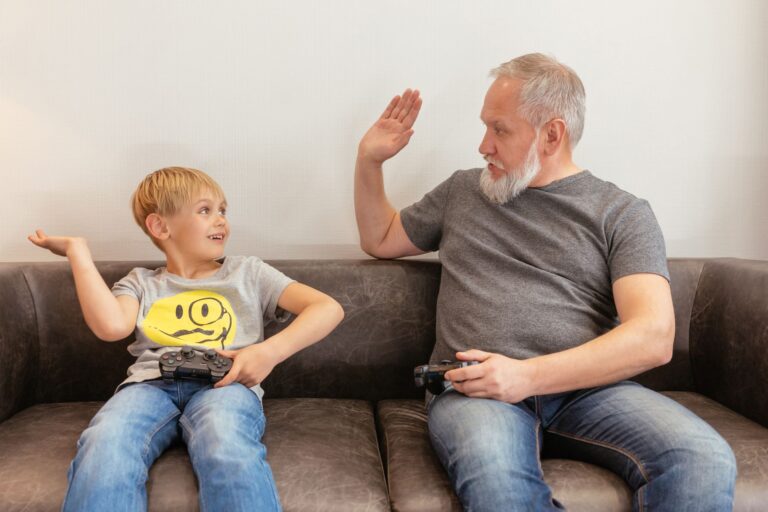
Games can support enjoyment, social connection, and modest short-term cognitive gains in dementia care, but they are not proven treatments or prevention tools. In 2026, the safest choice is an accessible activity matched to the person's abilities, with help or supervision when needed. "Games for dementia care" includes word games, puzzles, music, discussion, and creative activities. These may be used one-to-one or in small groups as cognitive stimulation.
Medical information disclaimer: This article is for general educational purposes only and does not provide medical advice, diagnosis, or treatment. Always consult a physician or other qualified health professional about symptoms, medications, tests, or treatment decisions.
Table of Contents
- What does the evidence actually show?
- How should a game be matched to the person?
- What safety risks need attention?
- Are brain-training apps equivalent to clinical programs?
- A practical decision check
What does the evidence actually show?
For people with mild-to-moderate dementia, cognitive stimulation probably provides a small cognitive benefit. A 37-study Cochrane review found a 1.99-point advantage on the Mini-Mental State Examination, but follow-up evidence was sparse and outcomes were mainly measured immediately after treatment according to Cochrane. The effect should be interpreted cautiously.
A modest change on a test does not establish lasting improvement in memory, independence, or disease progression. The World Health Organization's 2026 guideline says structured cognitive stimulation, including tabletop games, may improve executive function and verbal fluency over four to 12 weeks. However, the evidence is low to very low certainty and does not show that these activities prevent dementia or mild cognitive impairment according to WHO.
How should a game be matched to the person?
Start with what the person can still do comfortably, not what they could do in the past. The goal may be enjoyment, participation, conversation, or a sense of success rather than better scores.
Match the demands of the activity to current abilities: Help the person begin, decide whether supervision is needed, and simplify or stop when frustration appears. These principles reflect the National Institute on Aging's guidance for adapting activities for people with Alzheimer's disease from the NIA.
- Choose familiar subjects, images, music, or rules.
- Reduce the number of cards, pieces, choices, or steps.
- Use large, clear materials when small print or crowded layouts create difficulty.
- Demonstrate the first turn instead of relying only on written directions.
- Allow extra time and avoid correcting every mistake.
What safety risks need attention?
A seated tabletop, word, or music activity may still cause distress if it feels like a test. Watch for repeated errors followed by embarrassment, anger, withdrawal, fatigue, or refusal. Change the rules, offer a simpler role, switch activities, or stop without framing the session as a failure.
Movement-based video games, sometimes called exergames, require added caution. Consider balance, trip hazards, space, footwear, equipment placement, and whether another person must remain nearby. Home safety has not been established for exergames in dementia. Reviewed sessions took place under supervision in controlled settings, while effects on cognition, mobility, daily activities, and adverse events remained very uncertain according to Cochrane.
Are brain-training apps equivalent to clinical programs?
No. A commercial app should not be assumed to reproduce the methods or benefits of structured training used in a clinical trial. Similar words such as "brain training" or "memory exercise" do not establish equivalent content, intensity, supervision, or results.
Treat strong health promises as warning signs. Claims that a game prevents dementia, improves memory, or substitutes for medical care deserve particular scrutiny. Before paying, ask:.
- What exact outcome does the product claim?
- Was it studied in people living with dementia?
- How long did any measured benefit last?
- Does the evidence apply to this specific product?
- Can difficulty, sound, timing, and visual clutter be adjusted?
A practical decision check
A useful game is one the person can access, tolerate, and enjoy today. Trial the activity briefly before building it into a routine, and observe the person's response rather than relying on the product description. Use these questions during the trial: If a seller promises prevention or memory improvement, pause the purchase and ask a clinician to review the claim before money or care decisions depend on it.
- Can the person understand how to begin with limited prompting?
- Can they see, hear, hold, or operate the materials?
- Do they appear interested rather than pressured?
- Does the difficulty allow some success?
- Is supervision needed for movement, equipment, or emotional support?
You Might Also Like
- Books for Dementia Care 2026 Guide: safety, access, and evidence limits; Key Facts and Questions to Ask
- What Is New With Games for Dementia Care in September 2026? Latest FDA, NIH, WHO, and CMS sources and Key Takeaways
- Games for Dementia Care September 2026 Update: What Changed, Why It Matters, and What to Watch Next