Simplify guided walking—accompanying a person with cues or physical support—by matching the route and help to what the person can manage today. Give one direction at a time, demonstrate it when needed, and shorten, pause, or stop the walk as abilities change. Do not base the plan only on a diagnosis or what worked last month. The practical goal is a walk that uses the person's remaining skills without overwhelming attention, communication, or balance.
Medical information disclaimer: This article is for general educational purposes only and does not provide medical advice, diagnosis, or treatment. Always consult a physician or other qualified health professional about symptoms, medications, tests, or treatment decisions.
Table of Contents
- Check today's abilities before setting out
- Replace explanations with one-step cues
- Make the route easier to interpret
- Know when to modify the walk or seek an assessment
- Reassess when independent walking becomes unsafe
Check today's abilities before setting out
dementia does not change every person's communication in the same way or on the same schedule. The Alzheimer's Association advises matching communication to the person's present abilities rather than assuming what a disease stage permits in its communication guidance.
Use a brief observation rather than a pass-or-fail test. Consider: The answers may change the walk without ending it. Someone who previously followed several directions may now need one repeated route, fewer decisions, or a companion beside them throughout.
- Can the person follow a single familiar direction?
- Does a gesture or demonstration work better than words?
- Can the person walk and balance with the usual level of help?
- Are fatigue, poor vision, reduced hearing, or frustration affecting the response?
- Does attention begin to fade before the planned walk ends?
Replace explanations with one-step cues
Speak slowly and reduce background noise before giving a direction. ask one question at a time, use clear steps, and demonstrate the movement when words are not enough.
Break the walk into small actions: For example, replace "Let's go through the door, turn left, and walk to the bench" with separate directions at each point. If the person responds to your movement but not your words, continue using the visual cue instead of adding a longer explanation.
- Say, "Stand up," then allow time to respond.
- Point toward the door and say, "Walk with me."
- At a turn, name only that turn.
- Demonstrate stopping, turning, or holding a rail.
- Give the next cue after the current action is complete.
Make the route easier to interpret
Choose a flat, even, obstacle-free path with handrails where available. Recognizable points of interest can help define where the person is going while still allowing room to walk.
Review the environment from the walker's perspective: These details matter because dementia can change how surfaces are perceived. The NHS notes that rugs, glare, shiny flooring, and strong patterns may be mistaken for obstacles or wet areas, increasing confusion during movement in its home-environment guidance.
- Remove or avoid loose rugs and other trip hazards.
- Favor bright, even lighting.
- Reduce glare from windows or flooring.
- Avoid shiny floors and busy patterns when possible.
- Choose a route with clear, recognizable stopping points.
Know when to modify the walk or seek an assessment
Watch for waning attention, fatigue, or rising frustration. Modify the route, pause in a safe place, or try again later instead of forcing the planned distance or destination. Physical assistance requires a separate safety decision.
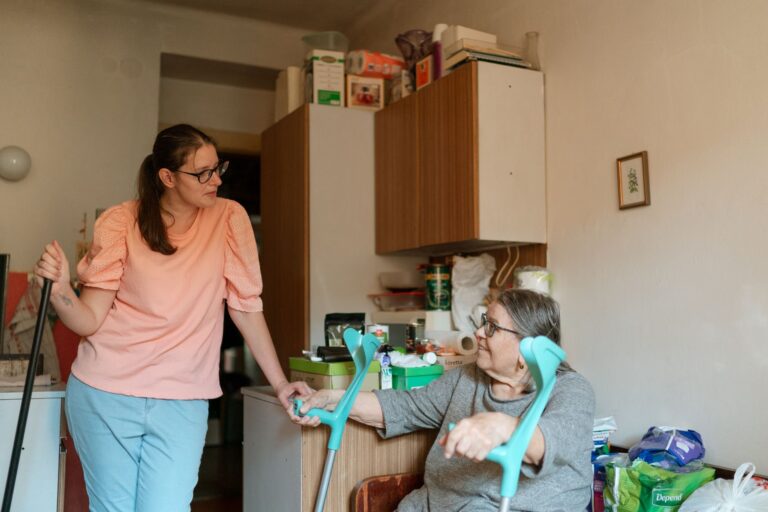
The Alzheimer's Association recommends a fall-risk assessment when someone needs help with walking, balance, or strengthening; physical or occupational therapy may also be needed to determine safe assistance and equipment use in its dementia care recommendations. Do not treat a walking aid or another person's physical support as automatically safe. An assessment can clarify what help and equipment fit the person's current abilities.
Reassess when independent walking becomes unsafe
Guided walking and independent walking require different decisions. The Alzheimer's Association reports that six in 10 people living with dementia wander at least once, and wandering can occur at any stage. Reconsider independent walking if the person: Look for patterns and possible triggers.
Check toileting, food, and hydration needs, and schedule structured activity or exercise during periods when restlessness commonly occurs. Identification, GPS, door alarms, and a neighbor contact plan may help if someone becomes lost, but they cannot guarantee safety, according to the National Institute on Aging's wandering guidance. A person with a history of wandering should not be left unattended.
- Returns unusually late from a familiar walk.
- Forgets routes that were previously familiar.
- Has a history of wandering or becoming lost.
- Becomes restless during predictable parts of the day.