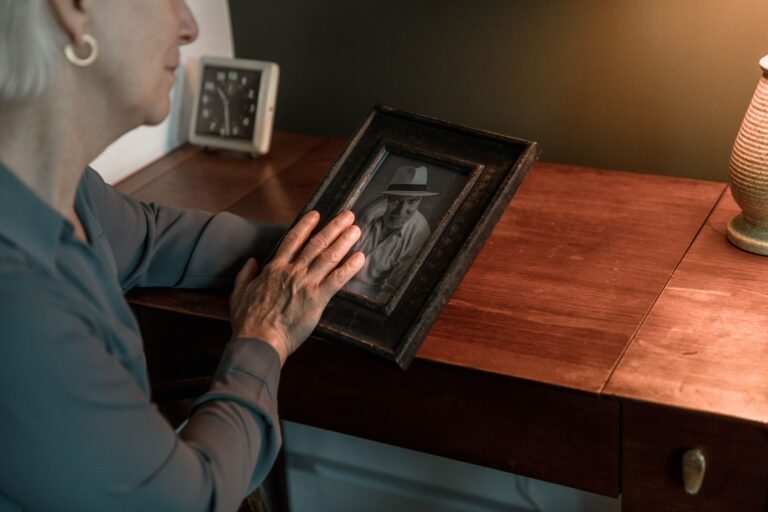
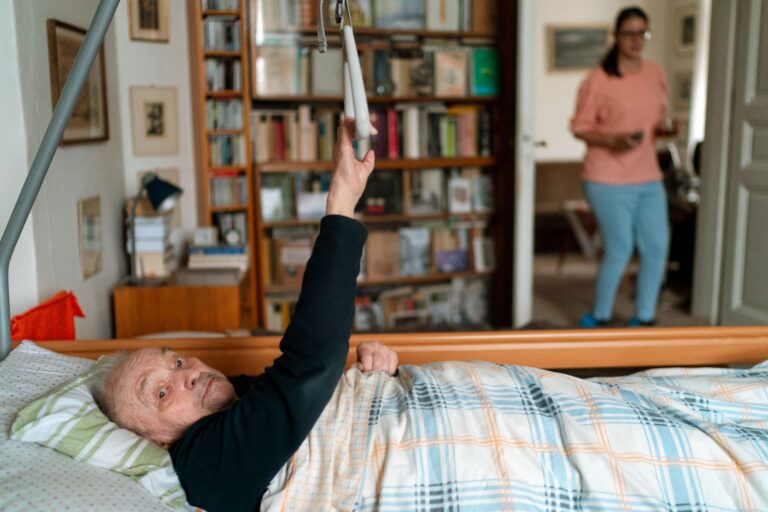
Simplify photo sorting by reducing it to one easy choice at a time and letting a care partner manage every complex step. As abilities change, shorten sessions, offer only the help needed, and stop when attention, comfort, or interest fades. Dementia is cognitive loss severe enough to disrupt daily life. It may affect memory, judgment, language, and the ability to complete familiar tasks, according to the National Institute on Aging.
Medical information disclaimer: This article is for general educational purposes only and does not provide medical advice, diagnosis, or treatment. Always consult a physician or other qualified health professional about symptoms, medications, tests, or treatment decisions.
Table of Contents
- Turn sorting into one simple choice
- Set up a session that feels manageable
- Match the task to today's abilities
- Seek connection instead of correct answers
- Know what photo sorting can and cannot do
Turn sorting into one simple choice
Do not ask the person to organize an entire collection. Present one photograph and request one concrete decision: A care partner can handle names, dates, scanning, duplicates, album order, and storage. Treat "set aside" as a temporary category so an uncertain choice does not lead to an irreversible loss.
- Keep or set aside
- Family or friends
- Older or newer
- Put in the album or leave loose
Set up a session that feels manageable
The Alzheimer's Association recommends breaking activities into easy steps and focusing on one task at a time because numerous directions can become overwhelming. Its guidance also advises watching for fatigue, sensory difficulties, fading attention, and frustration during activities. Prepare the materials before inviting the person to participate:.
- Place a small stack on a clear surface.
- Give one instruction.
- Show one photo at a time.
- Move each photo into one of two labeled containers.
- End before the activity becomes tiring.
Match the task to today's abilities
Use current performance, not past skill, to choose the task. Someone who can compare pictures may sort them into two broad groups.
Someone who struggles to begin may need the first photo placed in front of them with a brief prompt. Reduce the demand when you notice: Pause, simplify the choice, or try at another time. Finishing the stack matters less than keeping the activity comfortable.
- Repeatedly asking what to do
- Looking away or losing track
- Trouble seeing or hearing the prompt
- Slower responses
- Irritation, worry, or visible fatigue
Seek connection instead of correct answers
Familiar photographs can prompt conversation because older autobiographical memories may remain accessible longer than recent ones. The Alzheimer's Association advises making connection rather than accurate recall the goal.
Avoid turning the session into a memory test. Instead of asking, "Who is this?" try "What do you notice here?" or share a neutral observation such as, "That looks like a celebration." If the person gives an unexpected answer, do not insist on correction before continuing.
Know what photo sorting can and cannot do
Photo sorting should not be presented as a proven dementia therapy. The closest researched practice is reminiscence therapy, which uses prompts such as photographs to encourage memories and conversation.
Evidence for that therapy remains limited. A Cochrane review of 22 trials involving 1,972 participants found no important immediate overall improvement in quality of life, and results differed by setting and format. Keep uncertain photographs in a labeled "set aside" box rather than making disposal decisions during a difficult session.