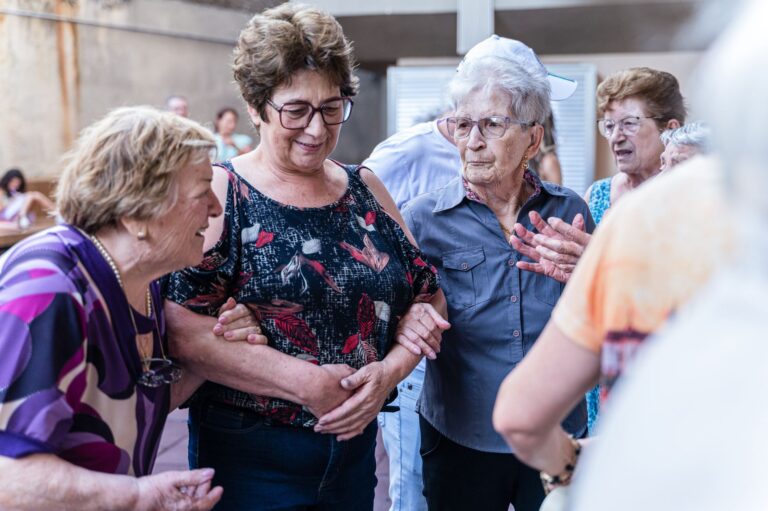
Photo sorting for dementia caregivers means choosing, grouping, and labeling photographs to support connection and preserve a person's life story. Start with a small set, organize it around meaningful people, places, and events, add names, then create an easy-to-use album or digital record. Treat the finished collection as a conversation aid, not a memory test or treatment. If a photograph causes distress, stop discussing it and respond to the person's feelings.
Medical information disclaimer: This article is for general educational purposes only and does not provide medical advice, diagnosis, or treatment. Always consult a physician or other qualified health professional about symptoms, medications, tests, or treatment decisions.
Table of Contents
- Decide what the collection should do
- Sort the photographs in simple passes
- Add labels and choose a format
- View photographs without testing memory
- Share the record and set realistic expectations
Decide what the collection should do
Choose one clear purpose before sorting. You might create an album for shared conversations, a portable source of comfort, or a life-story record for care staff. The Alzheimer's Society says life-story work can record important people, places, and events in a book, photo album, tablet, or smartphone app.
It may be completed with a family member or professional, so the caregiver does not have to know every detail alone in its guidance on memory-loss therapies. Begin with a manageable batch rather than the entire family archive. Prioritize photographs that are clear, personally meaningful, and likely to invite comfortable conversation.
Sort the photographs in simple passes
Use separate passes so you do not have to identify, organize, label, and select every photograph at once. Follow the person's priorities when possible. A seemingly ordinary photograph may matter more than a formal portrait because it connects with a familiar person, routine, or place.
- Gather a small batch of photographs and basic labeling materials.
- Set aside clear images of important people, places, and events.
- Group them into simple categories, such as family, homes, celebrations, work, hobbies, and holidays.
- Invite the person to comment if they wish, without asking them to prove who or what they remember.
- Ask relatives for missing details when necessary.
Add labels and choose a format
Give each selected photograph a short, direct caption. Include the person's name and relationship where useful—for example, "Maya Chen, your daughter"—and add a place or event only when you know it accurately. The Alzheimer's Association specifically recommends adding names to family photographs or collages to help people with middle-to-late-stage Alzheimer's identify others in its caregiver gift guidance.
Avoid guessing at uncertain names or dates; leave the detail blank until someone can confirm it. Choose the format that best fits the intended use. A hand-held album is portable and easy to share, while a digital record can hold more material. Keep the main collection selective so the most meaningful photographs do not get lost among weaker ones.
View photographs without testing memory
Begin with a comment rather than a question: "Here is Daniel at the beach," or "That garden looks colorful." The Alzheimer's Association advises caregivers to seek connection, follow the person's lead, and let reminiscence unfold naturally. If recognition is difficult, offer one brief prompt: "That is your sister, Anna." Do not press for an answer, give a long correction, or argue about what happened.
A photograph can revive a painful or sad memory. If the person becomes upset, put the image aside, acknowledge the emotion, and shift to something reassuring. A hand-held album may also help redirect anxiety, including repeated requests to go "home," provided the caregiver comments on the pictures instead of quizzing the person.
Share the record and set realistic expectations
A completed photo-and-life-story record can accompany the person into hospital, respite care, or a care home. Information about significant people, places, preferences, and routines can help staff provide more individualized care. Photo reminiscence is supportive, not a proven cure.
A 2018 Cochrane review of 22 trials found that effects on quality of life, cognition, communication, and mood were inconsistent and usually small across settings and formats in its review summary. A 2026 pilot randomized trial involving 68 caregiver–recipient pairs found that a digital reminiscence platform reduced caregiver predeath grief over two weeks. However, its small, digitally connected, predominantly White and female sample limits how broadly the result can be applied in JAMA Network Open.