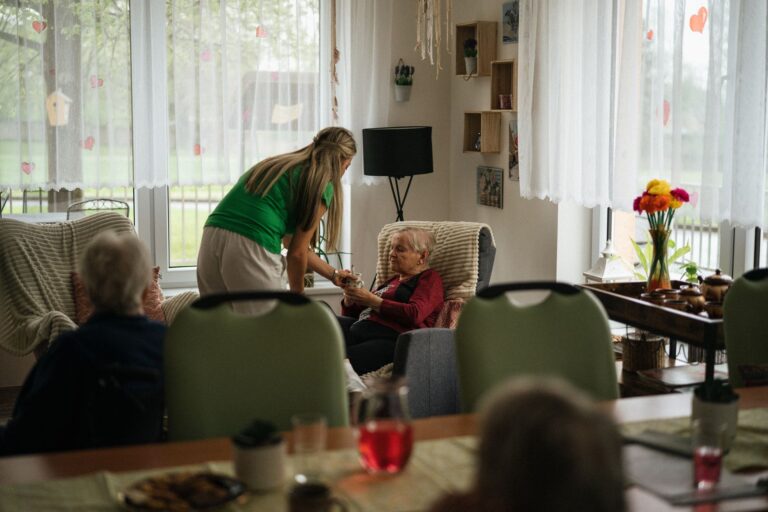
Simplify familiar music sessions by keeping songs the person enjoys while reducing what you ask them to do. Replace singing or instrument playing with easier responses, such as humming or foot-tapping, and change course if discomfort appears. A familiar music session uses personally meaningful songs to invite comfort, movement, or connection. It should not test memory: the Alzheimer's Association explains that long-ago memories, including favorite songs, may remain accessible longer than recent ones.
Medical information disclaimer: This article is for general educational purposes only and does not provide medical advice, diagnosis, or treatment. Always consult a physician or other qualified health professional about symptoms, medications, tests, or treatment decisions.
Table of Contents
- Make connection the goal
- Choose a smaller, more personal playlist
- Use the easiest form of participation
- Reduce competing sound and demands
- Let behavior guide the session
- Keep expectations realistic
Make connection the goal
Success does not require remembering a title, finishing a verse, or following instructions. A relaxed face, a small movement, a sound, or quiet attention may be a meaningful response.
Remove questions that can feel like a test, such as "Who sings this?" or "Don't you remember this one?" Try an invitation instead: "Let's listen together," or simply begin the song and observe. The person may participate differently from one day to another. Treat that variation as information about current ability and comfort, not as failure.
Choose a smaller, more personal playlist
Start with music the person already knows and enjoys. Let them choose when they can, and avoid assuming that a popular song, familiar genre, or caregiver favorite will suit them. When preferences are hard to express, ask relatives or friends about songs from the person's young adulthood.
Music & memory recommends observing the person one-to-one and building a focused playlist of about 10 to 25 likely favorites. A short playlist makes reactions easier to interpret. Note which songs invite calm, smiles, movement, or vocal sounds, as well as which ones bring tension or withdrawal.
Use the easiest form of participation
Match the activity to what the person can do now. The Alzheimer's Society activities handbook recommends adapting frustrating activities, breaking them into simple steps, and accounting for changes in cognition, hearing, vision, balance, and other abilities.
Move down this participation ladder as needed: Offer one action at a time. Demonstrating a slow clap may be easier to follow than explaining several steps. If even that creates strain, shared listening is enough.
- Sing a familiar song or play a simple instrument.
- Sing only the chorus or repeat one easy line.
- Hum or whistle with the melody.
- Clap, sway, or tap a hand or foot.
- Listen together without requesting any response.
Reduce competing sound and demands
Create a simple listening space before pressing play. The Alzheimer's Association advises turning off the television, closing windows or doors when they admit competing noise, and keeping music at a comfortable rather than loud volume. Choose the music for the immediate purpose.
A tranquil selection may support a calm setting, while a faster childhood favorite may lift spirits. Add clapping or dancing only when the person welcomes it and can participate safely. Avoid stacking demands. Listening while eating, answering questions, watching television, or navigating a busy room may make the session harder to follow.
Let behavior guide the session
When speech is limited, look at facial expression, body position, movement, and sounds. Smiling, settling, humming, or turning toward the music may suggest enjoyment. Grimacing, pulling away, agitation, or covering the ears means you should lower the volume, change the song, pause, or stop.
Do not insist on finishing a playlist. One welcomed song can be more useful than a longer session that becomes tiring. If a former favorite repeatedly causes distress, remove it for now rather than pushing for a remembered response.
Keep expectations realistic
Music can create an opportunity for enjoyment and connection, but it is not a proven treatment for every dementia symptom. Responses also differ by person, song, setting, and day.
A 2025 Cochrane review of 30 trials involving 1,720 participants found a small improvement in depressive symptoms after treatment. It found likely no improvement in agitation or aggression, and long-term effects remain unestablished.