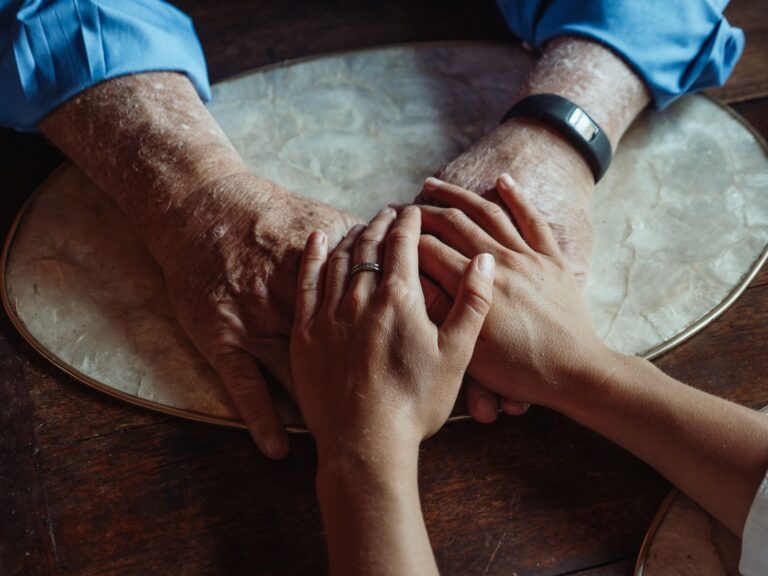
Families preserve inherited jewelry before Alzheimer's progresses by documenting the stories and significance of each piece while cognitive ability remains intact, then storing items in controlled conditions that maintain their physical and emotional integrity. Jewelry matters because personal items serve as object-cued memory anchors that evoke emotional and autobiographical details even when factual recall declines—a quality unique to how Alzheimer's affects different types of memory. Family members with an Alzheimer's diagnosis often experience renewed urgency to preserve family stories and keepsakes, proactively recording how each piece was acquired and why it matters before memory loss advances. This dual approach—capturing stories now and preserving physical condition—ensures that inherited jewelry can continue to sustain identity and connection as the disease progresses.
Medical information disclaimer: This article is for general educational purposes only and does not provide medical advice, diagnosis, or treatment. Always consult a physician or other qualified health professional about symptoms, medications, tests, or treatment decisions.
Table of Contents
- Why Inherited Jewelry Works as Memory and Identity
- The Therapeutic Impact of Reminiscence With Personal Objects
- Document the Story Before Cognitive Changes Progress
- Proper Storage Protects Jewelry for Years of Use
- Practical Steps to Preserve and Use Jewelry With Alzheimer's
- Frequently Asked Questions
Why Inherited Jewelry Works as Memory and Identity
When someone develops Alzheimer's, verbal and factual memory pathways deteriorate, but emotional and procedural memory systems often remain accessible longer. Jewelry activates these preserved memory networks through sensory stimulation—the weight of a ring, the appearance of a pendant, the texture of a bracelet. These tactile connections unlock recognition and joy independently of cognitive decline, allowing a person to feel connected to family history without needing to recall or articulate details.
Beyond memory, inherited objects sustain personhood itself. Tom Kitwood's framework, the dominant model in person-centered dementia care, defines identity not through cognitive ability alone but through relationships and connection to personal possessions. A grandmother wearing her mother's bracelet carries forward that relationship and sense of custodianship, even when she cannot name who gave it to her. Research shows that despite significant memory loss, people with advanced Alzheimer's construct coherent self-narratives and emphasize their role as custodians of family identity, sustained partly through tangible connections to family possessions.
The Therapeutic Impact of Reminiscence With Personal Objects
Reminiscence therapy using personal objects—photos, jewelry, and mementos—improved quality of life by 15.69% and reduced depressive symptoms across a meta-analysis of 26 studies involving 2,766 participants. The percentage of patients with low quality of life dropped from 78% to 24%, a substantial shift from simply having access to meaningful objects.
The mechanism is straightforward: handling familiar jewelry during conversations activates emotional memory, which remains more resilient than cognitive memory in Alzheimer's. This engagement improves mood and sense of connection. However, research also identified a limitation: while reminiscence therapy with personal objects significantly improves quality of life and reduces depression, it did not reduce caregiver burden or behavioral and psychological symptoms of dementia across the studies, meaning jewelry-based memory work should integrate with other care strategies, not replace them.
Document the Story Before Cognitive Changes Progress
The most practical preservation step happens before memory loss advances: creating a record of how each piece entered the family, who wore it, and what significance it holds. This documentation might include a photograph of the piece, the name and relationship of the original owner, the occasion it marks (an engagement, a milestone, a inheritance), and any personal stories about it. Write these details in a central document or spreadsheet—both digital and printed copies—so future caregivers and family members understand what the person holding the jewelry is connecting to.
This written record transforms a beautiful but silent object into a conversation starter. When a person with advancing Alzheimer's wears a documented piece, a caregiver can reference the story, prompting memory engagement and emotional connection that the person might not generate alone. Objects with documented stories hold significantly greater value for future generations than undocumented items, both emotionally and in terms of their role in therapeutic reminiscence.
Proper Storage Protects Jewelry for Years of Use
Inherited jewelry requires specific environmental conditions to remain intact and suitable for regular wear and reminiscence activities. Store jewelry at 50–80°F (10–27°C) and 35–55% relative humidity, with humidity fluctuations not exceeding 5% daily, plus professional inspection twice yearly to prevent tarnishing, corrosion, and structural damage. This means avoiding humid bathrooms, basements prone to moisture, attics with temperature extremes, or sunny windowsills where UV exposure can fade gemstones.
A climate-controlled closet, interior drawer, or safe deposit box typically meets these requirements. If you inherit multiple pieces, store them individually wrapped in acid-free tissue or soft cloth to prevent pieces from scratching one another. Professional inspections catch loosened stones, corroded clasps, and structural weaknesses before they lead to loss or injury.
Practical Steps to Preserve and Use Jewelry With Alzheimer's
.
- **Document now**: photograph each piece and record its origin, owner, and significance in a shared document available to all caregivers
- **Store safely**: maintain cool, stable humidity and protect from light and moisture; use a safe deposit box or climate-controlled storage if the home environment fluctuates
- **Inspect twice yearly**: arrange professional cleaning and structural assessment to catch corrosion, loose stones, or weakened clasps
- **Integrate into care**: reference the jewelry's story during reminiscence activities; have the person wear cherished pieces during visits or outings when appropriate and safe
- **Assign custody**: clarify after the person's diagnosis who is responsible for the jewelry's care and future stewardship, preventing disputes and loss
Frequently Asked Questions
Does wearing inherited jewelry prevent or slow Alzheimer's?
No. Jewelry does not prevent or alter the course of the disease. However, using meaningful objects in reminiscence therapy improves mood, quality of life, and sense of identity for the person living with dementia—quality-of-life benefits, not disease modification.
Should someone with Alzheimer's wear expensive inherited jewelry regularly?
Regularly wearing valuable pieces carries practical risks—loss, theft, damage, or injury if the person becomes agitated or forgetful. Reserve valuable pieces for supervised reminiscence activities and safe settings; consider having costume or replica pieces available for daily wear if jewelry is important to the person's sense of identity.
What if a family member with Alzheimer's can no longer recognize the jewelry or its story?
Emotional and procedural memory often remain intact even when factual recall declines. The person may not remember the story but may still experience a sense of comfort or joy from handling the piece, or recognize it as "important" through emotional resonance. The reminiscence is for both the person and their caregiver—a shared moment of connection.