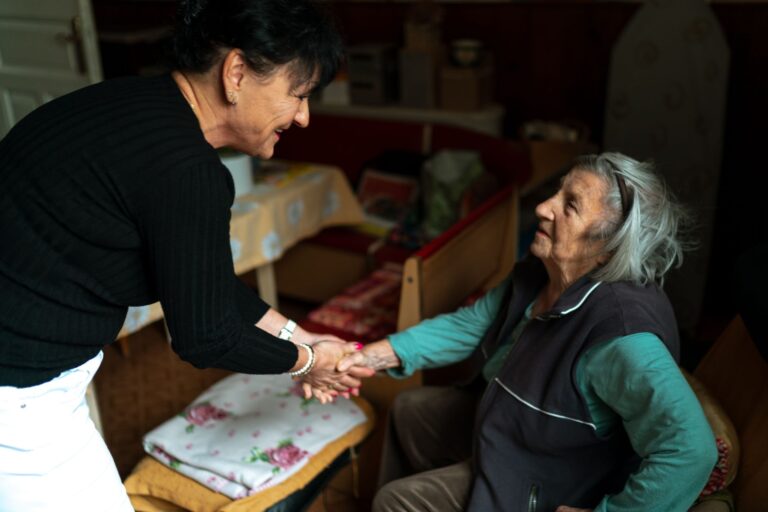
Grandchildren can build new bonds with grandparents living with dementia—declining memory, thinking, and decision-making that disrupts daily life—through familiar, low-pressure moments. They can connect with music, photos, simple routines, calm conversation, touch, or quiet companionship instead of trying to recreate the old relationship. Dementia may change communication and recognition without erasing every opportunity for affection. Alzheimer's disease is the most common type, accounting for 60% to 80% of cases, according to the Centers for Disease Control and Prevention.
Medical information disclaimer: This article is for general educational purposes only and does not provide medical advice, diagnosis, or treatment. Always consult a physician or other qualified health professional about symptoms, medications, tests, or treatment decisions.
Table of Contents
- Accept that the relationship may feel different
- Prepare children without frightening them
- Choose a familiar, low-demand activity
- Make communication easier
- Keep connection separate from caregiving responsibility
Accept that the relationship may feel different
A grandparent may struggle to find words, follow a sequence, maintain attention, or filter background noise. A conversation that once felt effortless may now create confusion or fatigue. These changes do not necessarily mean the grandchild has done something wrong. The new bond may rely less on shared facts and more on shared emotion.
A Barcelona study of 145 grandchildren found that dementia generally harmed contact, closeness, and satisfaction. However, some grandchildren reported positive changes when they maintained emotional contact and positive feelings, as described in the Journal of Applied Gerontology study. Recognition may also become unpredictable. A grandchild can still offer warmth without testing the grandparent's memory or insisting that the person identify them.
Prepare children without frightening them
Adults should explain dementia simply and honestly, using language suited to the child's age. For example: "Grandpa has an illness that makes remembering and talking harder. He may repeat things or forget names, but we can still spend time with him." Children may feel sad, angry, embarrassed, or afraid of being forgotten. Adults can acknowledge those feelings without asking the child to hide them or act cheerful.
They should also model respectful speech and avoid discussing the grandparent as if the person were absent. Before a visit, tell the child what might happen. Explain that the grandparent may repeat a question, use the wrong name, become quiet, or stop an activity early. Give the child permission to take a break or end the visit.
Choose a familiar, low-demand activity
The best activity gives both people something simple to do without requiring accurate recall. Keep it short, remove unnecessary choices, and let the grandparent participate as independently as possible.
Useful options include: Follow the grandparent's response rather than trying to finish the plan. If photographs cause frustration, put them away and play music. A quiet visit can still be meaningful.
- Looking through a small set of familiar photographs without asking, "Who is this?"
- Listening to a favorite song, clapping, humming, or moving together.
- Folding towels, watering a plant, or following another familiar routine.
- Drawing, sorting objects, or sharing a simple snack.
- Sitting together while the grandchild describes school, a pet, or something nearby.
Make communication easier
Reduce television noise and other distractions before starting a conversation. Approach from the front, speak calmly, and use short sentences. Ask one question at a time, then allow enough time for a response.
Avoid correcting every inaccurate detail or pressing for an explanation. If the grandparent becomes stuck, the grandchild can offer a simple choice or shift attention to the shared activity. As speech becomes harder, facial expression, tone, gestures, and appropriate touch may carry more of the interaction. These approaches reflect National Institute on Aging communication guidance, which recommends fewer distractions, calm speech, response time, and nonverbal communication.
Keep connection separate from caregiving responsibility
A grandchild can offer company and affection, but an adult should remain responsible for safety and personal care. Children should not have to manage bathing, dressing, medication, wandering, aggression, or other situations beyond a simple shared activity. Pay attention when visits lead to persistent fear, resentment, or disrupted sleep. Research involving children ages 6 to 13 found altered roles, sadness, fear of not being recognized, and satisfaction from giving affection; some children living with the grandparent also reported sleep problems.
"Building a new bond" is a possibility, not a proven clinical outcome. A 2021 systematic review found changing roles, stress, and positive experiences among caregiving grandchildren, but it did not prove that involvement strengthens every relationship or treats dementia. Grandchild-specific evidence remains small, largely observational or qualitative, and mostly from Spain. families needing more preparation can use the National Institute on Aging guide for families caring for someone with Alzheimer's disease before planning a child's visit.