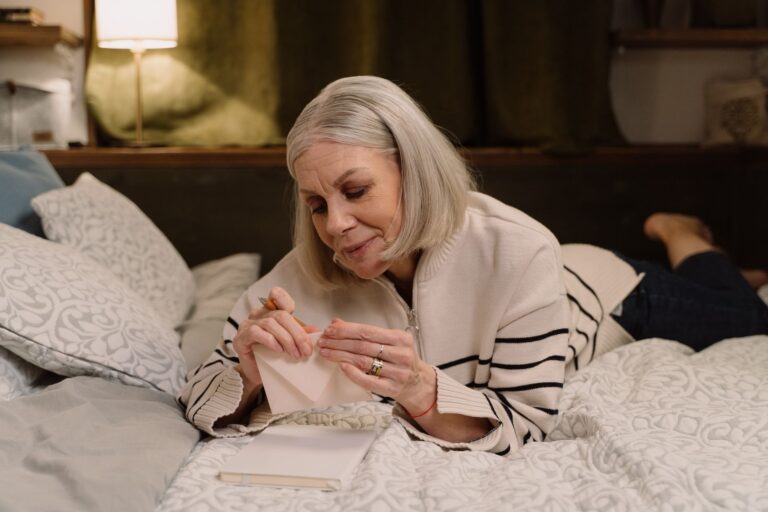
In the account described by the headline, a son shares his mother's final birthday card as a treasured record from before she could no longer write. However, no reliable primary source confirms the family's identity, the card's history, her diagnosis, or that dementia alone made writing impossible. Dementia is a syndrome involving cognitive decline severe enough to disrupt daily life, not one specific disease. A handwritten card can preserve a meaningful connection, but it cannot establish why someone's writing changed.
Medical information disclaimer: This article is for general educational purposes only and does not provide medical advice, diagnosis, or treatment. Always consult a physician or other qualified health professional about symptoms, medications, tests, or treatment decisions.
Table of Contents
- What the birthday card can—and cannot—show
- Can dementia affect writing?
- When should writing changes prompt an assessment?
- How to communicate when writing becomes difficult
- Preserving the card without overstating its meaning
What the birthday card can—and cannot—show
The card may document a real change that the son witnessed. Differences in spelling, sentence structure, word choice, legibility, or message length can help relatives describe a pattern to a clinician. It cannot prove a diagnosis or pinpoint when a person lost the ability to write.
Without the original card, medical records, and an attributable family account, even the headline's sequence of events remains unverified. Families can honor the emotional meaning of such an object without turning it into medical evidence. The safest description is that it was the last birthday message the family received in her handwriting, if that is what they report.
Can dementia affect writing?
Yes, some forms of dementia can affect writing. The National Institute on Aging says dementia may cause difficulty speaking, understanding, expressing thoughts, reading, or writing, although symptoms differ by person and dementia type in its overview of dementia. A person might omit words, repeat phrases, lose track of a sentence, or struggle to express an intended thought.
These changes do not occur in everyone, and handwriting difficulty alone is not a diagnostic test. The underlying condition matters. Primary progressive aphasia, which is often associated with frontotemporal disorders, specifically affects speaking, reading, writing, and comprehension, according to NIA guidance on frontotemporal disorders.
When should writing changes prompt an assessment?
A new or worsening writing problem deserves medical attention when it accompanies changes in memory, language, judgment, or everyday functioning. Bring examples when possible, but avoid testing or correcting the person repeatedly at home.
Before an appointment: Clinical assessment matters because medication effects, infection or delirium, depression, metabolic problems, vitamin deficiencies, tumors, and dementia can produce overlapping symptoms. Some causes may improve with treatment, as explained in NIA guidance for assessing cognitive impairment.
- Note when the change began and whether it appeared suddenly or gradually.
- Save dated writing samples, such as cards, lists, or forms.
- Record related changes in speech, reading, comprehension, mood, or daily tasks.
- Prepare a current medication list and describe any recent illness.
How to communicate when writing becomes difficult
Do not assume that losing one communication skill means the person has nothing to say. Offer simple choices: speaking, pointing, drawing, selecting a photograph, using gestures, or responding to yes-or-no questions. Reduce pressure by allowing extra time and avoiding frequent corrections.
Ask one question at a time, maintain a calm tone, and pay attention to facial expressions and body language. For additional practical strategies, families can use the NIA guide to communicating with someone who has Alzheimer's. Adapt each suggestion to the person's abilities rather than assuming every communication change follows the same course.
Preserving the card without overstating its meaning
A last card can hold grief, affection, and evidence of a changing relationship. Families may photograph both sides, record the date and context, store the original in an acid-free sleeve, and write down what they know while memories remain clear. Keep the family story separate from the medical record: preserve the card as a personal keepsake, and give clinicians dated examples of writing changes alongside observations about daily functioning.