Fall prevention for a person with dementia begins by making the home easier to see, understand, and move through without unnecessary assistance. Clear walking routes, secure flooring, steady lighting, well-placed handrails, supportive seating, and accessible everyday items can reduce hazards while preserving the person’s ability to walk and complete familiar tasks. For example, removing a loose hallway runner and adding a continuous handrail may allow someone to keep walking independently between the bedroom and bathroom instead of needing an escort every time. The goal is not to eliminate movement.
Restricting activity can weaken muscles, reduce balance, and make a person increasingly dependent on caregivers. A safer approach combines environmental changes with appropriate footwear, regular movement, medication review, vision and hearing care, and attention to new symptoms that may affect walking. Dementia changes how a person interprets surroundings as well as how reliably they remember instructions. A shiny floor may look wet, a dark mat may resemble a hole, and a small change in furniture placement may interrupt a route learned through repetition. Effective home modifications account for these perceptual and cognitive changes rather than relying on reminders such as “watch your step.”.
Medical information disclaimer: This article is for general educational purposes only and does not provide medical advice, diagnosis, or treatment. Always consult a physician or other qualified health professional about symptoms, medications, tests, or treatment decisions.
Table of Contents
- How Does Fall Prevention for Dementia Protect Mobility and Independence?
- Clear Walking Routes, Flooring, and Visual Clutter
- Lighting, Stairs, Bathrooms, and Other High-Risk Areas
- Make Daily Movement Safer Without Taking It Away
- Common Fall Risks Beyond the Physical Home
- Use Familiar Cues and Supportive Technology Carefully
- What to Do After a Fall or Near-Fall
- Frequently Asked Questions
How Does Fall Prevention for Dementia Protect Mobility and Independence?
A fall can affect much more than physical safety. Pain, injury, fear, and time spent inactive may reduce a person’s confidence and willingness to walk. Caregivers may then begin doing tasks the person previously managed, accelerating the loss of strength and independence. Preventing falls helps protect ordinary abilities such as getting dressed, reaching the dining table, using the bathroom, and walking outdoors. The most useful changes reduce risk without turning the home into a series of barriers.
A sturdy chair with arms can make standing easier while still allowing the person to rise without being lifted. By comparison, a very low, soft sofa may require considerable leg strength and encourage the person to pull on an unstable table or caregiver. No home can be made completely fall-proof, and supervision alone does not address every cause. Falls may also result from dizziness, pain, infection, dehydration, low blood pressure, medication effects, vision changes, or a stroke. A sudden decline in balance, repeated unexplained falls, new weakness, fainting, or a head injury requires prompt medical assessment.
Clear Walking Routes, Flooring, and Visual Clutter
Walking routes should be wide, predictable, and free of objects that require quick decisions. Remove loose rugs, electrical cords, footstools, low tables, clutter, and furniture that narrows the route. Repair curled carpet edges and uneven flooring, and keep frequently used paths consistent. A person who has learned to turn left around a particular chair may become confused or unsteady if that chair is moved without a clear reason. Visual simplicity matters because dementia can make it harder to distinguish objects from their backgrounds.
Strong contrast can help a person identify a toilet seat, handrail, chair, or doorway. Busy carpet patterns, glossy surfaces, sharp patches of sunlight, and dark thresholds may be misread as obstacles or changes in floor level. In one home, replacing a black bathroom mat that appeared to be a hole may be more effective than repeatedly encouraging the person to step over it. Contrast must be used selectively. A bright strip along the edge of a stair can clarify where the step ends, but excessive tape, signs, patterns, and colored markers may create more confusion. Avoid floor markings that resemble barriers unless a clinician familiar with the person’s perception recommends them.
Lighting, Stairs, Bathrooms, and Other High-Risk Areas
Use even, glare-controlled lighting throughout the home, especially on stairs and along the route between the bedroom and bathroom. Replace failed bulbs promptly, reduce heavy shadows, and use night-lights or motion-activated lights where appropriate. Light switches should be easy to locate and operate. sudden transitions from a brightly lit room to a dark hallway can be disorienting, particularly when the person is tired. Stairs need secure handrails, visible step edges, uncluttered landings, and working lights at both ends. If possible, provide handrails on both sides.
Baby gates and improvised barriers can introduce tripping and climbing hazards, so they are not automatically suitable for an adult with dementia. When stair use has become unsafe, an occupational therapist or physical therapist can help determine whether training, equipment, supervision, or a change in room arrangement is appropriate. Bathrooms combine hard surfaces, moisture, tight spaces, and repeated transfers. Install grab bars anchored for a person’s weight rather than relying on towel rails or suction-mounted devices. A nonslip surface, raised toilet seat when clinically appropriate, handheld showerhead, and stable shower chair may help. For example, placing a secured grab bar beside the toilet gives the person a reliable pushing point; a freestanding towel rack may tip as soon as body weight is placed on it.
Make Daily Movement Safer Without Taking It Away
Keep commonly used items within comfortable reach so the person does not have to climb, stretch, or bend deeply. Store everyday clothing between waist and shoulder height, place a stable chair near dressing areas, and keep water and frequently used dishes accessible. Locking everything away may reduce one hazard while forcing the person to search, climb, or depend on a caregiver for simple routines. Choose chairs and beds that support safe transfers. Seats should generally be firm enough to push up from, with stable armrests and enough height for the person’s feet to rest on the floor.
A bed that is too high may leave the feet dangling, while one that is too low can be difficult to rise from. Bed rails are not ordinary grab bars: they can cause entrapment, climbing, or injury and should be considered only after an individualized professional assessment. Regular, supported activity helps maintain the strength needed for balance and transfers. Short walks, repeated sit-to-stand practice, and exercises prescribed by a qualified clinician may be more useful than prolonged sitting intended to prevent falls. The tradeoff is that movement carries some exposure to risk, but eliminating movement can create weakness that makes every later transfer more dangerous.
Common Fall Risks Beyond the Physical Home
Medication effects can contribute to sleepiness, dizziness, blurred vision, low blood pressure, or an urgent need to use the bathroom. Ask a physician or pharmacist to review prescription medicines, over-the-counter products, and supplements, particularly after a new medicine or dose change. Do not stop medicines abruptly without clinical guidance, even when a fall appears to follow a medication change. Footwear should fit securely, provide traction, and stay on the heel. Loose slippers, backless shoes, long robes, and trousers that drag on the floor can become hazards.
Bare feet may slip or be painful, while thick socks without grips can slide on smooth flooring. Foot pain, long nails, swelling, and reduced sensation can also alter a person’s gait and deserve professional attention. Continence problems and nighttime urgency often lead to rushed movement. Keep the bathroom route clear, make the toilet easy to identify, and consider scheduled bathroom visits based on the person’s usual pattern. A bedside commode may shorten the route for some people, but it can itself become an obstacle if placed in a narrow path. New or suddenly worse urgency, confusion, weakness, or unsteadiness should not be dismissed as normal dementia progression.
Use Familiar Cues and Supportive Technology Carefully
Simple cues can help a person navigate without constant verbal prompting. A clear picture of a toilet on the bathroom door, contrasting tape on a handrail, or an open door with the room visible may work better than a written sign for someone who no longer reads reliably. Keep cues consistent: changing the color, location, or wording every few days can undermine recognition.
Motion sensors, door alerts, wearable call buttons, and monitoring systems may notify caregivers when help is needed, but they do not physically prevent a fall. A pressure alarm that sounds whenever someone rises can also startle the person or cause them to move faster. Technology should be tested during ordinary routines; for example, a soft hallway light triggered before the person reaches the doorway may be more useful than a loud bedside alarm after standing has already begun.
What to Do After a Fall or Near-Fall
After a fall, check for pain, bleeding, unusual limb position, difficulty breathing, loss of consciousness, new confusion, weakness, or inability to stand. Do not pull the person up quickly if an injury is possible. Seek urgent medical help after a significant head impact or when concerning symptoms are present, especially if the person takes blood-thinning medication.
Record what happened just before the incident, including the time, location, footwear, activity, lighting, symptoms, and recent medication changes. Near-falls are useful evidence too. If someone repeatedly grabs the wall while turning from the bed toward the bathroom, an occupational or physical therapist can examine that exact route and assess turning ability, transfer technique, walking aids, lighting, and the safest location for a properly installed support rail.
Frequently Asked Questions
Should every rug be removed from a home where someone has dementia?
Loose, curled, sliding, or visually confusing rugs should usually be removed or securely addressed. A firmly fixed carpet that provides good traction may be safer than a smooth floor, so the decision depends on the surface, contrast, and person’s walking pattern.
Is a walker always safer?
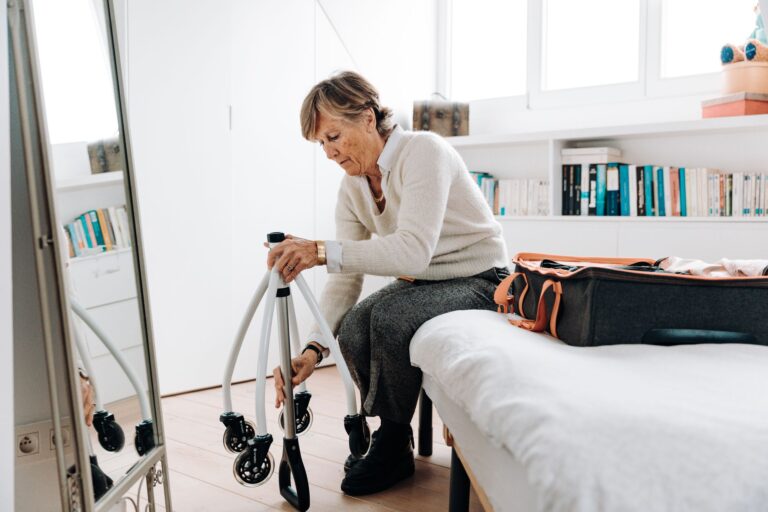
No. A walker can improve stability when it is correctly selected, fitted, and used, but it can become a hazard if the person forgets it, pushes it too far ahead, or cannot maneuver it around furniture. A physical therapist can assess the appropriate device and teach both the person and caregivers how to use it.
Are motion-activated lights suitable for bedrooms?
They can be helpful when they provide gentle light before the person begins walking. Lights that switch on abruptly at high brightness may cause glare or startle someone, so placement and brightness should be tested.
Should a person who falls frequently stop using stairs?
Not automatically. Stair safety depends on strength, balance, vision, judgment, the design of the stairs, and available supervision. A professional home assessment can identify whether handrails, lighting, training, supervised use, or relocating essential rooms is the safest option.
Who can perform a home fall-risk assessment?
Occupational therapists commonly assess how the person completes daily activities within the home, while physical therapists assess walking, balance, strength, transfers, and mobility equipment. Physicians, pharmacists, nurses, vision professionals, and podiatrists may also address medical or sensory factors contributing to falls.