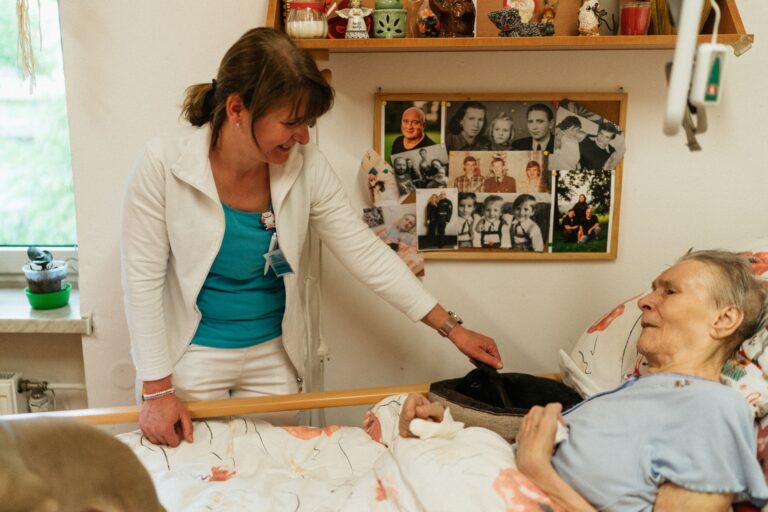
Adjustment to memory care typically unfolds over weeks to months, though there is no universal timeline. Some individuals begin settling within two to three weeks, while others may take three to six months or longer to show genuine signs of comfort in their new environment. The variation depends heavily on the person’s cognitive stage, prior living situation, family involvement, and the quality of the transition process itself. For example, someone with early-stage dementia who moves from independent living may experience a sharper emotional response and longer adjustment period than someone transitioning from a caregiving crisis at home.
The adjustment process is not linear. Residents typically move through phases: initial confusion or resistance, gradual familiarization with routines and staff, and eventual acceptance of the new setting as normal. Some days will feel like progress; others will reveal regression or distress that seemed resolved days earlier. This volatility is normal and does not necessarily indicate that the facility is a poor fit.
Medical information disclaimer: This article is for general educational purposes only and does not provide medical advice, diagnosis, or treatment. Always consult a physician or other qualified health professional about symptoms, medications, tests, or treatment decisions.
Table of Contents
- What Affects How Quickly Someone With Dementia Adjusts to Memory Care?
- The First Few Weeks and Initial Adjustment Challenges
- How Family Involvement Shapes Adjustment Speed
- Environmental Factors and Facility Setup That Speed Adjustment
- Common Setbacks and Warning Signs During Adjustment
- Monitoring Progress and Reading the Signs of Adjustment
- The Adjustment Horizon Beyond the First Months
- Frequently Asked Questions
What Affects How Quickly Someone With Dementia Adjusts to Memory Care?
The person’s stage of dementia significantly influences adjustment speed. Those with mild cognitive impairment may understand the move intellectually and adjust faster because they can reason through the transition, even if they experience sadness or loss. Conversely, individuals in moderate to advanced stages may not retain memory of conversations about the move, creating a repeated sense of displacement each time they become aware of their surroundings. A person in advanced dementia may adjust more quickly simply because they have less capacity to hold onto the memory of “home” as a reference point. Pre-move history matters considerably. Someone who has been socially isolated or struggling with advanced caregiving at home may adjust faster because memory care removes daily stressors and introduces structured engagement.
Conversely, a person who lived independently or had very strong attachments to a family home may experience deeper initial distress. The nature of the move itself—whether it was planned or rushed due to crisis—also shapes the adjustment arc. A planned move with gradual visits to the facility tends to produce faster adjustment than an emergency admission. Personality and temperament play an underestimated role. People who were flexible, socially oriented, and open to novelty before cognitive decline tend to adjust faster. Those who were rigid, private, or resistant to change before dementia often carry those traits into memory care and may require longer adjustment periods. Family involvement during the transition—consistent visits, participation in facility activities, and reassuring communication—can accelerate adjustment or, if handled poorly, prolong it.
The First Few Weeks and Initial Adjustment Challenges
The first two weeks are typically the most disorienting. The resident is navigating a new physical space, new people, new routines, and may not retain information from day to day. Staff members may appear unfamiliar each morning even if the person met them the previous day. Facility staff call this the “reset period”—each day can feel like the first day to someone with significant memory loss. Many families notice increased agitation, repeated questions, or resistance during this window. Behavioral changes during early adjustment are common and often reflect distress rather than permanent maladjustment.
Increased wandering, vocal outbursts, refusal to participate in activities, or regression in self-care are warning signs that the adjustment is difficult, but not necessarily permanent. One limitation families must understand: behavioral improvement is gradual, and there may be no obvious “turning point.” Instead, caregivers notice that bad days become less frequent, or that the person’s distress resolves more quickly when redirected. Sleep disruption frequently occurs in the first month. The new environment, different noise levels, unfamiliar bed, and disrupted routines can trigger insomnia or increased nighttime confusion. Some residents’ sleep normalizes within a few weeks; others take two months or more. This sleep debt can worsen behavioral and cognitive symptoms, creating a cycle that families may misinterpret as the facility being unsuitable, when the real issue is just the adjustment period itself.
How Family Involvement Shapes Adjustment Speed
Consistent, purposeful family visits accelerate adjustment and reduce the sense of abandonment that can drive continued resistance. Residents who receive frequent visits show measurably faster acclimation to staff and routines. However, the quality of those visits matters more than frequency. Visits focused on the person’s current experience—sitting together, engaging in activities, introducing them to staff by name—are more effective than visits filled with reassurance about “going home,” which can rekindle distress rather than ease it.
Some families, with good intentions, inadvertently prolong adjustment by withdrawing visits if the resident seems upset, hoping to reduce distress. This backfires. Regular presence, even when the resident is angry or tearful, signals that they have not been abandoned and that the facility is part of their life now. Over time, this consistency builds trust with both the resident and the staff caring for them. A comparison: residents with family members who visit twice weekly typically show measurable behavioral improvement by week four, while those with sporadic or infrequent visits may struggle for two to three months.
Environmental Factors and Facility Setup That Speed Adjustment
The physical design of the memory care unit influences how quickly a resident orients to the space. Facilities with clear wayfinding, familiar-feeling layouts, and visual cues help people navigate with greater confidence. A resident may adjust faster if their room is near the activity area or dining room, because they encounter fewer confusing corridors and more natural reasons to explore. Small, homelike environments typically produce faster adjustment than large institutional settings, though this is not universal. Staffing consistency is critical and often overlooked. When the same caregiver works with a resident repeatedly, trust and familiarity build.
Facilities with high turnover or understaffing require residents to re-orient to different faces regularly, which can extend adjustment indefinitely. A warning: some families choose facilities based on amenities or cost without evaluating whether the same staff members work regularly. High-quality dementia care requires consistent relationships between resident and caregiver. Activity programming also shapes adjustment. Residents who are engaged in meaningful activities, even simple ones like sorting, reminiscing, or listening to familiar music, adjust faster because they have positive daily experiences beyond just meals and basic care. Conversely, a resident in a facility with minimal structured activity may remain withdrawn and resistant for months. The comparison is stark: a resident in a facility with robust programming may show comfort by week three; one in an under-stimulated environment may remain distressed at month four.
Common Setbacks and Warning Signs During Adjustment
Adjustment is not monotonic. A resident may seem settled by week three, then have a difficult week when a family member is hospitalized, a medication is changed, or the facility calendar shifts (e.g., seasonal staffing changes). This regression does not erase prior progress; it is a temporary response to a stressor. Families should prepare for this reality and avoid the assumption that any setback means the facility is wrong. Certain warning signs do warrant concern and may indicate slower adjustment or genuine unsuitability. Persistent refusal to eat or bathe, complete withdrawal from activities over many weeks, or repeated physical aggression directed at staff can signal that the facility environment is not working.
However, these must be distinguished from normal adjustment behaviors like initial anxiety or brief resistance. A limitation of adjustment timelines: there is no agreed-upon point at which “still adjusting” becomes “never will adjust.” This requires ongoing communication between family and facility staff. Unaddressed pain or medical issues can severely prolong adjustment. A resident in pain or experiencing a urinary tract infection may resist care, refuse activities, and appear emotionally distressed in ways that look like maladjustment but are actually medical. This is why careful assessment during the transition period is essential. Some adjustment delays resolve once underlying health issues are treated.
Monitoring Progress and Reading the Signs of Adjustment
Families should look for behavioral micro-indicators rather than waiting for a sudden announcement that the person is “adjusted.” Early signs include: reduced resistance during daily care routines, beginning to ask staff members’ names without repeating the question endlessly, sitting willingly in the activity room, or showing appetite improvements. A resident does not need to love memory care to be adjusting; they need to be less distressed than they were. Documentation from facility staff is valuable.
A memory care unit that tracks behavioral notes, appetite, sleep, and mood changes provides a concrete record of adjustment progress. Over weeks and months, these notes often reveal gradual improvement that feels invisible day-to-day. For example, a resident who ate 30 percent of meals in week two and 70 percent by week six is adjusting, even if they still resist certain foods.
The Adjustment Horizon Beyond the First Months
Most residents who will adjust reasonably well show clear evidence of this by month three. This does not mean they are completely acclimated—that can take six months to a year—but the acute distress typically diminishes by this point. A resident who is still in profound crisis at month four is less likely to experience dramatic improvement, though gradual shifts can still occur over a longer timeline.
Very advanced dementia presents a different adjustment curve entirely. A person in the late stages may never demonstrate what families would recognize as “settling in,” because their awareness and memory capacity are too limited. However, they may still experience the facility positively in the moment—feeling safe, engaged during activities, or comforted by consistent staff presence. This is adjustment within the limits of their cognition, and it counts.
Frequently Asked Questions
Is it normal for my parent to ask to go home repeatedly during the first month?
Yes. This is one of the most common adjustment behaviors and does not necessarily mean they dislike the facility. The question often reflects disorientation and loss rather than an accurate desire to return to their previous home. Responding with validation (“I know you miss home”) rather than reassurance (“You’ll go home soon”) or facts (“You can’t go home”) often works better than either extreme.
Should I visit less if my parent gets upset when I leave?
No. Reducing visits may lower acute distress in the moment but typically prolongs overall adjustment and deepens the sense of abandonment. Consistent presence, even when separations are hard, supports adjustment faster. Consider brief, structured visits rather than withdrawing entirely.
What if my parent has not improved after two months?
Ongoing distress at the two-month mark warrants a careful reassessment. Meet with facility staff to explore whether there are medical issues, medication concerns, or environmental factors (like room location or roommate mismatch) that are slowing adjustment. Some residents do need a different facility, but this is best determined through investigation rather than assumption.
Can I speed up adjustment by bringing familiar objects from home?
Familiar items—photos, a favorite blanket, beloved books—can help some residents feel grounded. However, an over-abundance of home items can also increase distress by emphasizing what is missing. A balanced approach of a few meaningful objects, thoughtfully placed, often works better than recreating the entire home environment.
Is adjustment slower in small independent facilities versus large chains?
Not necessarily. Adjustment speed depends more on staffing consistency, activity programming, and how the physical environment supports navigation than on facility size. Large facilities with high staff turnover and minimal activity can produce slower adjustment than small, well-run communities.
How will I know when adjustment is truly complete?
Complete adjustment is gradual and rarely announces itself. You will notice it in absence—fewer resistant days, less repeated questioning, moments of seeming comfort or engagement. Most residents never forget they did not choose to be there, but they do eventually become comfortable with the reality of their environment.