A medical ID bracelet for a person with dementia should include the person’s name, a clear description of the condition, a brief instruction for anyone who finds them, and at least one reliable emergency contact number. Critical allergies or medical conditions may also belong on the bracelet if space allows. For example: “MARIA SANTOS — HAS DEMENTIA — MAY BE LOST OR CONFUSED — CALL SON 555-0123.” The engraving should help a stranger act quickly without requiring the person to explain what is happening.
Dementia can affect speech, memory, judgment, and the ability to provide an address or telephone number. A bracelet therefore needs to identify both the situation and the next step: keep the person safe, speak calmly, and contact someone who knows them. Space is limited, so prioritize information that changes what a bystander, police officer, or paramedic should do immediately. A complete medication list, detailed medical history, and lengthy instructions are usually better kept in a wallet card, secure digital profile, or emergency information form.
Medical information disclaimer: This article is for general educational purposes only and does not provide medical advice, diagnosis, or treatment. Always consult a physician or other qualified health professional about symptoms, medications, tests, or treatment decisions.
Table of Contents
- What Information Should a Medical ID Bracelet for Dementia Include?
- Choosing Medical and Emergency Details for the Engraving
- Emergency Contacts, Addresses, and Privacy
- How to Create a Clear, Actionable Bracelet Message
- Common Problems With Dementia Medical ID Bracelets
- QR Codes, NFC Tags, and Digital Medical Profiles
- Involving the Person With Dementia and the Care Team
What Information Should a Medical ID Bracelet for Dementia Include?
The most useful engraving usually contains four elements: the wearer’s name, the words “dementia,” “Alzheimer’s disease,” or another accurate diagnosis, a short assistance message, and an emergency contact. “May be confused” or “May be lost” explains the practical effect of the condition, while “Please call” tells the reader what to do. A telephone number without any context may be overlooked or mistaken for an identification number. Use the name the person recognizes and responds to.
A preferred first name can be more useful during a stressful encounter than a formal name that is rarely used. For example, the front might read “ROBERT ‘BOB’ LEE,” while the back says “HAS DEMENTIA — MAY NEED HELP — CALL WIFE 555-0147.” Including the contact’s relationship, such as “wife,” “daughter,” or “caregiver,” helps responders understand whom they are calling. Avoid filling the bracelet with low-priority details at the expense of legibility. A short, deeply engraved message in readable type is generally more useful than several lines of tiny text. When choosing between an old home address and a second contact number, the contact number is often safer because it remains useful if the person has wandered far from home or recently moved.
Choosing Medical and Emergency Details for the Engraving
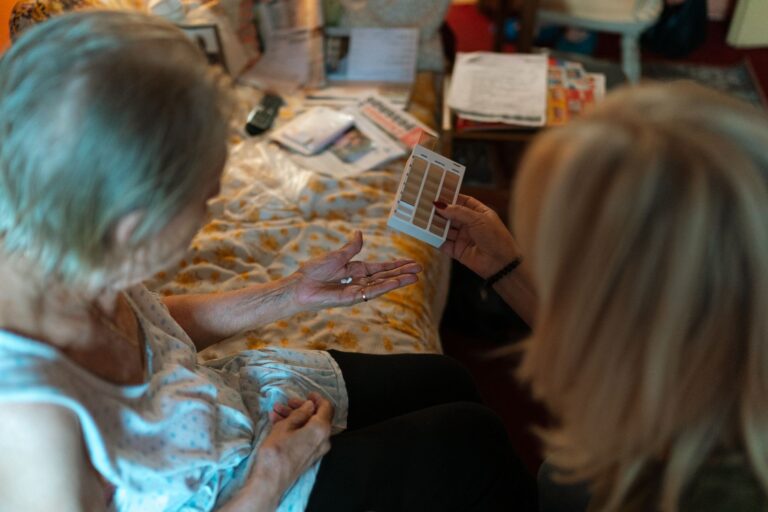
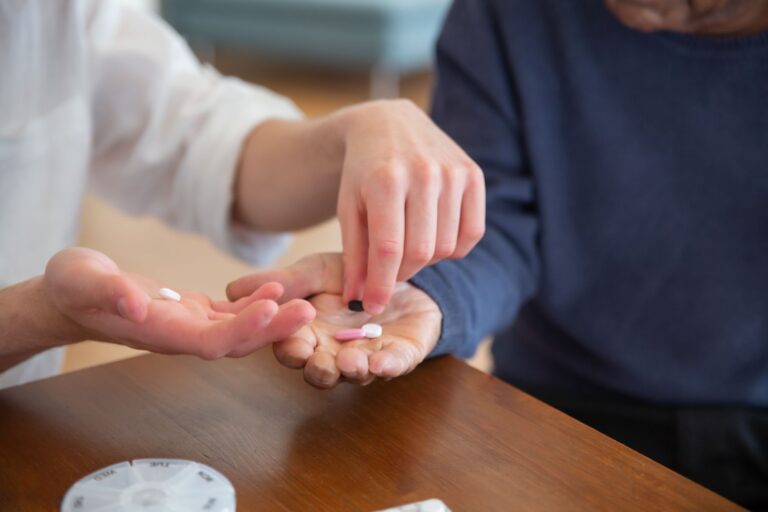
Include medical information that could materially affect emergency care. Severe drug or food allergies, diabetes, epilepsy, implanted devices, or the use of blood-thinning medication may be relevant, depending on the person‘s health and the advice of their clinician. A bracelet might say, “DEMENTIA — DIABETES — PENICILLIN ALLERGY,” followed by an emergency number. A full medication list rarely fits and can become inaccurate whenever a prescription changes. Writing only “ON MEDS” provides little actionable information, while listing several drug names may crowd out the dementia notice and emergency contact.
A better arrangement may be “MED LIST IN WALLET” if the person consistently carries an updated card. That approach has a limitation: a wallet can be lost, left behind, or overlooked. Do not rely on a bracelet alone to communicate advance-care decisions. Instructions such as “DNR” may not be sufficient for emergency personnel because recognition and documentation requirements vary by location. Families should discuss valid emergency orders and advance-care documents with the person’s healthcare team and keep the required form where local responders expect to find it.
Emergency Contacts, Addresses, and Privacy
Choose a primary contact who is likely to answer calls at any hour and who knows the person’s current care arrangements. The number should include the area code, and an international country code is useful if the bracelet may be worn during travel. If space permits, add a backup number rather than relying on one person whose phone could be unavailable. An address can help someone guide the wearer home, but it also creates privacy and safety concerns.
A stranger does not necessarily need to know that a potentially vulnerable adult lives at a particular address. The address may also become misleading after a move to assisted living or when the person is found in another city. “CALL DAUGHTER +1 555-0182” often provides a safer route to current instructions than engraving a full street address. Families can reduce unnecessary exposure by placing the diagnosis and contact details on the inside of the band, although hidden engraving may be missed. Another option is a front-facing medical symbol with wording such as “SEE REVERSE.” For example, a bracelet could show “MEDICAL ID” on the outside and place “VASCULAR DEMENTIA — MAY BE CONFUSED — CALL CAREGIVER 555-0160” on the back.
How to Create a Clear, Actionable Bracelet Message
Draft the message before ordering, then rank each detail by how quickly it would help during an actual incident. Start with the diagnosis or functional problem, add a simple instruction, and finish with the emergency contact. Use familiar wording and avoid abbreviations that an untrained bystander may not understand. “ALZHEIMER’S — MAY BE LOST — PLEASE CALL” is clearer to most readers than a string of unexplained initials. Compare two possible engravings: “JOHN A.
SMITH, DOB 3/4/48, HX AD, NKDA, ICE 555-0119″ and “JOHN SMITH — HAS ALZHEIMER’S — MAY BE LOST — CALL WIFE 555-0119.” The first includes more data, but the second is easier for a member of the public to interpret. Medical abbreviations can save space, yet they trade broad comprehension for compactness. Ask another person to read the proposed engraving without explanation. If that reader cannot quickly identify what is wrong and whom to call, revise it. Check capitalization, spelling, and every digit in the telephone number before the bracelet is made; a single incorrect digit can make the contact information useless during an emergency.
Common Problems With Dementia Medical ID Bracelets
The most common practical problem is outdated information. Caregivers may change telephone numbers, the wearer may move, or a listed contact may become unable to respond. Review the engraving after any change in residence, diagnosis, primary caregiver, or contact details. Test the number periodically from a phone that the contact does not recognize to confirm that calls are answered and voicemail is active. Another problem is inconsistent wear.
A bracelet offers no protection when it is left beside the bed because it feels heavy, catches on clothing, or irritates the skin. Metal bands are durable and recognizable as medical jewelry, but they may be uncomfortable for some people. Silicone bands are lighter and quieter, though printed information can wear down and the casual appearance may be overlooked. Do not make the bracelet so tight that it damages the skin or so loose that it slips off. Check beneath it for redness, swelling, moisture, or pressure marks, particularly if the person cannot reliably report discomfort. A new bracelet may also cause distress if the wearer believes it is unfamiliar or restrictive; introducing it gradually and choosing a watch-like design may improve acceptance, but no design guarantees that it will stay on.
QR Codes, NFC Tags, and Digital Medical Profiles
QR-code and near-field communication bracelets can link to a longer profile containing several contacts, medication lists, communication preferences, and recent photographs. For example, a digital profile could tell a responder that the wearer speaks Spanish, uses hearing aids, and becomes frightened when touched unexpectedly. The physical bracelet should still carry basic engraved information because a phone, internet connection, compatible scanner, or willingness to open an unfamiliar link may be unavailable.
Digital profiles also require active maintenance and careful privacy settings. Check who can view the record, whether a login is required, what happens if the provider closes, and how quickly updates appear. Avoid placing financial information, identification numbers, door codes, or other details in a publicly accessible profile.
Involving the Person With Dementia and the Care Team
When possible, involve the person with dementia in choosing the wording, color, material, and style. A person who dislikes visible medical labeling may accept discreet interior engraving or a band that resembles an ordinary watch.
Consent and dignity still matter even when caregivers are responding to a genuine risk of disorientation. Show the final wording to a clinician if there is uncertainty about which medical facts deserve priority, and give family members and paid caregivers a copy of the exact information. Keep the backup wallet card synchronized with the bracelet, label the medication list with the date it was updated, and replace the band as soon as any engraved telephone number stops working.