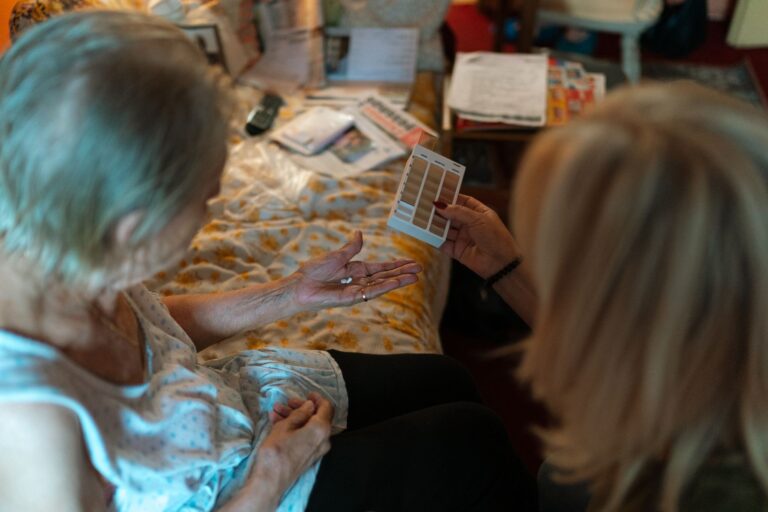
When someone with advanced dementia faces a serious medical crisis, families often feel pressured to choose between aggressive hospitalization or comfort-focused care at home or in a facility. The choice is rarely clear-cut: hospitalization can extend life but may cause additional suffering through procedures and institutional confusion, while comfort care prioritizes dignity and symptom relief without pursuing curative treatment. For a person in the late stages of dementia, the answer depends less on medical possibilities and more on what kind of final chapter aligns with their values, the quality of life they can actually experience, and what their family can realistically provide. Consider an 82-year-old woman with advanced dementia who can no longer speak or eat normally.
When she develops aspiration pneumonia, the hospital can offer antibiotics, supplemental oxygen, and feeding tubes. Yet she may not understand what’s happening, cannot cooperate with treatment, becomes frightened by restraints and monitors, and the hospital setting may accelerate her decline. Comfort care would instead focus on managing fever and breathing difficulty with medications, keeping her calm and pain-free, while allowing the disease to progress naturally. Both paths have real consequences—and neither is objectively “right” for every person.
Medical information disclaimer: This article is for general educational purposes only and does not provide medical advice, diagnosis, or treatment. Always consult a physician or other qualified health professional about symptoms, medications, tests, or treatment decisions.
Table of Contents
- How Do Hospitalization and Comfort Care Differ in Approach?
- Why Hospitalization Often Fails for Advanced Dementia
- What Does Comfort Care Actually Involve?
- How Should Families Approach This Decision?
- Understanding the Outcomes—Death Rates and Timelines Are Not Straightforward
- The Role of Advance Directives and Shared Decision-Making
- Making Peace with the Limits of Medicine
- Frequently Asked Questions
How Do Hospitalization and Comfort Care Differ in Approach?
Hospitalization for advanced dementia typically involves admission to an acute care setting where the medical team’s primary goal is diagnosis and treatment of the acute condition. This means blood draws, imaging, medications, possible procedures, and continuous monitoring. The assumption underlying this approach is that extending life is the primary aim. However, this model was designed for patients who can communicate their symptoms, cooperate with treatment, and recover to functional independence. People in advanced dementia often cannot do any of these things. Comfort care, also called palliative care or “comfort-focused care,” takes a fundamentally different approach.
Rather than pursuing diagnosis and treatment of acute conditions, the focus shifts to symptom management and maintaining the person’s dignity and emotional well-being. Pain, agitation, difficulty breathing, and other distressing symptoms are addressed with medication and nursing care. Feeding tubes and aggressive interventions are generally avoided, not from neglect but because they often add burden without meaningful benefit in advanced dementia. The goal is a peaceful death, not a prolonged life of suffering. The practical difference is visible in daily routines. A hospitalized person with advanced dementia may be subjected to repeated blood draws, catheterization, restraints (if they pull at tubes), and institutional schedules that have nothing to do with their needs. Someone receiving comfort care at home or in a hospice unit might spend their day in a quiet room with family present, medications adjusted to keep them comfortable, and freedom from unnecessary interventions.
Why Hospitalization Often Fails for Advanced Dementia
Hospitalization can inadvertently cause harm to people with advanced dementia because the hospital environment itself is incompatible with their condition. A person who cannot understand language, cannot sit still, and experiences the world through fear and confusion will be terrified by hospitals—the lights, the sounds, the strangers, the procedures, the physical restraints sometimes used to prevent them from removing tubes. This fear accelerates delirium and decline. Medical interventions also carry specific risks in advanced dementia. Feeding tubes, intended to prevent starvation, often lead to aspiration pneumonia (the tube doesn’t prevent food from entering the lungs), infection at the insertion site, and behavioral distress as the person repeatedly tries to remove the tube.
Antibiotics for infections in advanced dementia may briefly clear one infection, but without addressing the underlying decline, another infection follows within weeks. Blood draws and lab monitoring can reveal infections, but if comfort care is the goal, treating every infection with antibiotics contradicts that goal and may simply prolong a process that should be allowed to complete. A significant limitation of hospitalization is that it often doesn’t address what’s actually limiting quality of life for someone in advanced dementia—the loss of communication, the inability to experience meaning or pleasure, the struggle to breathe as the body fails. These are features of advanced dementia itself, not a treatable medical problem. Hospitalizing someone to treat an infection or pneumonia may extend their life by weeks or months, but during that time, the underlying dementia continues to progress. Hospitals are not designed to help someone die well; they’re designed to help people survive and recover.
What Does Comfort Care Actually Involve?
Comfort care is not passive or abandoning—it’s an active medical approach focused on different outcomes. A person receiving comfort care gets regular medication adjustments, nursing visits, wound care if needed, and family support. The difference is that the treatments offered are selected for their ability to reduce suffering, not extend life. Medications in comfort care might include pain relievers, anxiety medications, and medications to help with secretions or breathing difficulty. A person may continue to receive some oral intake if they can manage it safely, with food and fluids offered but not forced.
Oxygen or breathing support might be offered to reduce the sensation of suffocation, but not with the goal of prolonging mechanical support. Comfort care also includes what’s sometimes called “life review” or “legacy work”—space for family to say goodbye, to tell stories, to express love and forgiveness. Comfort care can be provided in various settings: at home with family and visiting hospice nurses, in a nursing home with added palliative support, or in a dedicated hospice facility. The setting matters less than the philosophy. In all these environments, the aim is that the person’s final weeks or months involve minimal medical burden and maximum presence of people who care about them. For some families, being present to hold their loved one’s hand while they die is the most meaningful way to demonstrate love at the end of life.
How Should Families Approach This Decision?
The choice between hospitalization and comfort care isn’t made in a vacuum—it should reflect what the person with dementia would have wanted, if they ever expressed views about end-of-life care. This is why advance directives, made before dementia is severe, matter enormously. If someone once said, “Don’t put me in a hospital when I’m dying” or “I want everything done to keep me alive,” that statement should guide the decision, even though the circumstances may not be exactly as they imagined. When advance directives don’t exist or are unclear, families should ask: “What matters most to my loved one now?” Some people will prioritize any extra time, even if that time involves hospital stays and procedures. Others would hate the hospital setting more than they fear death.
A conversation with the person’s doctor should include honest assessment: How likely is this hospitalization to result in recovery to baseline? How long might recovery take? What procedures would be involved? What is the realistic prognosis if we choose comfort care instead? These conversations are hard but essential. Families should also be honest about practical and emotional capacity. Can the family manage care at home, or is a facility necessary? Will watching a loved one decline peacefully at home be something the family finds meaningful, or traumatizing? Comfort care at home requires someone to help with bathing, medication administration, and sometimes difficult emotional moments. Some families are equipped for this; others need institutional support. Neither choice is wrong. What matters is matching the decision to reality.
Understanding the Outcomes—Death Rates and Timelines Are Not Straightforward
A common myth is that hospitalization always extends life while comfort care hastens death. The reality is more complicated. For someone with advanced dementia and an acute infection, antibiotics might extend life by weeks, but the quality of those weeks matters. Hospital-acquired infections are common, leading to repeated hospital admissions and treatments. Some people enter a cycle of infection-treatment-brief recovery-new infection that continues for months, each cycle taking more toll than the last. Studies of people with advanced dementia show that aggressive medical interventions do not dramatically extend life or improve outcomes. A person who has stopped eating and speaking—a clear sign of advanced dementia—is in the final stage of disease.
Whether they receive antibiotics for pneumonia or not, death is weeks to months away. The question isn’t whether comfort care leads to death (advanced dementia always does); it’s whether the time before death involves medical procedures and hospital settings that add suffering. A limitation of comfort care that families need to understand is that it requires a change in expectations and sometimes in relationships. If someone has been in denial about their loved one’s decline, comfort care forces a reckoning—this is really happening, this person is dying. Some people find this clarity and presence deeply valuable. Others struggle with it. There’s also a risk that comfort care, done poorly, can feel like neglect if the person is in pain or distress; finding a skilled palliative team is crucial.
The Role of Advance Directives and Shared Decision-Making
An advance directive is a legal document in which someone states their wishes for medical care if they can no longer speak for themselves. For people concerned about ending up in a hospital indefinitely with tubes and monitors, an advance directive that specifies “comfort care only” or “do not hospitalize” can provide legal backing for that choice. Some people name a healthcare proxy—a trusted family member—who will make decisions aligned with those values.
The advance directive conversation, ideally, should happen while someone is healthy or in early dementia, when they can articulate what they fear and what matters to them. Questions like “If you had a terminal illness and were in a coma, would you want to be kept alive by machines?” or “What would make life worth living for you at the end?” are uncomfortable but guide families later. Without these conversations, families are left guessing what their loved one would have chosen, sometimes disagreeing among themselves about what they think is right.
Making Peace with the Limits of Medicine
Part of the challenge families face is that modern medicine has made us believe death is optional, always something to fight. For someone with advanced dementia, accepting that hospitalization won’t restore them to who they were—that no intervention will bring back their personality, their memory, their ability to know their children—is essential to making peace with comfort care. Medicine can extend life, but it cannot restore what dementia has taken.
When an older person with advanced dementia develops a life-threatening infection or stops eating, this is often the body’s way of beginning to shut down. Fighting that process with aggressive medical intervention can extend the dying, not extend meaningful life. Families who choose comfort care often report that they felt they were finally honoring what their loved one would have wanted and allowing their loved one to die with dignity. The decision carries grief, but it also carries the peace of having made a choice aligned with values rather than defaulting to whatever the hospital offers.
Frequently Asked Questions
If I choose comfort care, am I letting my loved one die?
In advanced dementia, the disease itself is fatal. Choosing comfort care means accepting that reality and focusing on minimizing suffering in the time remaining, rather than pursuing treatments unlikely to restore health or meaningful function.
Can my loved one receive comfort care in a nursing home?
Yes. Many nursing homes can provide palliative care. Some also have partnerships with hospice services that add specialized support. The key is ensuring the facility prioritizes symptom management and comfort over aggressive intervention.
What if I’m not sure what my loved one would have wanted?
This is common and painful. Talk with the medical team about your loved one’s current quality of life and prognosis. Consider what would have mattered to them—independence, time with family, avoiding medical procedures—and let those values guide you.
Does comfort care mean my loved one won’t receive any medications?
No. Comfort care involves careful use of medications to manage pain, agitation, and breathing difficulty. The difference is that medications are chosen for comfort, not for extending life or treating every infection that arises.
How long does someone with advanced dementia typically live on comfort care?
It varies widely. Some people live weeks, others months. The timeline depends on the stage of dementia, other medical conditions, and how actively the body is declining. The medical team can offer estimates based on the person’s current condition.
Can I change my mind about comfort care if my loved one’s condition changes?
Yes. Advance directives and care plans can be updated. If someone is receiving comfort care and their condition stabilizes, or if a family’s values shift, these conversations can happen with the medical team.