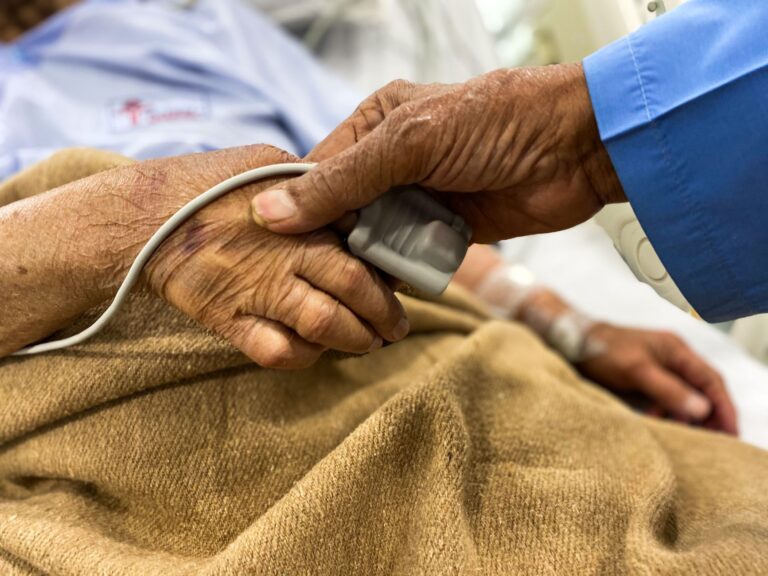
The $409 billion figure is a 2026 projection of U.S. health care, long-term-care, and hospice payments for people living with Alzheimer’s disease or other dementias. It is not the full economic cost of dementia, it excludes unpaid caregiving, and families do not pay all of it themselves. Their direct out-of-pocket share is projected at $103 billion—about one-quarter of the total—while public programs and other payers cover the rest. For a family, that distinction can look like this: Medicare may pay for a parent’s hospital treatment, while the family pays for home-care help, transportation, safety equipment, and services that insurance does not cover.
A daughter may also reduce her work hours to supervise that parent, creating a loss that never appears in the $409 billion. The national projection measures payments through the care system; a household budget captures a different and often more personal burden. The scale of both burdens is immense. According to the Alzheimer's Association's 2026 Alzheimer's Disease Facts and Figures, nearly 13 million unpaid caregivers provided more than 19 billion hours of care in 2025, valued at more than $446 billion. That valuation is not a cash bill, and it is not included in the projected $409 billion.
Medical information disclaimer: This article is for general educational purposes only and does not provide medical advice, diagnosis, or treatment. Always consult a physician or other qualified health professional about symptoms, medications, tests, or treatment decisions.
Table of Contents
- What Does the $409 Billion Cost of Dementia in 2026 Include?
- Why Dementia Care Costs More Per Person
- The Separate Price of Unpaid Dementia Caregiving
- How Families Can Identify and Prepare for Direct Costs
- Why Living at Home Can Shift More of the Burden to Families
- What Medicare’s GUIDE Model May Provide
- Newer Alzheimer’s Treatment Adds Clinical and Financial Questions
What Does the $409 Billion Cost of Dementia in 2026 Include?
The $409 billion estimate covers projected U.S. payments for health care, long-term care, and hospice for people living with Alzheimer’s or other dementias. The projected funding breakdown is $186 billion from medicare, $77 billion from Medicaid, $103 billion in out-of-pocket payments, and $44 billion from other sources. Because those amounts are rounded, the displayed components may not add precisely to the displayed total.
This is better understood as a map of formal care payments than as a single invoice sent to American households. Medicare accounts for 45% of the projection, out-of-pocket spending for 25%, Medicaid for 19%, and other sources for 11%. A family paying an assisted-living bill may experience the out-of-pocket portion directly, while taxes, insurance premiums, and public budgets finance other parts less visibly. The estimate also leaves out unpaid help with bathing, meals, medications, finances, transportation, supervision, and household tasks. Calling $409 billion the complete “cost of dementia” would therefore understate the economic contribution of caregivers and could wrongly imply that families personally pay the entire amount.
Why Dementia Care Costs More Per Person
Among traditional Medicare beneficiaries age 65 and older, average annual payments in 2025 dollars were $46,141 for people with Alzheimer’s or other dementias, compared with $15,499 for comparable beneficiaries without dementia. That is nearly three times as much per person, reflecting the broad medical and supportive needs that often accompany cognitive decline. Dementia can complicate the treatment of other illnesses. A urinary tract infection, fall, or medication problem may be harder to recognize early, while hospitalization can lead to delirium, functional decline, or a need for rehabilitation.
A beneficiary who once managed diabetes independently may begin needing medication supervision, transportation, and help communicating with clinicians, adding services around an already costly chronic condition. There is an important limitation: the per-person comparison applies to traditional Medicare and does not represent people enrolled in Medicare Advantage. It also describes average payments, not a predictable household bill. One person may remain at home with limited paid support, while another may experience repeated hospitalizations and require round-the-clock long-term care.
The Separate Price of Unpaid Dementia Caregiving
Nearly 13 million unpaid caregivers delivered more than 19 billion hours of care in 2025, with an estimated economic value exceeding $446 billion, according to the Alzheimer's Association's 2026 Facts and Figures report. This figure assigns a value to unpaid labor; it does not mean caregivers collectively wrote checks for $446 billion. The distinction matters in an ordinary household. A spouse who provides overnight supervision may spend little cash during those hours, yet lose sleep, health, and the ability to work the next day.
An adult child who takes unpaid leave for appointments may lose wages and retirement contributions even when Medicare pays the physician. The $446 billion valuation is based on care delivered in 2025, while $409 billion is a projection of formal payments for 2026. Adding them together as if they were matching components of one annual national total would be misleading. They cover different kinds of economic burden and different time periods.
How Families Can Identify and Prepare for Direct Costs
Families can begin by separating anticipated expenses into medical care, long-term support, household modifications, legal and financial planning, transportation, and caregiver work losses. Insurance coverage should be checked service by service. Medicare may cover a medically necessary visit but generally should not be assumed to pay for ongoing supervision or all help with daily activities. Historical estimates cited in the 2026 report illustrate the pressure on household finances.
In 2021, dementia caregivers had estimated average out-of-pocket costs of $12,388, compared with $6,667 for non-dementia caregivers. Among dementia caregivers, 48% reported reducing other spending and 43% reported reducing savings because of care-related out-of-pocket expenses. A written care budget can expose tradeoffs before a crisis. Paying for several hours of respite may preserve a caregiver’s job and health, while postponing paid help can conserve cash but increase burnout and safety risks. Families should record recurring bills and less obvious costs such as mileage, home repairs, meal delivery, incontinence supplies, missed work, and unpaid leave.
Why Living at Home Can Shift More of the Burden to Families
Remaining at home may offer familiarity and autonomy, but it can transfer more labor and expense to relatives. An NIA-highlighted study published in 2020 found that, among decedents with dementia, community-dwelling people and their families paid 64% of total care costs on average, compared with 43% for those living in nursing homes. That comparison does not prove nursing-home care is cheaper for every household. It reflects a historical study population rather than a 2026 national projection, and “family-paid” costs can include both money and the value of informal care.
Nursing-home residents may receive more publicly financed services, especially through Medicaid when eligible, while community-dwelling families often supply supervision and daily assistance themselves. The warning for families is that “aging in place” is not automatically the low-cost option. A home arrangement may require paid aides, accessibility changes, emergency coverage, transportation, and unpaid family availability. When cognitive or behavioral symptoms make continuous supervision necessary, the apparent savings can depend on a relative absorbing the missing hours.
What Medicare’s GUIDE Model May Provide
The Centers for Medicare & Medicaid Services’ GUIDE Model began July 1, 2024, and is scheduled to run for eight years. Participating programs can offer care navigation, caregiver education, 24-hour support, and qualifying respite services. CMS states that aligned patients cannot be charged cost-sharing for GUIDE services.
GUIDE is a model test, not universal dementia insurance. Access depends on patient eligibility and participation by local providers. Respite support is capped at up to $2,500 per eligible patient annually and is paid to participating programs, so a family should not assume it will receive a $2,500 reimbursement or that the benefit will cover every form of respite care.
Newer Alzheimer’s Treatment Adds Clinical and Financial Questions
Leqembi, or lecanemab-irmb, is not awaiting approval or merely experimental. The FDA converted it to traditional approval on July 6, 2023 for Alzheimer’s disease.
Treatment should be initiated in people with mild cognitive impairment or mild dementia, the population in which it was studied, and it is administered by intravenous infusion every two weeks. For families, treatment planning can involve more than the drug itself: confirming eligibility, arranging infusions, attending appointments, and managing required clinical monitoring can consume time and create related expenses. Leqembi is not indicated simply because someone has advanced memory loss; its FDA-described treatment population is people at the mild cognitive impairment or mild dementia stage of Alzheimer’s disease.