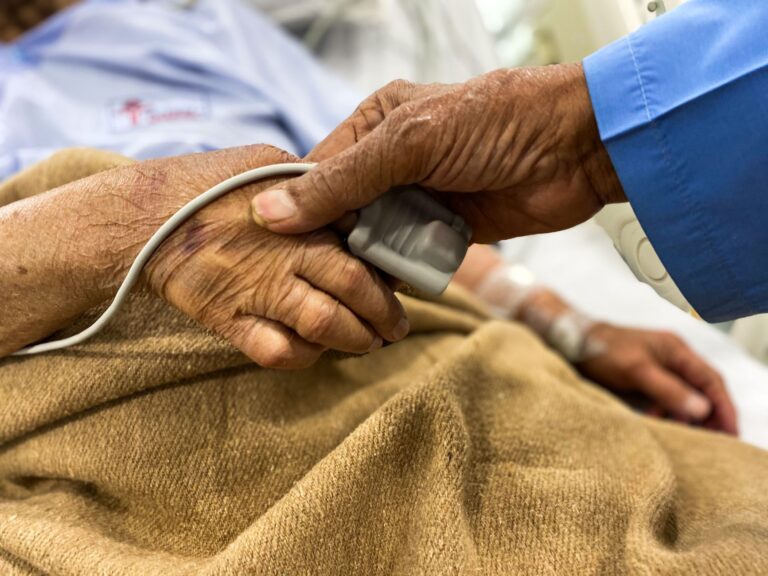
Dementia-related Medicaid costs are much higher than other older-adult care costs because dementia often creates years of need for custodial care—help with bathing, dressing, toileting, supervision, and safe daily living—that Medicare generally does not cover. When a person’s savings and income are insufficient, Medicaid may become the payer for nursing-facility care or qualifying services in the community. For example, an older adult recovering from surgery may receive short-term Medicare-covered skilled nursing care, while an older adult with advanced dementia may need continuous assistance long after that temporary coverage ends. The latest published comparison shows average annual Medicaid payments of $7,158 per person for Medicare beneficiaries age 65 and older with Alzheimer’s disease or other dementias, compared with $322 for those without dementia—about 22 times as much.
The figures, reported in 2025 dollars in Table 16 of the Alzheimer’s Association’s “2026 Alzheimer’s Disease Facts and Figures,” were published on April 21, 2026. That striking ratio requires careful interpretation. It applies to average Medicaid payments among Medicare beneficiaries age 65 and older with versus without Alzheimer’s or another dementia. It is not a causal estimate of what dementia alone costs, and it does not mean that every person with dementia receives Medicaid.
Medical information disclaimer: This article is for general educational purposes only and does not provide medical advice, diagnosis, or treatment. Always consult a physician or other qualified health professional about symptoms, medications, tests, or treatment decisions.
Official resources:
- Find local long-term care and caregiver services — Search by location to connect with public agencies and supports for older adults and families.
- Verify Medicaid nursing-facility coverage requirements — Review the federal coverage basics and why state eligibility and level-of-care rules matter.
Table of Contents
- Why Are Dementia Medicaid Costs So Much Higher Than Other Older-Adult Care?
- The Long-Term Care Gap Between Medicare and Medicaid
- Dementia Increases the Amount and Intensity of Care
- Planning for Medicaid Eligibility and Care Settings
- Financial Depletion, Medicaid Enrollment, and Important Limits
- Nursing-Facility Spending as a Major Cost Mechanism
- What the 22-Times Figure Does—and Does Not—Measure
Why Are Dementia Medicaid Costs So Much Higher Than Other Older-Adult Care?
The 22-fold difference is specific to Medicaid, not to total health and care spending. The same Alzheimer’s Association table reports average annual payments from all sources of $46,141 for older medicare beneficiaries with dementia and $15,499 for those without it. That is roughly a threefold difference—still substantial, but far below the Medicaid ratio. The contrast reflects the programs’ different roles. Medicare covers many hospital, physician, prescription, rehabilitation, and limited skilled-nursing services used by older adults with and without dementia.
Medicaid is more concentrated among people who meet financial and functional eligibility requirements and need services Medicare excludes, particularly long-term services and supports. A $322 average in the comparison group also creates a low mathematical baseline, making the Medicaid ratio especially large. The comparison includes both community-dwelling beneficiaries and people living in care residences. It should not be described as a nursing-home-only spending figure. Some Medicaid payments may support eligible care in a person’s home or another community setting, while institutional services remain an important driver of the difference.
The Long-Term Care Gap Between Medicare and Medicaid
Medicare generally does not pay for long-term custodial care in a nursing home or in the community. Custodial services can include help with bathing, dressing, toileting, eating, and other daily activities. These tasks may not require a nurse each time, but they can demand many hours of labor every day when memory loss, disorientation, mobility problems, or unsafe behavior prevent a person from living independently. Medicaid fills part of that coverage gap.
According to the Centers for Medicare & Medicaid Services, Medicaid can cover nursing-facility care beyond Medicare’s 100-day skilled-nursing limit, as well as certain services that Medicare does not cover. For people enrolled in both programs, Medicare pays first for services covered by both; Medicaid may then cover eligible costs and separate Medicaid benefits. A dementia diagnosis does not automatically entitle someone to Medicaid-funded nursing-facility care. The person must qualify for Medicaid, meet the state’s definition of nursing-facility level of care, and receive services in a state-licensed or certified Medicaid nursing facility. Income limits, asset rules, clinical assessments, covered community services, and administrative procedures vary by state, so families should not assume that a physician’s diagnosis alone secures coverage.
Dementia Increases the Amount and Intensity of Care
Dementia affects more than memory. A person may need medication management, meal preparation, transportation, help with personal care, protection from wandering, and supervision during hours when someone with another chronic illness could safely remain alone. This combination can turn occasional assistance into sustained, labor-intensive care. A matched U.S. cohort study published in JAMA Internal Medicine in December 2023 illustrates the difference.
At two-year follow-up, 20.6% of people with dementia reported a nursing-facility stay, compared with 4.4% of matched controls. The dementia group also received 45 monthly hours of help from family members or other unpaid caregivers, versus 13 hours among controls. Formal medical care was more intensive as well. At the same follow-up, 23.1% of the dementia group used in-home medical care, compared with 14.4% of controls, and 46.6% had a hospital stay, compared with 34.5%. A practical example is an older adult with diabetes who can no longer remember insulin doses: the problem may require family monitoring, home health involvement, emergency treatment after a dosing error, and eventually residential care rather than a single routine office visit.
Planning for Medicaid Eligibility and Care Settings
Families facing progressive dementia should distinguish Medicare coverage from long-term care financing early. Useful steps include obtaining the state’s current Medicaid eligibility rules, requesting a formal care-needs assessment, checking whether prospective facilities are Medicaid-certified, and asking which home- and community-based services are available locally. Because eligibility and transfer-of-asset rules can be complex, individualized advice from the state Medicaid agency, an aging-services organization, or a qualified elder-law professional may be necessary before major financial decisions are made. The choice between care at home and institutional care involves real tradeoffs. Home care can preserve familiar routines and may be preferred by the person with dementia, but it can depend heavily on unpaid relatives, available workers, housing safety, and state program capacity.
Nursing facilities provide round-the-clock staffing and structured support, but they are disruptive, expensive, and not automatically covered merely because a family can no longer manage care at home. Medicaid’s benefit design also affects that choice. Nursing-facility services are a required Medicaid benefit for eligible adults who need that level of care. Some home- and community-based services, by contrast, may be limited by states or subject to enrollment caps and waiting lists. As a result, institutional care can become the financed fallback even when care at home would otherwise be workable.
Financial Depletion, Medicaid Enrollment, and Important Limits
Long care needs can gradually shift costs from households to Medicaid. In the JAMA Internal Medicine cohort, Medicaid enrollment among people with dementia rose from 16.1% before observed onset to 29.7% over eight years. Median wealth in the dementia group fell from $79,339 to $30,490 during the study period. Those figures describe associations, not proof that dementia alone caused every loss of wealth or every Medicaid enrollment.
Aging households may also face hospital bills, other chronic diseases, housing expenses, reduced earnings, spousal needs, and broader economic changes. Likewise, Medicaid eligibility rules mean that enrollment patterns can reflect both declining resources and changing care needs. Families should be wary of treating “spending down” as a simple or universal strategy. Transfers, gifts, trusts, jointly held assets, a spouse’s finances, home equity, and estate-recovery rules can affect eligibility differently across states and circumstances. An irreversible transfer made without state-specific guidance can delay coverage rather than accelerate it.
Nursing-Facility Spending as a Major Cost Mechanism
Older research identified institutional care as the dominant mechanism behind dementia’s added Medicaid cost. A Georgia Medicaid claims study published in the Journal of the American Geriatrics Society in September 2000 adjusted for demographics, comorbidities, Medicare eligibility, and months of Medicaid eligibility.
Excess nursing-home spending accounted for more than 85% of the additional Medicaid cost associated with Alzheimer’s disease and related dementia. The study is useful because it examined the spending channel directly, but its age and single-state setting limit how precisely it describes Medicaid today. Modern state programs may finance more community-based care than Georgia did during the study period, yet a prolonged nursing-facility stay can still generate far more Medicaid spending than occasional outpatient care.
What the 22-Times Figure Does—and Does Not—Measure
The $7,158 and $322 figures are per-person annual averages across the specified groups, not predicted bills for individual families. One beneficiary with dementia may receive no Medicaid payments because the person does not qualify or uses privately financed care; another may generate substantial Medicaid spending through an extended nursing-facility stay. Averaging those different circumstances produces a useful population comparison but not a personal cost estimate.
The measure also should not be used to claim that dementia makes every category of care 22 times more expensive. Total payments from all sources were $46,141 versus $15,499, while Medicaid payments alone were $7,158 versus $322. The narrower Medicaid disparity reflects the program’s concentrated role in financing qualifying long-term services and supports that Medicare generally leaves uncovered.